Get your free personalized podcast brief
We scan new podcasts and send you the top 5 insights daily.
In multi-tier AI memory, designate raw conversation logs as the durable source of truth. All other forms—summaries, facts, embeddings—should be treated as recomputable projections. This design allows for recovery from data loss and adaptation to new extraction strategies.

Related Insights
Instead of relying on lossy LLM-based summarization, architect agent memory into three tiers: an ephemeral scratchpad for immediate tasks, a deterministic state machine for history (e.g., Redis), and a semantic anchor (e.g., vector store) for global knowledge lookup.

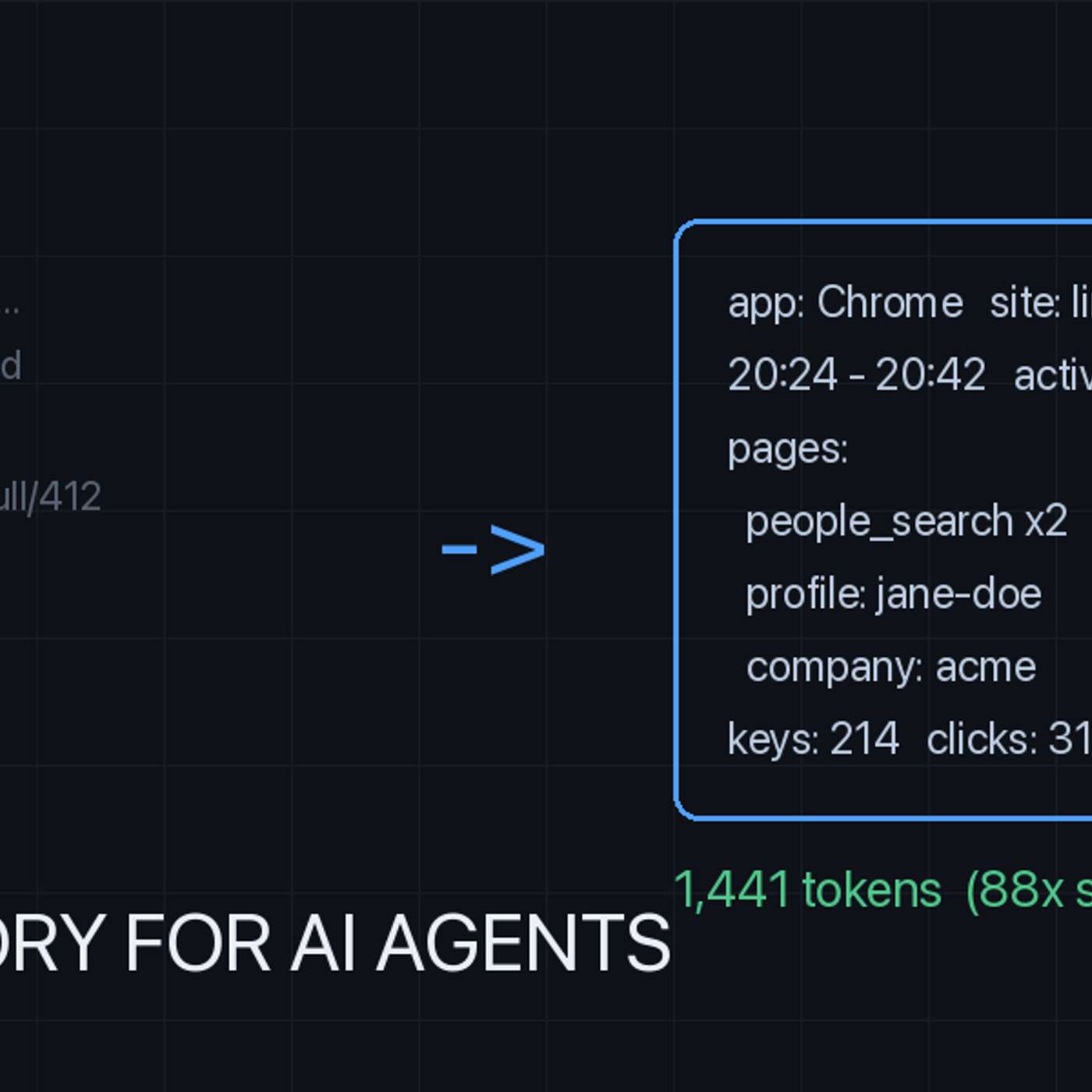
While using an LLM to summarize raw user activity seems intuitive, it is expensive, non-deterministic, and prone to hallucination. A superior approach is a "boring" deterministic compiler using plain code to transform raw data into structured, trustworthy, and recomputable memory episodes, reserving the LLM for higher-level interpretation.
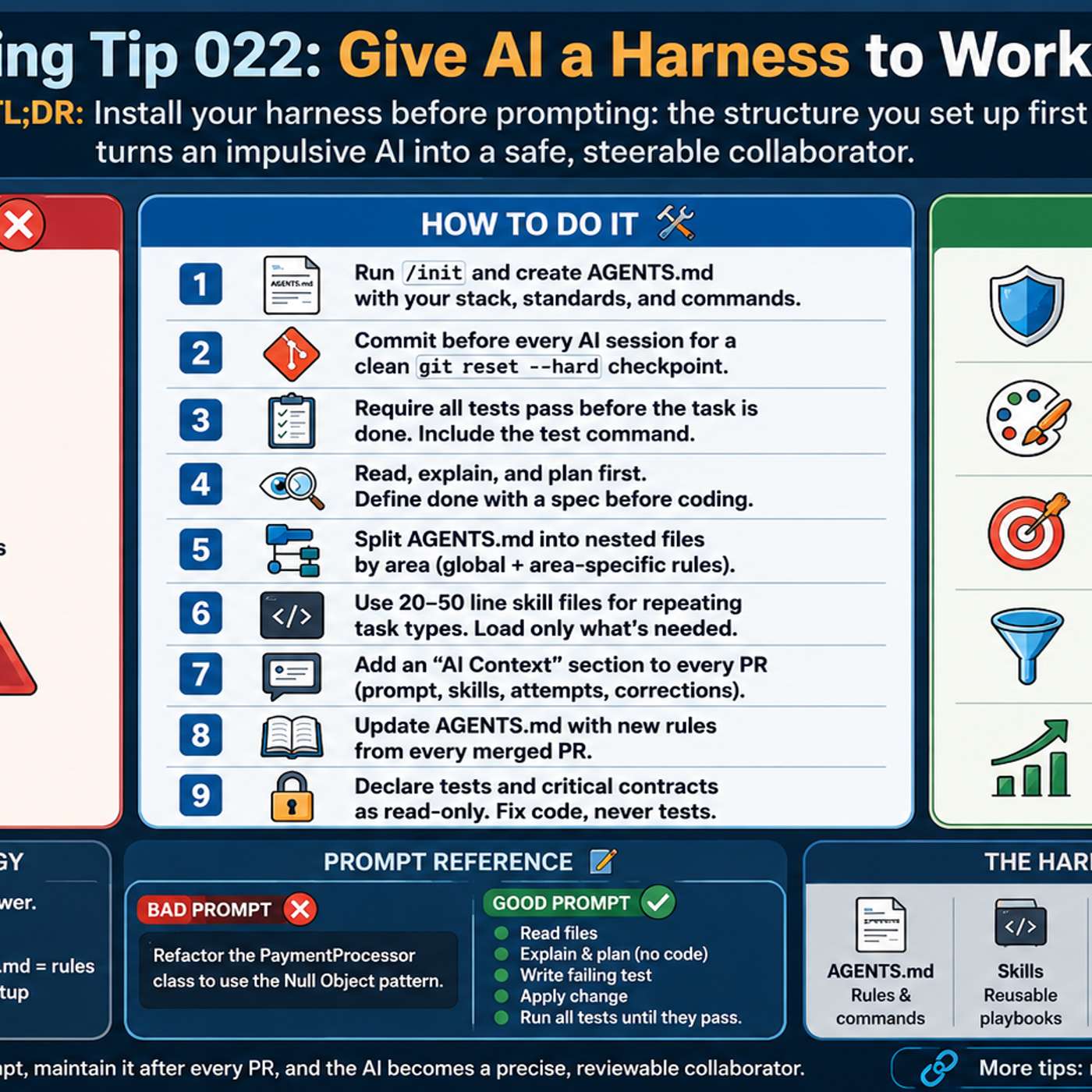
Relying on the context of a chat session is a mistake, as it disappears or gets compacted over time. To ensure consistent AI behavior and create a traceable record, rules and project context must be externalized into version-controlled 'skill files' or configurations that the AI reads at the start of every session.
Avoid processing raw data into summaries and then deleting the source. AI technology improves so rapidly that you'll want to re-process the original, raw data with future, more capable models to generate superior outputs and system upgrades, preventing irreversible information loss.

Instead of starting new chats for every task, use single, long-running 'monothreads' for each major workstream. Advanced context compaction in tools like Codex allows these threads to persist memory over time, turning the AI from a simple Q&A bot into an ongoing project collaborator with deep context.

AI agent memory is an emerging attack surface. To build trustworthy systems, memory must enforce a strict, auditable separation between "measured" data (recomputable facts from raw input) and "inferred" data (LLM-generated interpretations). This ensures a ground truth of pure fact remains, defending against memory poisoning attacks.
Relying on chat history for an AI's memory is fragile. A more robust method is to have the AI serialize key learnings into an external, structured file system (like an Obsidian vault). This creates inspectable, editable, and reusable artifacts that can outlive any single conversation thread.
Store an AI agent's medium-term rolling summaries in relational databases. Vector stores excel at retrieving atomic facts, but summaries are narratives whose value lies in continuity. Conflating these memory tiers adds unnecessary complexity and results in sub-optimal performance.
M0 employs a two-phase process for agent memory. It first extracts atomic facts solely from human-computer dialogue, ignoring verbose tool outputs. A separate LLM call then compares these new facts to existing memories to decide whether to add, update, or ignore them, preventing redundant or contradictory storage and minimizing token usage.

Chats in LLMs are temporary. To give your AI a permanent memory, store key instructions, playbooks, and processes as markdown documents within the AI's project files. This creates a stable intelligence layer that the AI always references, and the format is portable enough to be moved to other LLMs.
