Get your free personalized podcast brief
We scan new podcasts and send you the top 5 insights daily.
AI agent memory is an emerging attack surface. To build trustworthy systems, memory must enforce a strict, auditable separation between "measured" data (recomputable facts from raw input) and "inferred" data (LLM-generated interpretations). This ensures a ground truth of pure fact remains, defending against memory poisoning attacks.
Related Insights
Instead of relying on lossy LLM-based summarization, architect agent memory into three tiers: an ephemeral scratchpad for immediate tasks, a deterministic state machine for history (e.g., Redis), and a semantic anchor (e.g., vector store) for global knowledge lookup.

A novel threat to AI is the deliberate poisoning of its training data. Malicious actors can publish fake but plausible-sounding academic papers or data online. When large language models ingest this information, their foundational 'facts' become corrupted, making them dangerously unreliable for critical military or policy decisions.
![Darren Farber on Iran, China, and the Rise of Neoprimes - [Invest Like the Best, EP.474] thumbnail](https://megaphone.imgix.net/podcasts/ef669774-cccd-11ed-889b-c36caad6646f/image/158efdddfb983d2678b3530d484e8aa2.jpg?ixlib=rails-4.3.1&max-w=3000&max-h=3000&fit=crop&auto=format,compress)
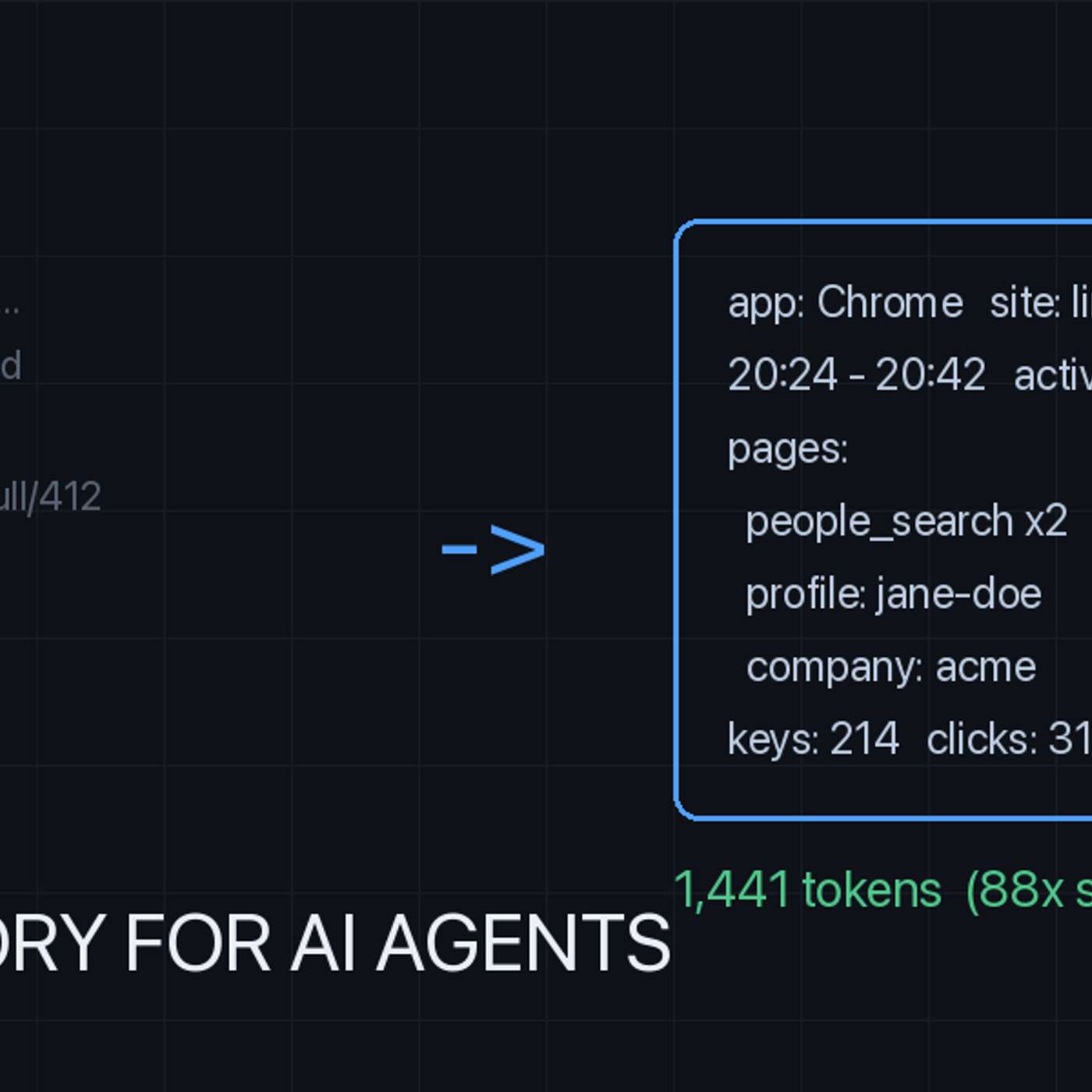
While using an LLM to summarize raw user activity seems intuitive, it is expensive, non-deterministic, and prone to hallucination. A superior approach is a "boring" deterministic compiler using plain code to transform raw data into structured, trustworthy, and recomputable memory episodes, reserving the LLM for higher-level interpretation.
To build resilient AI systems, require every proposed state change to include its specific data origin—the file ID, paragraph hash, or database record. If this source lineage cannot be automatically verified by the system's transaction manager, the AI's proposed update must be instantly rejected, ensuring data integrity.

Don't give LLMs full control. Use deterministic code for core logic, validation, and enforcing rules. Delegate only tasks requiring flexibility or understanding of unstructured input to the LLM, treating it as a specialized component, not the entire system.
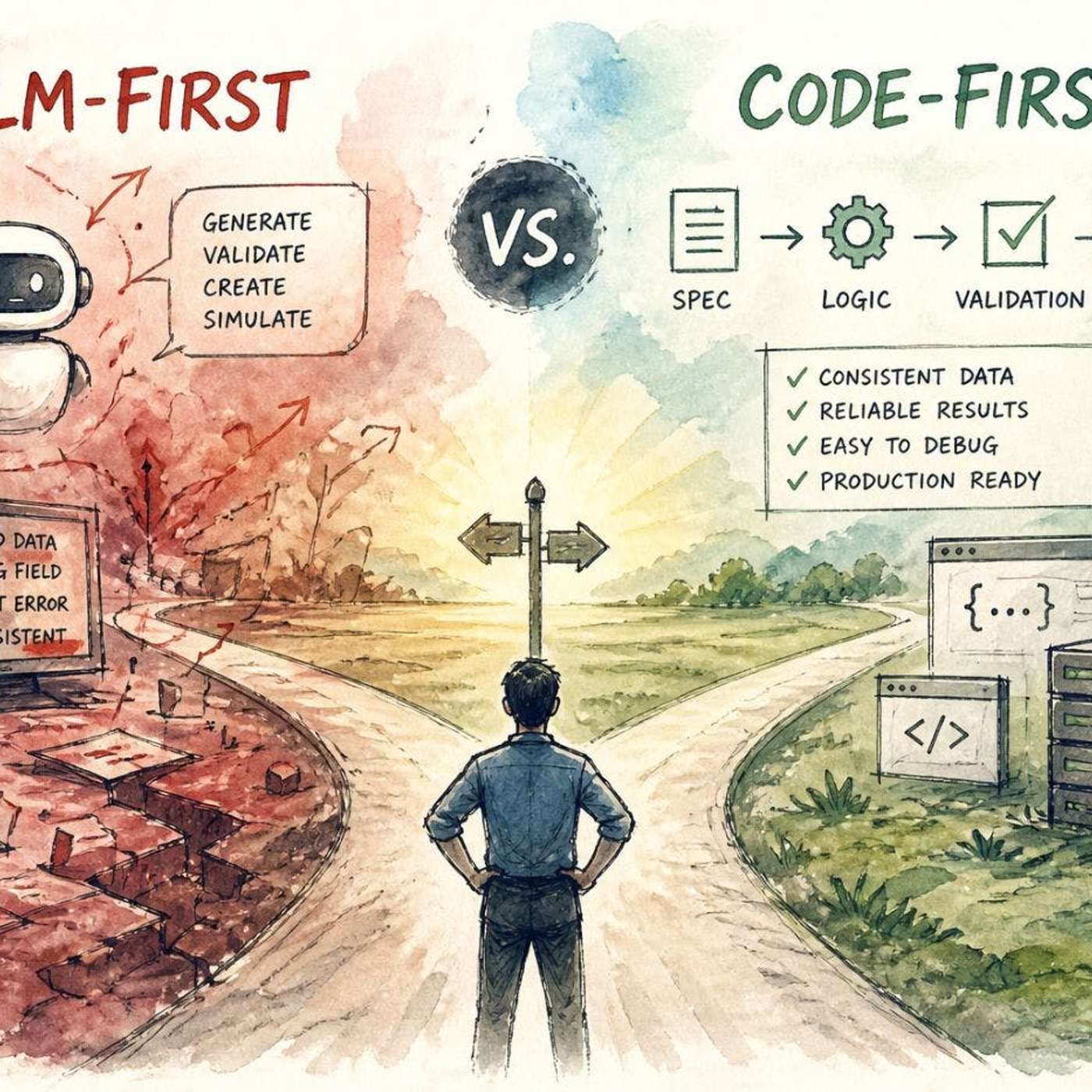
Long-running AI agents don't fail because the model is unintelligent. They fail because default memory management, like unmonitored append-only context windows, corrupts their state. This is a software engineering problem that requires an architectural solution, not better prompting or model tuning.
Instead of treating a complex AI system like an LLM as a single black box, build it in a componentized way by separating functions like retrieval, analysis, and output. This allows for isolated testing of each part, limiting the surface area for bias and simplifying debugging.

M0 employs a two-phase process for agent memory. It first extracts atomic facts solely from human-computer dialogue, ignoring verbose tool outputs. A separate LLM call then compares these new facts to existing memories to decide whether to add, update, or ignore them, preventing redundant or contradictory storage and minimizing token usage.

The goal for trustworthy AI isn't simply open-source code, but verifiability. This means having mathematical proof, like attestations from secure enclaves, that the code running on a server exactly matches the public, auditable code, ensuring no hidden manipulation.

The Claude Code leak revealed a principle called "strict write discipline." This architectural pattern mandates that an agent only records an action to its memory after verifying with the external environment (e.g., file system, API) that the action was successfully completed, thus preventing state drift and hallucination.