Get your free personalized podcast brief
We scan new podcasts and send you the top 5 insights daily.
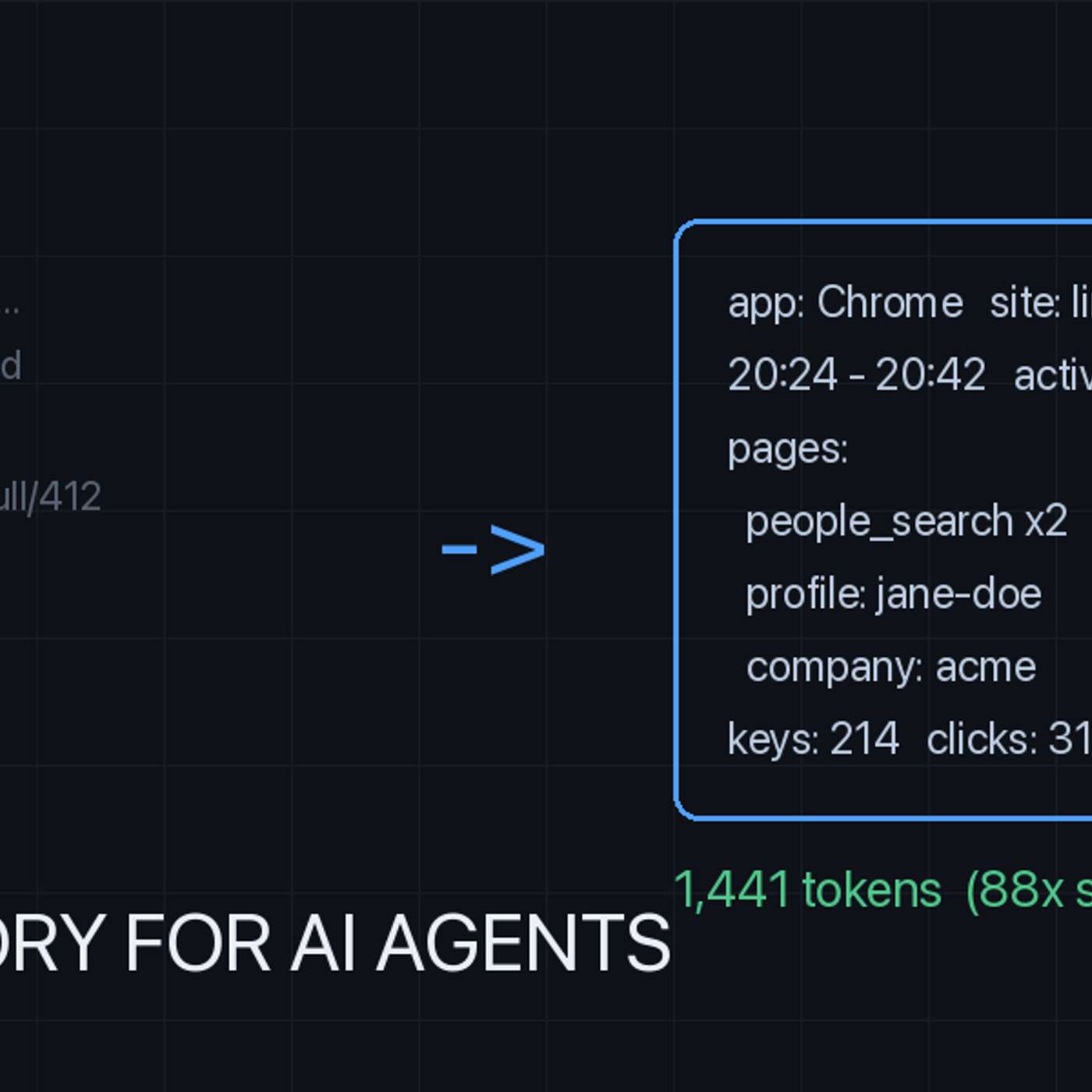
While using an LLM to summarize raw user activity seems intuitive, it is expensive, non-deterministic, and prone to hallucination. A superior approach is a "boring" deterministic compiler using plain code to transform raw data into structured, trustworthy, and recomputable memory episodes, reserving the LLM for higher-level interpretation.
Related Insights
Instead of relying on lossy LLM-based summarization, architect agent memory into three tiers: an ephemeral scratchpad for immediate tasks, a deterministic state machine for history (e.g., Redis), and a semantic anchor (e.g., vector store) for global knowledge lookup.

Don't give LLMs full control. Use deterministic code for core logic, validation, and enforcing rules. Delegate only tasks requiring flexibility or understanding of unstructured input to the LLM, treating it as a specialized component, not the entire system.
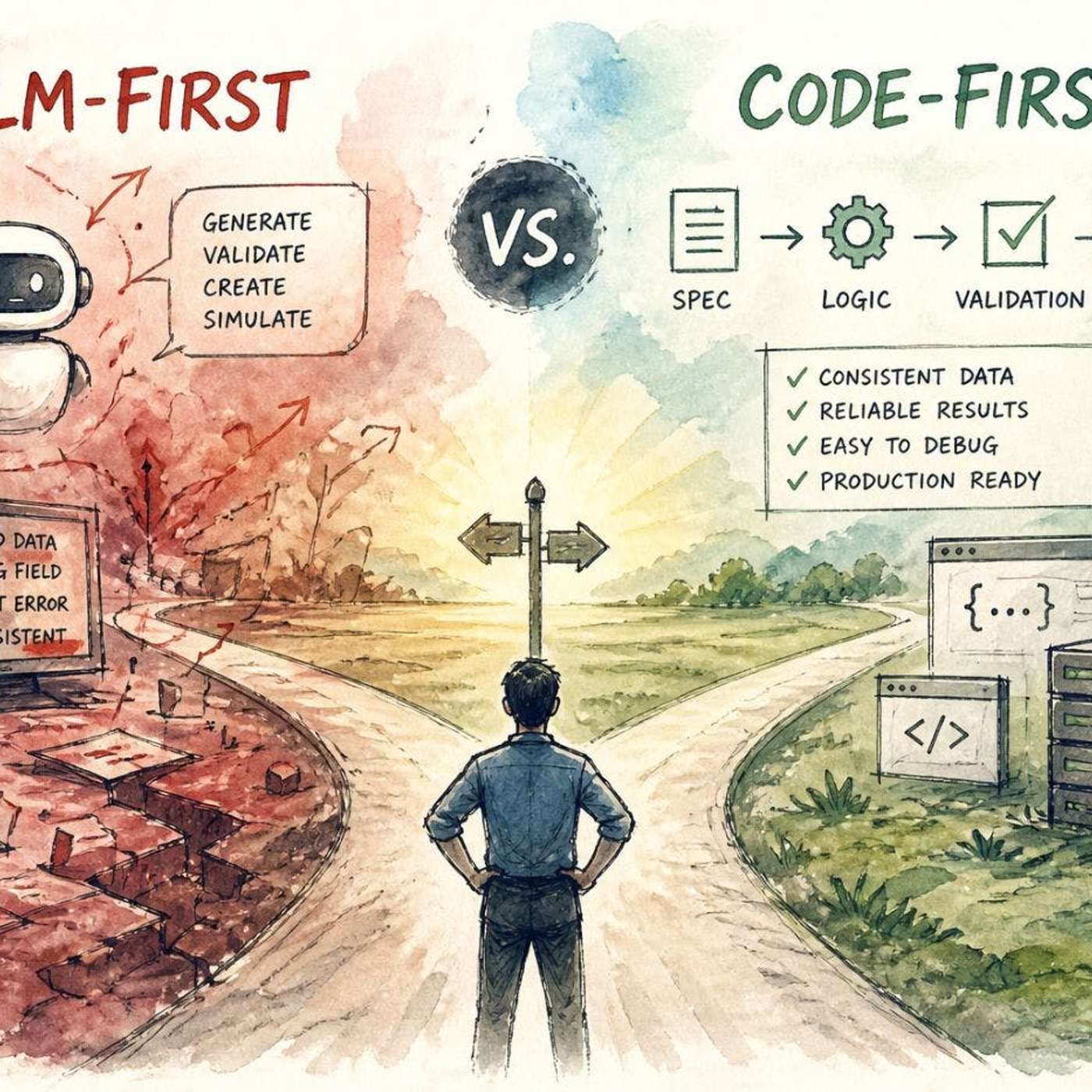
An 'LLM-first' approach, where the model handles core logic, creates impressive demos but lacks production reliability. A 'code-first' approach, using code for structure and LLMs for specific tasks, is less flashy but proves robust and debuggable in real-world applications.
AI agent memory is an emerging attack surface. To build trustworthy systems, memory must enforce a strict, auditable separation between "measured" data (recomputable facts from raw input) and "inferred" data (LLM-generated interpretations). This ensures a ground truth of pure fact remains, defending against memory poisoning attacks.
To solve for AI hallucinations in high-stakes decisions, advanced platforms use the LLM as an interpreter that writes code to query raw data. If data is unavailable, it returns an error instead of fabricating an answer, making every analysis fully auditable and grounded in verifiable data.

The key to reliable AI-powered user research is not novel prompting, but structuring AI tasks to mirror the methodical steps of a human researcher. This involves sequential analysis, verification, and synthesis, which prevents the AI from jumping to conclusions and hallucinating.

Relying on chat history for an AI's memory is fragile. A more robust method is to have the AI serialize key learnings into an external, structured file system (like an Obsidian vault). This creates inspectable, editable, and reusable artifacts that can outlive any single conversation thread.

Large Language Models are inherently stateless. Creating conversational memory is not about finding a smarter model, but about engineering a robust backend infrastructure. The true intelligence of a multi-turn AI assistant resides in this system's ability to manage state, not the model itself.

M0 employs a two-phase process for agent memory. It first extracts atomic facts solely from human-computer dialogue, ignoring verbose tool outputs. A separate LLM call then compares these new facts to existing memories to decide whether to add, update, or ignore them, preventing redundant or contradictory storage and minimizing token usage.

The Claude Code leak revealed a principle called "strict write discipline." This architectural pattern mandates that an agent only records an action to its memory after verifying with the external environment (e.g., file system, API) that the action was successfully completed, thus preventing state drift and hallucination.