Get your free personalized podcast brief
We scan new podcasts and send you the top 5 insights daily.
Travis Kalanick uses a mental model where the physical world operates like a computer: manufacturing is the CPU (manipulates atoms), real estate is storage, and logistics is the network. This allows him to apply computer science principles, data structures, and algorithms directly to complex industrial and logistical challenges.

Related Insights
Applied Intuition uses the same fundamental software platform across cars, trucks, boats, and construction equipment. This is possible because all are machines interacting with the physical world governed by consistent laws of physics, enabling a scalable "Teslification" of multiple industrial sectors with a single core technology.
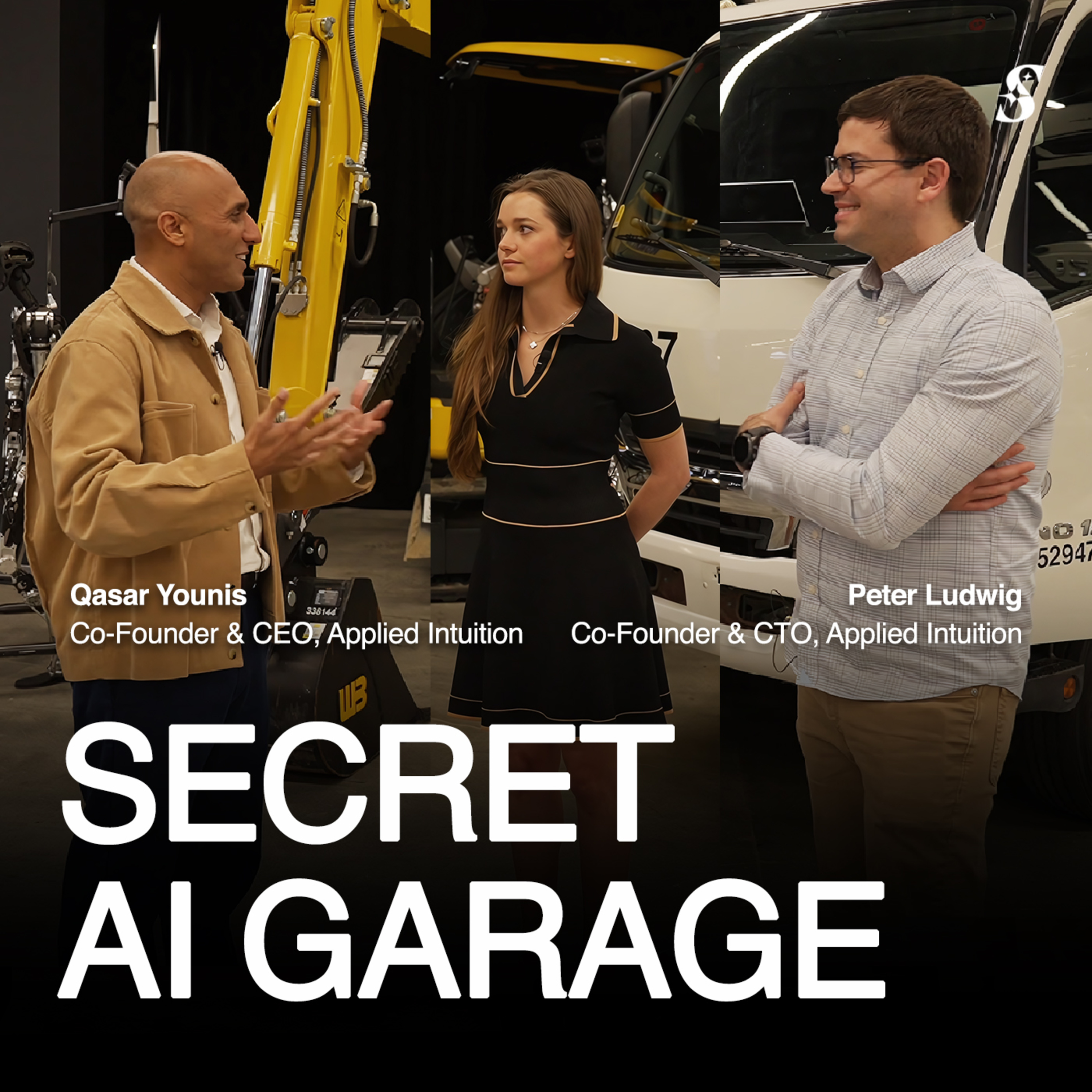
Founders are breaking down complex societal challenges like construction and energy into modular, repeatable parts. This "factory-first mindset" uses AI and autonomy to apply assembly line logic to industries far beyond traditional manufacturing, reframing the factory as a problem-solving methodology.
To attract top technical talent for hard-tech problems, frame the work as tangible and epic. Kalanick's pitch isn't about shipping code; it's about 'automating a 2,000,000 pound machine.' This appeals to engineers who want to build real-world, science-fiction-level technology rather than another app.

Kalanick uses a framework that maps core computing resources to the physical world: manufacturing is the CPU (manipulating atoms), real estate is storage (storing atoms), and transport is the network (moving atoms). This "digitizing the physical world" philosophy unites his work at Uber, CloudKitchens, and his new robotics ventures.

When hiring senior technical talent, the most valuable skill isn't just coding proficiency but the ability to take an abstract business problem—like designing a logistics system—and translate it into a functional technical solution. This skill demonstrates a deeper understanding that connects work to real-world value.

Travis Kalanick conceptualizes physical world problems using an "atoms-based computer" analogy. In this model, manufacturing is the CPU (processes atoms), real estate is storage, and logistics is the network. This provides a first-principles mental model for revolutionizing industries like food and mining.

With his bioelectrical engineering background, Dara Khosrowshahi frames the CEO role as a large-scale engineering challenge. He sees companies as machines run by people, where the leader's job is to design the system, set the right goals, and assemble the components to achieve a desired output.

The structured, data-driven engineering design process—from problem identification and data collection to solution design and testing—is directly applicable to defining business strategy, achieving goals, and even managing people effectively.

Kalanick's strategy involves creating a core autonomous mobility technology that acts as a 'wheelbase for robots.' This horizontal platform serves as the foundation for various specialized, vertical-specific applications, from mining haulage to food delivery. This model creates immense leverage from a single, powerful tech stack.
Kalanick's grand strategy is based on a framework where atoms are treated like bits. Manufacturing manipulates atoms (CPU), real estate stores them (Storage), and logistics moves them (Network). This model explains his career progression from Uber (Network) to Cloud Kitchens (Storage) and now robotics (CPU).