Get your free personalized podcast brief
We scan new podcasts and send you the top 5 insights daily.
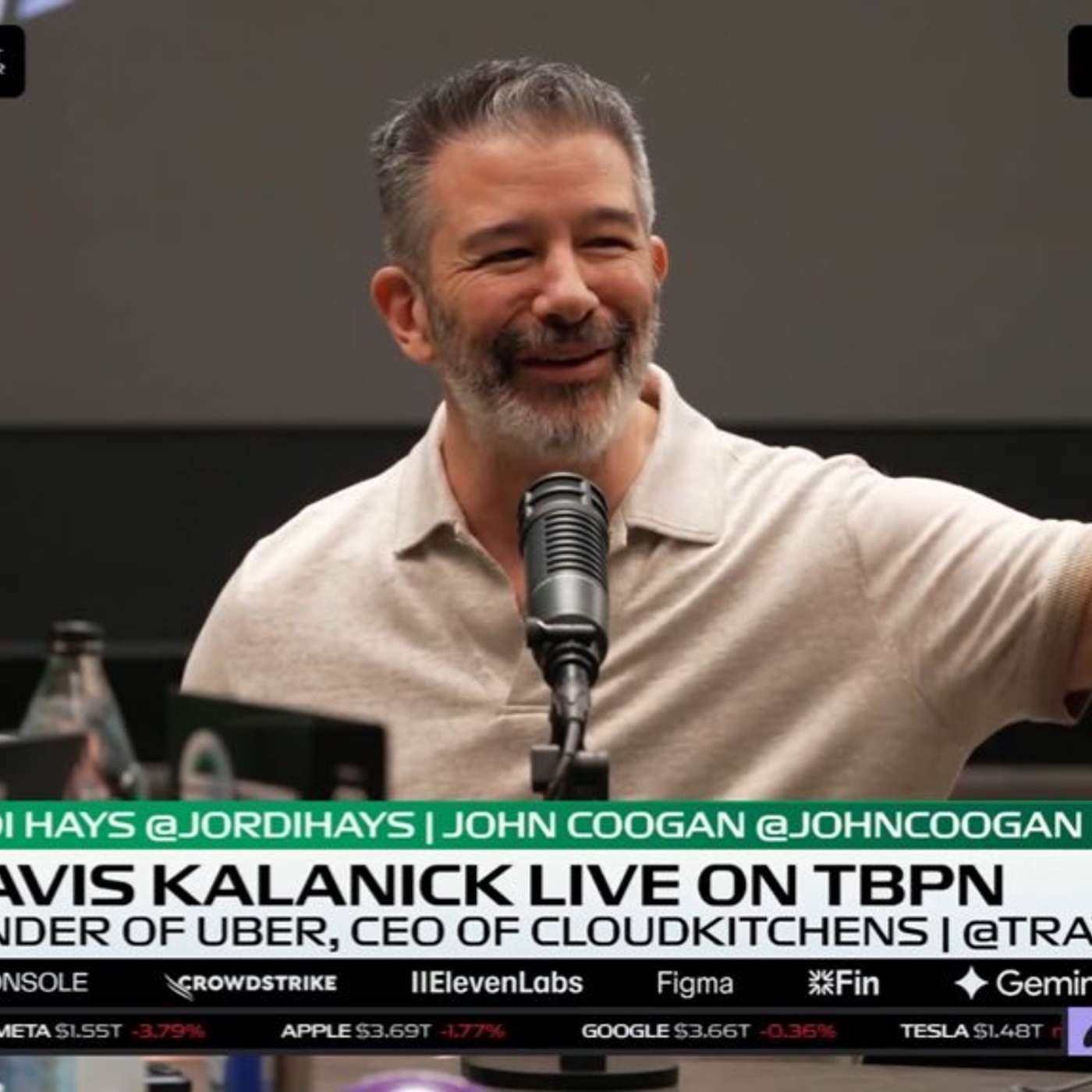
Kalanick uses a framework that maps core computing resources to the physical world: manufacturing is the CPU (manipulating atoms), real estate is storage (storing atoms), and transport is the network (moving atoms). This "digitizing the physical world" philosophy unites his work at Uber, CloudKitchens, and his new robotics ventures.

Related Insights
While language models understand the world through text, Demis Hassabis argues they lack an intuitive grasp of physics and spatial dynamics. He sees 'world models'—simulations that understand cause and effect in the physical world—as the critical technology needed to advance AI from digital tasks to effective robotics.

Founders are breaking down complex societal challenges like construction and energy into modular, repeatable parts. This "factory-first mindset" uses AI and autonomy to apply assembly line logic to industries far beyond traditional manufacturing, reframing the factory as a problem-solving methodology.

Co-founder Travis Kalanick pivoted Uber away from founder Garrett Camp's original, capital-intensive idea of buying a fleet of Mercedes. This critical shift to an asset-light platform model, connecting existing drivers with riders, was crucial for rapid, low-cost scalability.

Unlike Uber's network-effect moat, Adams is building defensibility through capital-intensive physical assets. By owning billions of dollars of real estate for its cloud kitchens, it creates a massive barrier to entry that is prohibitively expensive for competitors to replicate, ensuring a durable moat.
Kalanick posits that as AI automates most tasks, the remaining human-centric jobs (e.g., plumbing) will become the primary bottleneck for progress. This scarcity will make these roles the "long pole in the tent," dramatically increasing their economic value and earning potential until AGI arrives.
Kalanick compares his focus on food logistics to his early work in taxis, noting that both were seen as "boring" or "weird" ideas. He believes the best markets are often less competitive because they are difficult and unattractive to others, creating huge potential for founders who embrace the challenge.
With his bioelectrical engineering background, Dara Khosrowshahi frames the CEO role as a large-scale engineering challenge. He sees companies as machines run by people, where the leader's job is to design the system, set the right goals, and assemble the components to achieve a desired output.

The unprecedented speed and standardized scale of data center construction provides a unique proving ground to deploy and refine new automation, AI, and robotics technologies. Learnings from these fast-moving projects will then "spin out" to other large-scale industrial sectors like mining and manufacturing.
DoorDash's CEO frames the market as two battles: for digital attention (bits) and for facilitating the physical world (atoms). DoorDash focuses on moving atoms (goods) to complement the digital ecosystem, which clearly defines its strategic focus against other tech giants.

Kalanick's grand strategy is based on a framework where atoms are treated like bits. Manufacturing manipulates atoms (CPU), real estate stores them (Storage), and logistics moves them (Network). This model explains his career progression from Uber (Network) to Cloud Kitchens (Storage) and now robotics (CPU).