Get your free personalized podcast brief
We scan new podcasts and send you the top 5 insights daily.
The common mantra that every product must solve a problem is too narrow. Products like ice cream or Disney World succeed by satisfying a powerful desire or need, not just by alleviating a tangible pain point. This expands the canvas for innovation beyond mere problem-solving.

Related Insights
Founders misuse the Henry Ford quote to justify ignoring user research. It wrongly equates a customer's underlying problem (demand), which is supply-agnostic, with their desire for a specific solution (supply). True innovation serves existing demand with a better supply, like a car fulfilling the need to travel.

According to screenwriter Robert Towne, stories tap into two fundamental human drivers: achieving a cherished outcome or avoiding a negative one. This binary is a powerful lens for product development and marketing. Frame your offering to either fulfill a deep-seated aspiration or eliminate a persistent fear.
![Wolfgang Hammer - The Power of Story - [Invest Like the Best, EP.447] thumbnail](https://megaphone.imgix.net/podcasts/adaa55e4-bead-11f0-a5d6-a799713dc0a0/image/a76713c3a8fb2abf443f9164703734c5.jpg?ixlib=rails-4.3.1&max-w=3000&max-h=3000&fit=crop&auto=format,compress)
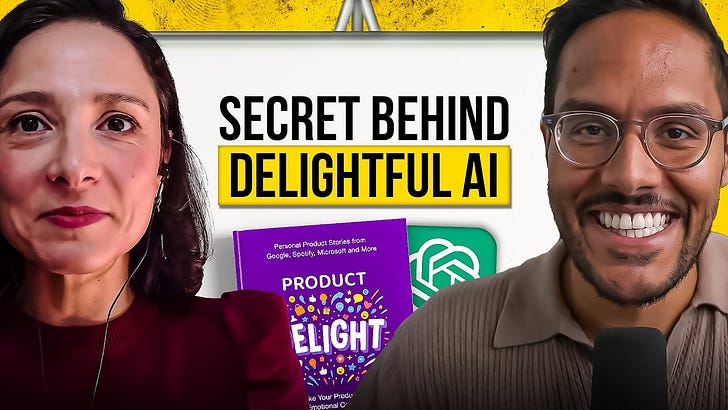
True differentiation comes from "deep delight," where emotional needs are addressed within the core functional solution. This is distinct from "surface delight" like animations or confetti, which are nice but fail to build the strong emotional connections that drive loyalty.
Whether an idea originates as a problem or a solution is less important than the rigorous validation process that follows. Success hinges on navigating this 'messy middle' to confirm the idea creates enough value that customers will pay for it, regardless of its origin.
Conventional innovation starts with a well-defined problem. Afeyan argues this is limiting. A more powerful approach is to search for new value pools by exploring problems and potential solutions in parallel, allowing for unexpected discoveries that problem-first thinking would miss.
In an era of diminished direct marketing, the old mantra "make something people want" is insufficient. The new imperative is to "make something people want to talk about." This shifts focus to creating products with inherent virality and word-of-mouth potential, turning customers into a marketing channel.

The founder of Billy Bob's Teeth, a gag gift, reframed his product as a "permission slip for people to be silly." This strategy gives a trivial product a deeper, more compelling purpose by connecting it to a fundamental human desire. This elevates the brand and makes the product more than just a novelty item.

Delight goes beyond surface-level features. It's about creating products that solve practical problems while also addressing users' emotional states, like reducing stress or creating joy. This is achieved by removing friction, anticipating needs, and exceeding expectations.

This reframes the fundamental goal of a startup away from a supply-side focus (building) to a demand-side focus (discovery). The market's unmet need is the force that pulls a company and its product into existence, not the other way around.
Move beyond listing features and benefits. The most powerful brands connect with customers by selling the emotional result of using the product. For example, Swishables sells 'confidence' for a meeting after coffee, not just 'liquid mouthwash.' This emotional connection is the ultimate brand moat.
