Get your free personalized podcast brief
We scan new podcasts and send you the top 5 insights daily.
The primary function of missile defense is not to achieve victory but to prevent a rapid defeat by thwarting initial attacks. This buys crucial time for offensive forces to neutralize threats by other means. While its absence can lose a war quickly, its presence alone is not a winning strategy.

Related Insights
Focusing on the cost of a single cheap drone versus an expensive interceptor missile is a flawed analysis. It ignores the total operational cost (fuel, personnel), the immense value of the asset being protected (e.g., a warship), and the catastrophic cost of mission failure.
Iran's military is prioritizing attacks on radar infrastructure across the Middle East. This is a strategic move to neutralize the technological superiority of US and Israeli air defense systems like Iron Dome and THAAD. By blinding the enemy first, even less sophisticated attacks can successfully get through.

The military is applying powerful AI software for intelligence and targeting, but the physical hardware—planes, missiles, and interceptors—was not designed for this new reality. This mismatch creates inefficiencies, such as using expensive Patriot missiles designed for jets to shoot down cheap drones, highlighting a hardware-software gap.

Modern asymmetric warfare is less about ground skirmishes and more about economic attrition through missile technology. Adversaries use extremely cheap drones and mines to exhaust the multi-million-dollar missile defense systems of better-equipped powers, creating a lopsided cost exchange.
The conflict reveals a critical vulnerability: nations burn through advanced interceptor missiles at a rate that vastly outpaces annual production. Firing two interceptors per incoming missile means that even well-stocked Gulf states could exhaust their pre-war supplies in days, exposing a major bottleneck in the defense supply chain.
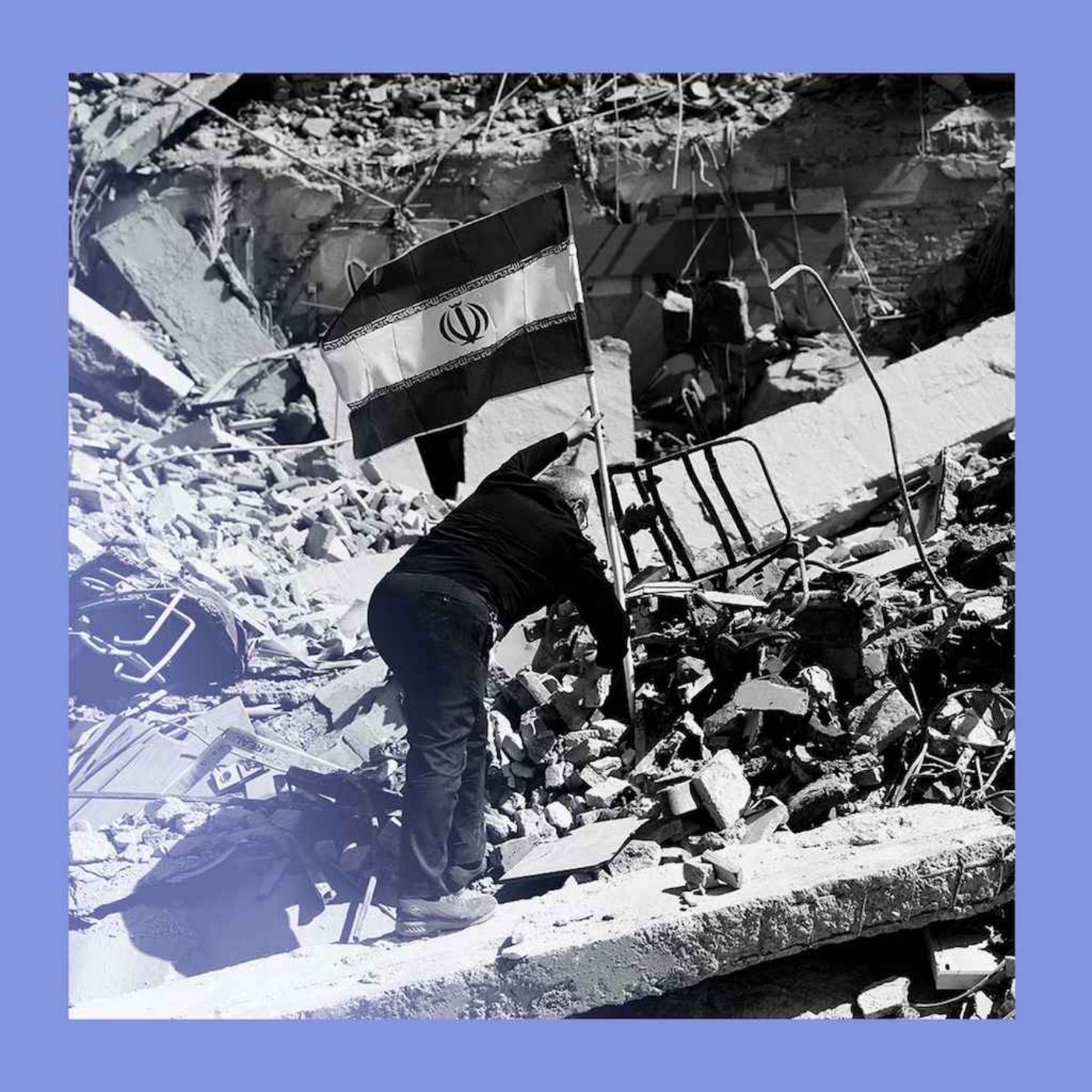
Contrary to expectations of a high-tech war, the conflict in Ukraine demonstrates enduring principles of warfare. The superiority of defense over offense, the difficulty of breakthroughs without air power, and the tendency toward attrition are all classic lessons that would be recognizable to strategists from past major conflicts.
The effectiveness of Ukrainian defense technology comes from its ability to dramatically lower the 'cost per shot' by orders of magnitude compared to legacy systems. This demonstrates that financial efficiency and adaptability, not just advanced features, are decisive on the modern battlefield.

To maintain a second-strike capability, a country doesn't need equally advanced AI. Low-tech countermeasures like decoys, covering roads with netting, or simply moving missile launchers more frequently can create enough uncertainty to thwart a sophisticated, AI-driven first strike.

AI targeting systems excel at generating vast target lists for rapid, shock-and-awe campaigns. However, they are currently being applied to a slower, attritional conflict. This misapplication turns operational excellence into a strategic dead end, where the machine simply produces more targets without a causal link to defeating the enemy.
In contemporary conflicts, the primary strategic objective is to gain information dominance by eliminating the opponent's ability to see. Targeting and destroying radar systems is the critical first move, as it blinds the enemy and makes all subsequent military assets vulnerable.