Get your free personalized podcast brief
We scan new podcasts and send you the top 5 insights daily.
Iran's military is prioritizing attacks on radar infrastructure across the Middle East. This is a strategic move to neutralize the technological superiority of US and Israeli air defense systems like Iron Dome and THAAD. By blinding the enemy first, even less sophisticated attacks can successfully get through.

Related Insights
Iran's strategy is not purely defensive. It is actively trying to escalate the conflict and draw in more countries by targeting other nations, such as firing a missile towards Turkey, a NATO member. This tactic aims to increase the political and military cost for the United States.

The conflict highlights a critical economic vulnerability in US defense strategy. The US is forced to use multi-million dollar missiles to counter Iranian drones that cost only $20,000. This massive cost imbalance demonstrates the power of asymmetric warfare and a significant strategic inefficiency for the US military.

A critical, unforeseen consequence of the US-Israel conflict with Iran is the direct impact on Ukraine's defense capabilities. Patriot missile systems intended to protect Ukraine from Russian strikes have been redeployed to the Middle East, leaving Kyiv more vulnerable and demonstrating the interconnectedness of global conflicts.

The US faces a severe economic disadvantage in the Middle East conflict. Iran uses $30,000 drones that can disable $160 million tankers, while US countermeasures involve $4 million Patriot missiles. This cost imbalance allows Iran to inflict massive economic damage cheaply, posing a significant strategic threat.

Contrary to common assumptions, the Gulf Cooperation Council (GCC) states have a higher density of advanced air defense systems, like Patriot and THAAD, than European NATO members on a per capita and per-kilometer basis. This highlights a significant shift in regional military investment and preparedness away from traditional Western powers.
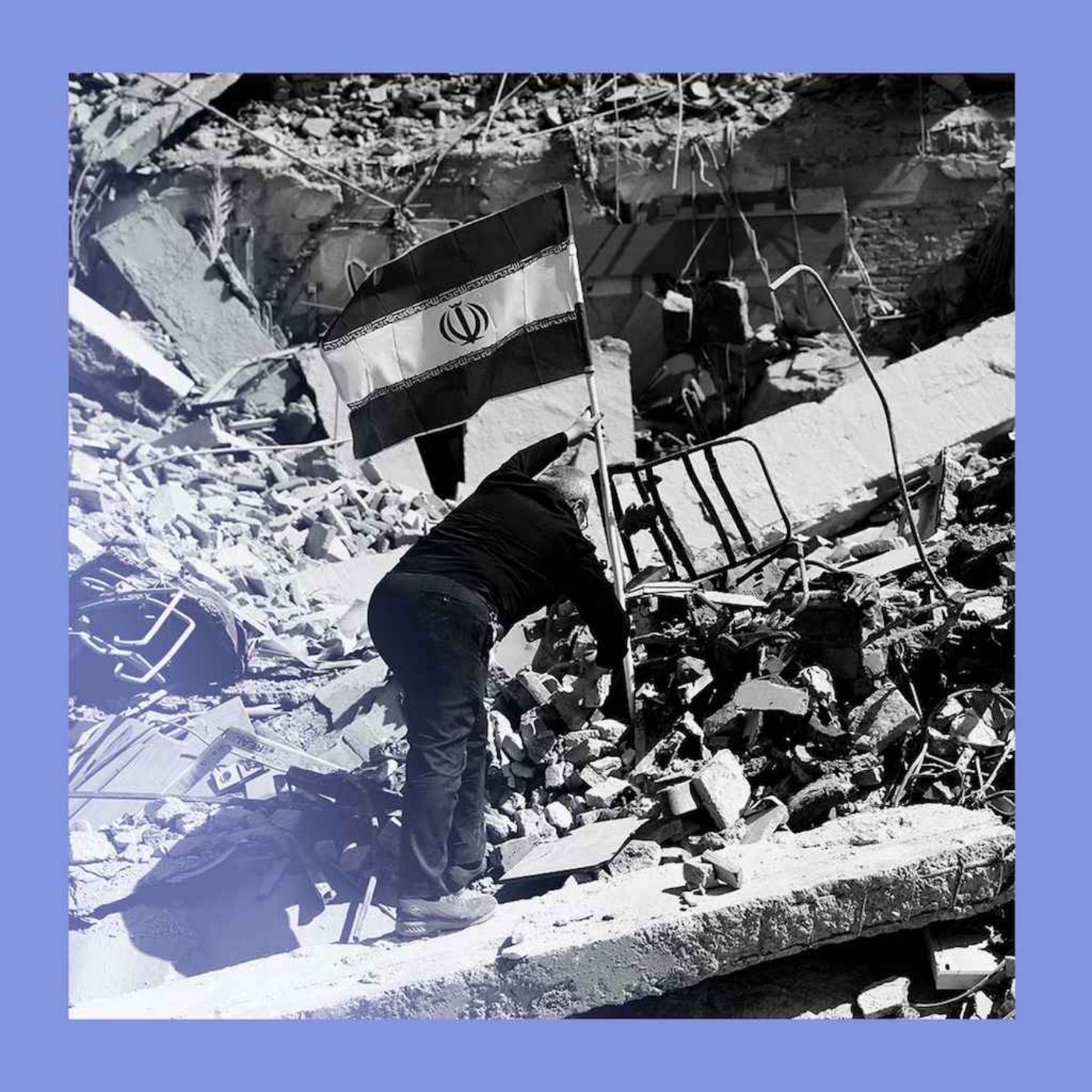
Iran's strategy isn't a quick military victory but a war of attrition. By accepting a long timeline and inflicting small but consistent damage, it aims to erode US domestic support for the war, especially in an election year, and outlast the current administration.

By forcing the U.S. to operate its air defense systems at scale, the conflict in Iran is inadvertently providing China with a treasure trove of intelligence. The Chinese can observe how these systems perform, identify weaknesses, and refine their own tactics for a potential future conflict.

The U.S. is deploying the "Lucas," a precise mass system ironically derived from Iran's own Shahid 136 drone. This demonstrates a rapid cycle of technological adaptation and counter-adaptation in modern warfare, effectively turning an adversary's innovation against them.
Iran's attacks on GCC nations are not random. They are a calculated strategy to force these states to divert capital from US AI investments towards domestic defense, thereby undermining the backbone of the US economy.

To maintain a second-strike capability, a country doesn't need equally advanced AI. Low-tech countermeasures like decoys, covering roads with netting, or simply moving missile launchers more frequently can create enough uncertainty to thwart a sophisticated, AI-driven first strike.
