Get your free personalized podcast brief
We scan new podcasts and send you the top 5 insights daily.
Complex tools like OpenClaw and Hermes, while too technical for mass adoption, are critical "incubatory cauldrons." Their early-adopter communities experiment with and discover the most useful interaction patterns for AI agents. This pioneering work directly informs the design of more user-friendly, mass-market products.

Related Insights
The rapid adoption of features like remote control and scheduled tasks by Anthropic, Perplexity, and Notion is not about copying the open-source OpenClaw project. Instead, it marks the industry's recognition of a new set of fundamental "primitives" for agentic AI: persistent, remotely accessible, and autonomous operation. These are becoming the new standard for AI interaction.
OpenAI's strategy for agents is a three-step journey: 1) Perfect agents for software engineering. 2) Provide open-ended tools for tinkerers to discover general use cases. 3) Use learnings from tinkerers to build highly productized, specific features for the mass market.
OpenClaw's rapid ascent to become the most-starred GitHub repo of all time shows massive developer enthusiasm for AI agents. However, its new user growth has plateaued, suggesting it's a powerful tool for technical users but has not yet been successfully productized for a mainstream, non-technical audience.

OpenClaw's declining hype doesn't signify failure but success as a trailblazer. Like the first airplane, it proved what was possible for agentic AI. This inspired a wave of more polished, user-friendly competitors that are now capturing the mainstream market, a common pattern where the pioneer isn't always the winner.
OpenClaw competitor Hermes is winning over developers with a unique feature: the agent writes its own "skills" (instruction sets) for new tasks. It also reflects on and combines these skills when idle, a process likened to human sleep, reducing manual setup for users and advancing agent autonomy.

While tech enthusiasts focus on powerful but complex agents like OpenClaw, Meta's Manus is gaining traction by offering a simplified, code-free version. This suggests mass-market adoption for AI agents hinges on ease of use and accessibility, not just technical capability.

The rapid succession of Claude's agent-like upgrades is a direct response to the capabilities demonstrated by the open-source project OpenClaw. This trend, termed 'Clawification,' highlights how the open-source community is now setting the pace for product development at major AI labs like Anthropic.
GrokBot's success stems from its intuitive, chat-based interface that abstracts away the technical complexity of managing AI agents. Unlike previous powerful but difficult tools, this ease of use is the critical factor for bringing agentic AI to a mainstream audience, finally realizing the promise of tools like OpenClaw.
OpenClaw is unlikely to achieve mainstream adoption, but its underlying architecture for autonomous, long-running tasks is a fundamental unlock. This "OpenClaw-style" capability will be integrated into focused consumer and business products, enabling a new wave of agentic software, rather than succeeding as a standalone horizontal tool.
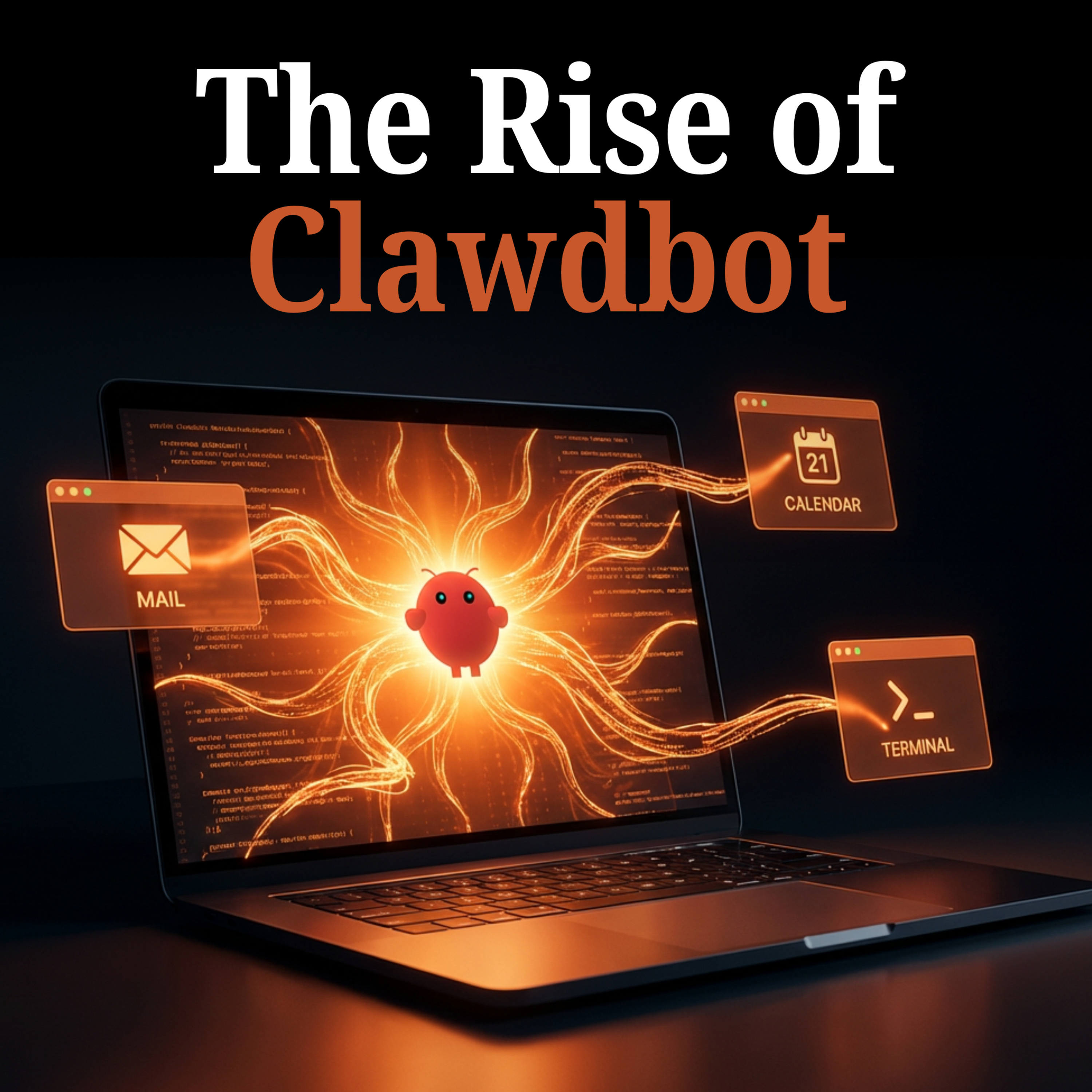
Clawdbot, an open-source project, has rapidly achieved broad, agentic capabilities that large AI labs (like Anthropic with its 'Cowork' feature) are slower to release due to safety, liability, and bureaucratic constraints.