Get your free personalized podcast brief
We scan new podcasts and send you the top 5 insights daily.
Food delivery is massive in China not just because of low labor costs, but because the local restaurant culture is so affordable that eating out is comparable to the cost of cooking at home. Combined with extreme urban density, this creates a fundamentally different and larger market than in the US.
Related Insights
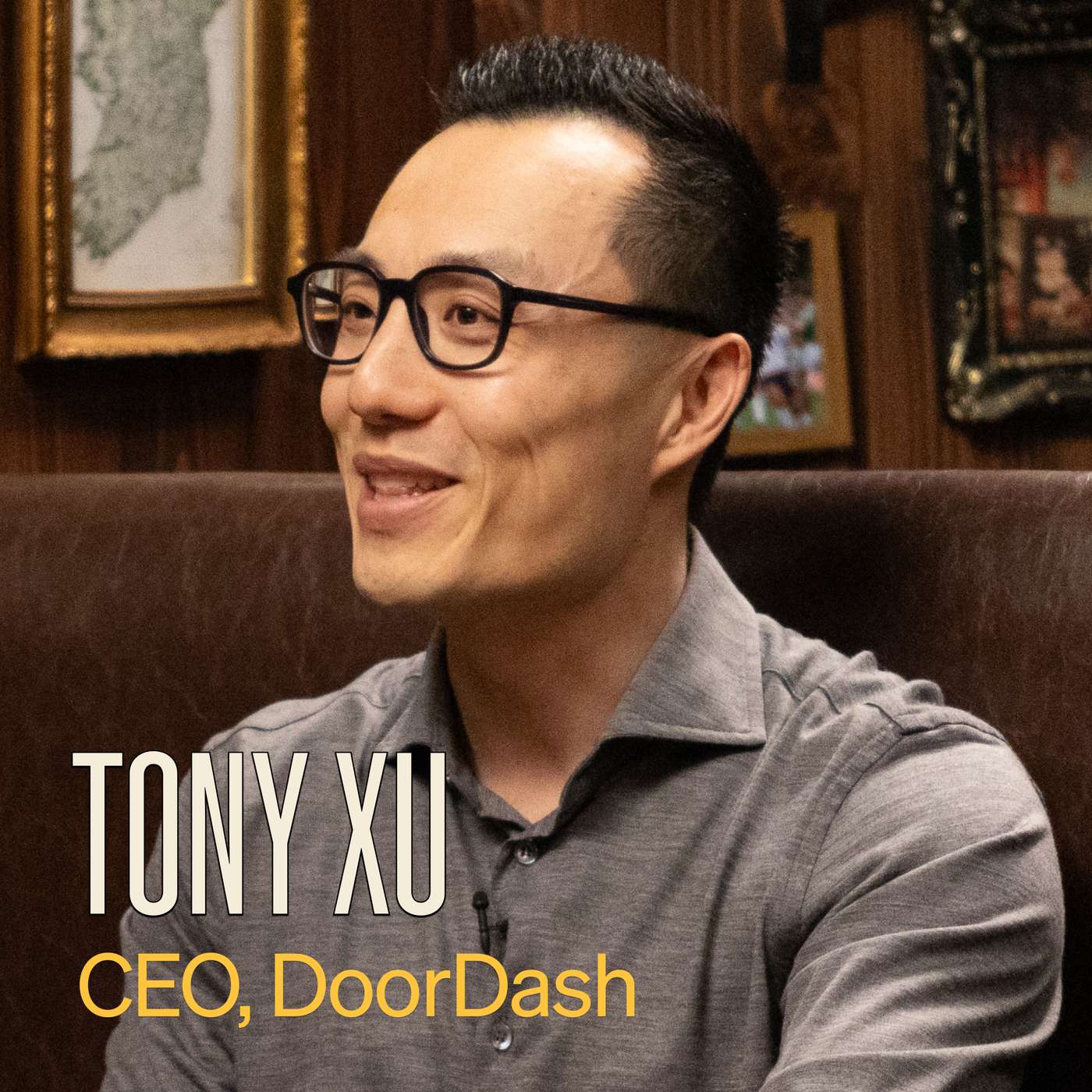
The narrative that successful tech platforms are simply "rent extractors" overlooks their fundamental value creation. DoorDash, for example, created a new market for at-home restaurant dining, massively increasing the addressable market for restaurants and creating new jobs for drivers, rather than just inserting itself into an existing transaction.

The pandemic served as a real-world stress test, revealing that business models less reliant on labor are inherently more resilient. During periods of labor shortages and wage inflation, franchises optimized for takeout and delivery with smaller staff requirements proved to be less risky and more efficient investments.

Dara Khosrowshahi predicts the restaurant industry is splitting. One path is pure utility, optimized for delivery via dark kitchens. The other is pure romance, focused on in-person hospitality and ambiance. Restaurants that fail to excel at one or the other and get stuck in the middle will lose share.

While competitors burned cash fighting over major hubs, delivery startup Fancy focused on Tier 2 cities. This strategy gave them a local monopoly, leading to far better unit economics and retention. This strong performance was a key factor in their acquisition by GoPuff.

According to Uber's CEO, the failure of quick commerce in the U.S. boils down to economics, not consumer interest. The model depends heavily on human labor in dark stores, which is too expensive in a high-wage market like the U.S., unlike in developing countries where it has thrived.
A striking market dynamic is unfolding in China's fast-food sector. Global brands, having saturated major cities, are pushing into rural areas. Conversely, domestic Chinese competitors are using their experience in smaller cities as a launching pad to challenge the global giants in major urban centers.

The global expansion playbook is reversing. Chinese brands like Luckin Coffee, having perfected low-cost, tech-integrated models in a hyper-competitive home market, are now expanding into the West. They are attempting a "reverse Starbucks," bringing their operational efficiency and aggressive pricing to markets like New York.
Rising labor costs are forcing restaurants to abandon the middle ground. They must now choose to either excel at high-touch, in-person service and hospitality or optimize for efficiency as a pure food production and manufacturing facility for takeout and delivery.
A takeaway order leverages a restaurant's fixed costs (rent, most labor) far more efficiently than a dine-in order. While a dine-in dollar might net 10 cents of profit, an incremental delivery dollar can generate 3-5 times that margin because it avoids tying up table space and front-of-house staff.
Criticizing fast food consumption ignores a key economic reality for many: it provides the cheapest calories available. The notion that cooking fresh, natural ingredients at home is more affordable is a myth, especially when factoring in time costs for those working multiple jobs.
