Get your free personalized podcast brief
We scan new podcasts and send you the top 5 insights daily.
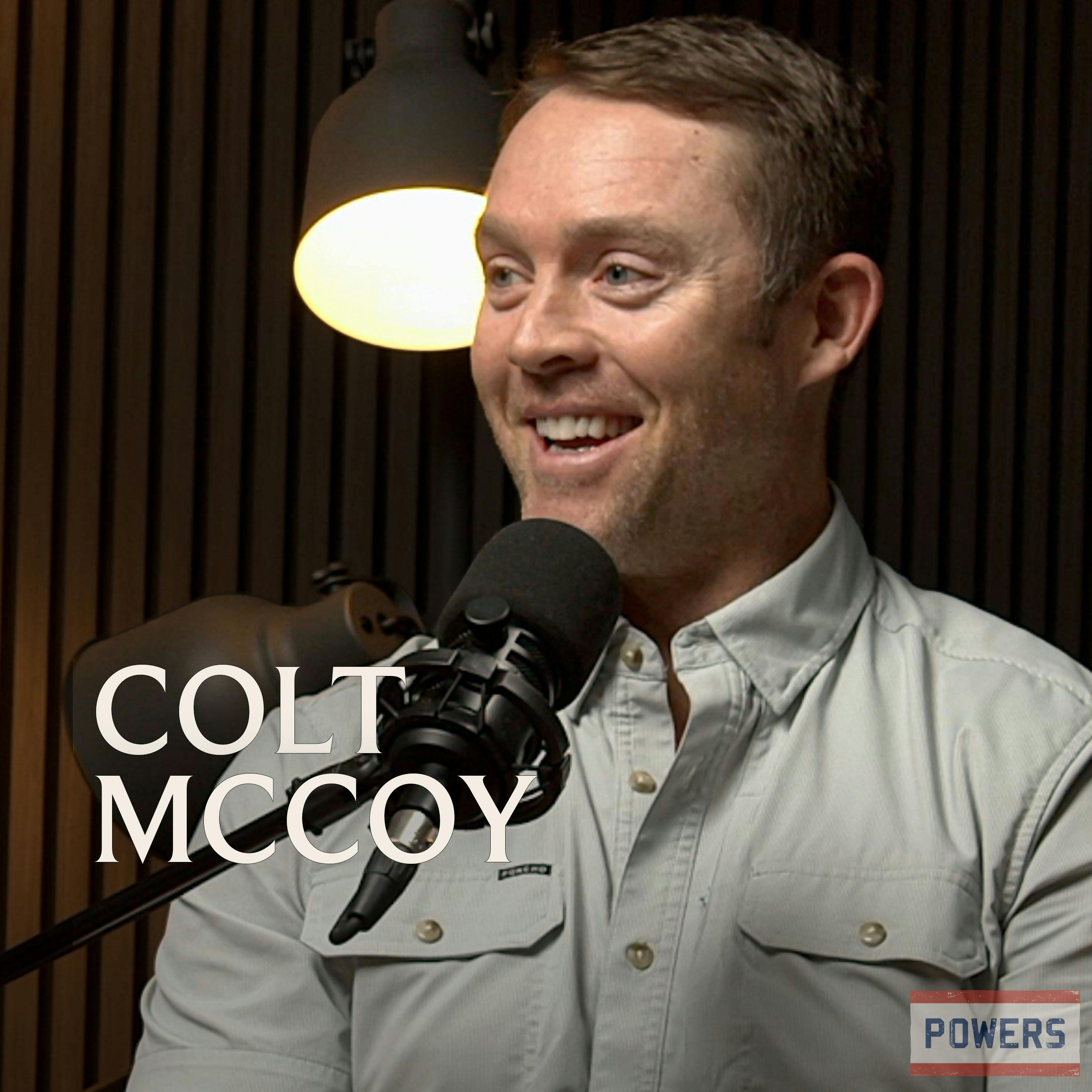
When retiring from the NFL, Colt McCoy and his wife used a whiteboard to map out pros and cons of future paths, prioritizing family goals over defaulting to a coaching career. This structured, patient process of alignment led them to a new city and a new career in real estate.
Related Insights
At age 44, Matt Spielman reframed his career pivot not as a risk, but as a mitigation of a greater one: staying on the wrong path. He believed waking up at 55 having not pursued his passion would be a far worse outcome than the uncertainty of starting his coaching practice.
![[REPLAY] Matt Spielman – Executive Coaching in Asset Management (Capital Allocators, EP.210) thumbnail](https://static.libsyn.com/p/assets/f/b/7/6/fb76e1c8bfb69e8dd959afa2a1bf1c87/CA_Square_logo_light_background_6.26.24.jpg)
Pursuing a more fulfilling career doesn't require risking financial ruin. Instead of taking a blind leap, you can vet a new direction by "trying it on"—shadowing professionals, conducting informational interviews, and testing the work in small ways to understand its reality before making a full transition.

Matthew McConaughey feared that making family his top priority would diminish his work ethic. Instead, he found that with his identity less singularly focused on his career, the pressure was off, and he actually performed better at his job. Shifting your core identity can enhance professional output.

Instead of "burning the ships," treat potential career changes as experiments. By starting a new venture as a side hustle without financial pressure, you can explore your curiosity, confirm it's a good fit, and build a "safety net" of confidence and proof before making a full leap.

Colt McCoy's ability to lead his college team in rushing was a key to his success. However, in the faster, more physical NFL, that style was a liability. He had to reinvent himself as a quick-decision pocket passer, demonstrating that advancing requires adapting or replacing previously successful skills.
Borrowing a concept from real estate, constantly ask yourself: 'What is the highest and best use of me today?' This framework encourages you to leverage your cumulative experience to make significant, non-linear career leaps, rather than just taking the next logical, incremental step.
When considering a major career change, it's easy to get trapped by the "sunk cost" of your existing industry expertise and identity. The key to making a successful long-term pivot is to consciously ignore what you've built in the past and focus on what will bring fulfillment and growth over a multi-decade career.

Many professionals chase titles and salaries ("acquisition"). True career satisfaction comes from choosing roles that align with personal values and desired lifestyle ("alignment"). Chasing acquisition leads to a short-term sugar rush of success followed by professional emptiness.

People often under-plan retirement because they view it as an endpoint. A more effective approach is to reframe it as a transition 'to' something new. This encourages proactive exploration and planning for a next chapter, preventing a post-career crisis of meaning.

When all immediate career goals are met, the next step isn't another small target but a larger visioning exercise: "What will my life and impact look like in 20 years?" This long-term re-framing creates a new, more profound sense of purpose that drives the next chapter of a career.
