Get your free personalized podcast brief
We scan new podcasts and send you the top 5 insights daily.
For serious writers, the primary objection to AI-generated text is not about quality but the circumvention of the thinking process. Writing is how ideas are refined and arguments are tested. An LLM executing an outline removes crucial steps where a writer's unique insight is developed.

Related Insights
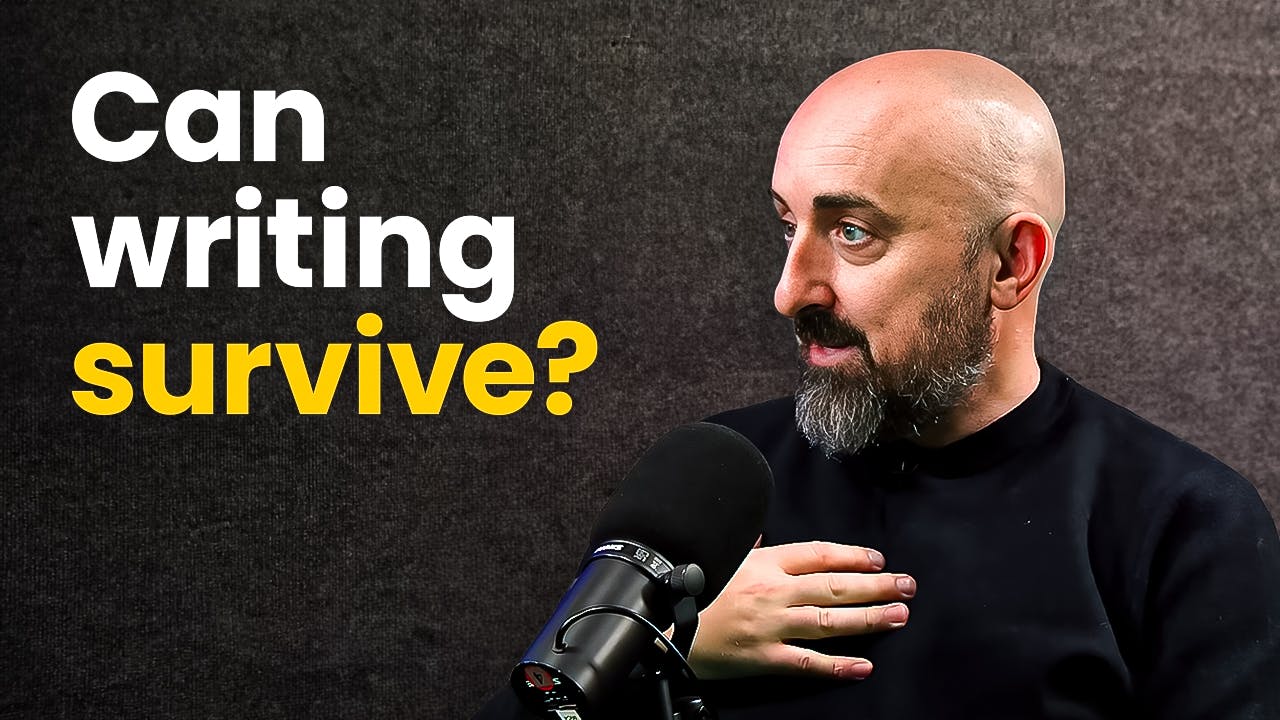
Medium's CEO argues that writing's future is secure because its core function is the process of structured thinking, not just content output. The act of articulating ideas reveals flaws and deepens understanding for the writer—a cognitive benefit that delegating to AI would eliminate.
True creative mastery emerges from an unpredictable human process. AI can generate options quickly but bypasses this journey, losing the potential for inexplicable, last-minute genius that defines truly great work. It optimizes for speed at the cost of brilliance.

The true danger of LLMs in the workplace isn't just sloppy output, but the erosion of deep thinking. The arduous process of writing forces structured, first-principles reasoning. By making it easy to generate plausible text from bullet points, LLMs allow users to bypass this critical thinking process, leading to shallower insights.

Language models often prematurely generate final outputs. To foster deeper thinking, create a dedicated 'thinking partner' sub-agent or use explicit negative constraints, instructing the AI to only ask questions and organize ideas, not write drafts or create outlines.

The value of a corporate or government memo often lies in the rigorous thinking process the author underwent. If an LLM generates the memo, it raises concern that a crucial thought process was skipped, leading to a form of organizational deskilling where the proof of work is lost.
AI excels at replicating patterns from its training data. However, top-tier authors provide value by subverting expectations and introducing surprising connections—a skill rooted in creative, pattern-breaking thought that AI struggles with. The act of writing is the act of thinking, which can't be outsourced.

Historically, well-structured writing served as a reliable signal that the author had invested time in research and deep thinking. Economist Bernd Hobart notes that because AI can generate coherent text without underlying comprehension, this signal is lost. This forces us to find new, more reliable ways to assess a person's actual knowledge and wisdom.

The process of writing is an invaluable tool for refining your ideas and achieving clarity of thought. Relying on LLMs to generate text for you bypasses this critical thinking process, ultimately hindering your own intellectual growth and ability to articulate complex concepts.

Writing is not just the documentation of pre-formed thoughts; it is the process of forming them. By wrestling with arguments on the page, you clarify your own thinking. Outsourcing this "hard part" to AI means you skip the essential step of developing a unique, well-reasoned perspective.

The act of writing is not just about producing words; it's a rigorous process of structuring thoughts and building knowledge. Offloading this 'hard work' to AI conveniences away the cognitive benefit, turning people from active creators and thinkers into passive observers and editors.
