Get your free personalized podcast brief
We scan new podcasts and send you the top 5 insights daily.
The loud, crowded environment of football matches offered a sanctuary for anti-apartheid activists. While the government banned political gatherings, the chaos of the games allowed activists to meet, converse, and organize, undermining the state's surveillance and censorship efforts.

Related Insights
The primary functions of protest are to publicly signal that a situation is not normal and to act as an incubator for building practical infrastructure, like the carpooling network during the Montgomery bus boycott. It is a gateway to organized, sustained action, not just a performative measure.

To become more than the sum of their parts, fragmented activist groups need an umbrella formation. Historical examples like South Africa's United Democratic Front and similar alliances in Chile and South Korea show how a coordinating body can give strategic shape and greater power to a broad-based democracy movement.

In cases like South Africa, where security forces are unlikely to defect, the business and corporate elite become the linchpin for change. A combination of boycotts, strikes, and international divestment pressured the business class, which in turn pressured the pro-apartheid party to reform, leading to a democratic transition without a civil war.
The goal of nonviolent resistance is not to "melt the heart of the dictator" but to strategically create defections within their pillars of support. By growing large and diverse, a movement builds direct ties to elites in business, media, and security, systematically shredding their loyalty to the regime.

Protests are not just single events; they create networks and invest participants emotionally, laying the groundwork for sustained organizing, voter registration, and future turnouts.

Dictatorships can tolerate individual criticism but actively suppress mechanisms that create common knowledge, like public assemblies or organized online groups. They understand that power rests on preventing citizens from realizing that their grievances are shared. Once dissent becomes common knowledge, coordinated revolt is possible, which no regime can withstand.

The primary value of protests isn't just cinematic outrage; it's serving as a gateway for deeper organizing. Demonstrations allow individuals to connect with the groups that form the backbone of sustained political action, creating lasting, though often unseen, infrastructure.

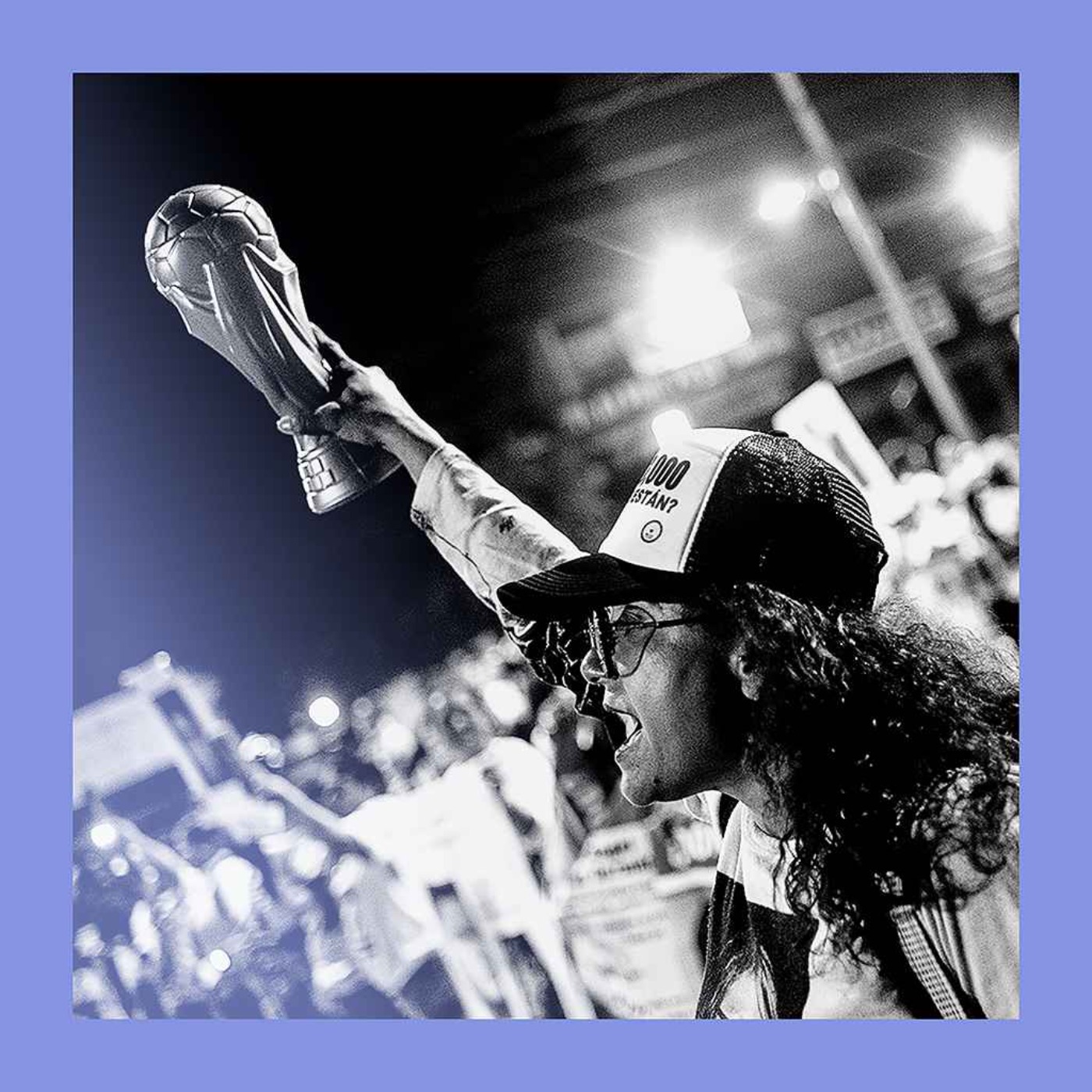
Groups like teachers and families of the 'disappeared' are leveraging the international media attention from the World Cup to pressure the Mexican government on domestic issues, turning the global spectacle into a platform for their causes.
Physically shouting down a speaker offers a temporary, local victory. However, the act of suppression is often recorded and shared, reaching a far larger 'audience' online. This audience frequently reacts against the suppression, giving the original message more power than it would have had otherwise.

Items from the daily lives of black working-class South Africans, like miners' helmets (Makarapas) and shift-change sirens, were brought into stadiums and transformed into iconic fan gear. This demonstrates how authentic fan culture can organically arise from repurposing everyday objects connected to a community's labor identity.