Get your free personalized podcast brief
We scan new podcasts and send you the top 5 insights daily.
While the UK's new government seeks to reset its relationship, the EU is preoccupied with larger issues like Russia and Trump. Brussels is unwilling to grant significant benefits without the UK accepting major obligations like budget payments and freer movement, making any meaningful rapprochement unlikely.

Related Insights
Major European allies like the UK and France face a "lethal problem" where raising defense spending to meet US-led targets could trigger a bond market revolt. This fiscal constraint, coupled with voter opposition to tax hikes, makes meeting these commitments politically and economically untenable.

The unified fear of Russia is compelling Europe to pivot its economic focus towards industrial and defense manufacturing. This is a significant strategic shift for a region recently more focused on regulation and legacy industries, potentially revitalizing its industrial base.
The UK is leveraging its post-Brexit autonomy to create a more favorable regulatory environment for AI and tech compared to the EU. This "pro-business" pragmatism, demonstrated during a recent state visit, has successfully attracted tens of billions in investment commitments from US tech giants like Microsoft, Google, and NVIDIA.

With the U.S. stepping back from its traditional leadership role, European countries are creating new, direct alliances to ensure their own security. A notable example is the emerging UK-Scandinavia-Baltic-Poland axis, which signals a fundamental shift in the continent's geopolitical architecture away from a singular reliance on Washington.

UK Sterling weakened despite news that personal income tax hikes might be avoided in the upcoming budget. This counterintuitive reaction, paired with rising Gilt yields, signals that investors are more concerned about the government's fiscal discipline and policy uncertainty than they are optimistic about potential short-term stimulus.

Sterling's reaction to potential UK budget options is "any news is bad news." Even less-damaging proposals cause weakness because the market understands any policy will result in fiscal tightening, forcing the Bank of England to react dovishly.
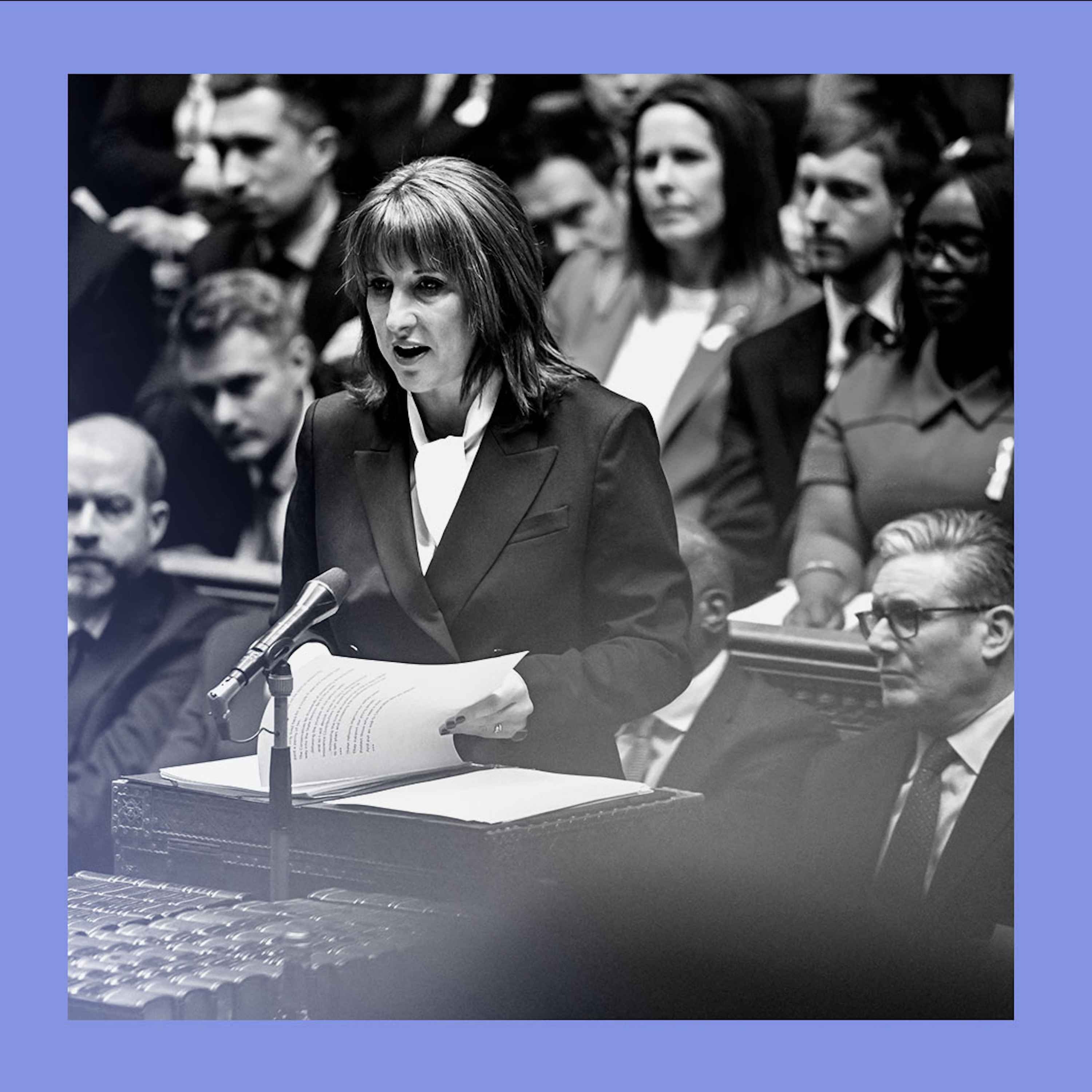
Despite accurately identifying severe economic and social challenges facing Britain, Keir Starmer's Labour government has proposed policies considered too small and shallow. There is a significant mismatch between the gravity of his diagnosis and the scale of his proposed solutions, leading to criticism that his administration is not meeting the moment.

Europe faces a dual threat: an aggressive Russia waging hybrid warfare on its eastern flank, and a Trump-led America that actively prefers a fragmented, weaker Europe. A disunified EU allows the U.S. to cut more favorable bilateral deals, leaving Europe vulnerable from both sides without its traditional transatlantic security guarantee.

The administration's aggressive, unilateral actions are pushing European nations toward strategic autonomy rather than cooperation. This alienates key partners and fundamentally undermines the 'Allied Scale' strategy of building a collective economic bloc to counter adversaries like China.

Despite claiming growth is its top mission, the UK government is pursuing anti-growth measures. These include making permanent residency harder to obtain, which limits skilled migration, and passing employment bills that increase the difficulty and cost of hiring, directly undermining business expansion.