Get your free personalized podcast brief
We scan new podcasts and send you the top 5 insights daily.
Complex AI tasks often require temporary infrastructure, such as a database for a one-off analysis. Instead of a lengthy setup, use APIs (like Railway's) to programmatically create a database, perform the task with an AI agent, and then tear it down, making data work dramatically faster.
![Claude Code marketing masterclass [from idea to making $$] thumbnail](https://assets.flightcast.com/workspaces/vde7jbg9rfhsyiw9o46f9sj8/podcasts/ordbkg8yojpehffas7vr7qpc/t8c97hs8oy7a2xnobsfu5p42.jpg)
Related Insights
Tools like Git were designed for human-paced development. AI agents, which can make thousands of changes in parallel, require a new infrastructure layer—real-time repositories, coordination mechanisms, and shared memory—that traditional systems cannot support.

To build a multi-billion dollar database company, you need two things: a new, widespread workload (like AI needing data) and a fundamentally new storage architecture that incumbents can't easily adopt. This framework helps identify truly disruptive infrastructure opportunities.

The shift toward code-based data pipelines (e.g., Spark, SQL) is what enables AI-driven self-healing. An AI agent can detect an error, clone the code, rewrite it using contextual metadata, and redeploy it to the cluster—a process that is nearly impossible with proprietary, interface-driven ETL tools.

For tasks that don't require immediate results, like generating a day's worth of social media content, using batch processing APIs is a powerful cost-saving measure. It allows agents to queue up and execute large jobs at a fraction of the price of real-time generation.

Directly connecting an AI agent to a platform's API (e.g., Facebook Ads) is risky. API rate limits and pagination mean the agent might only analyze a fraction of your data, leading to flawed decisions. A data warehouse is essential to provide a complete, reliable dataset for the AI to analyze.
A free trial for an AI agent hosting service revealed an unexpected user behavior: spinning up powerful AI agents for specific, time-bound tasks (like a coding project or planning a trip) and then letting them self-destruct. This concept of temporary agents opens up new possibilities beyond persistent personal assistants.

The primary value of AI app builders isn't just for MVPs, but for creating disposable, single-purpose internal tools. For example, automatically generating personalized client summary decks from intake forms, replacing the need for a full-time employee.

Instead of integrating with existing SaaS tools, AI agents can be instructed on a high-level goal (e.g., 'track my relationships'). The agent can then determine the need for a CRM, write the code for it, and deploy it itself.
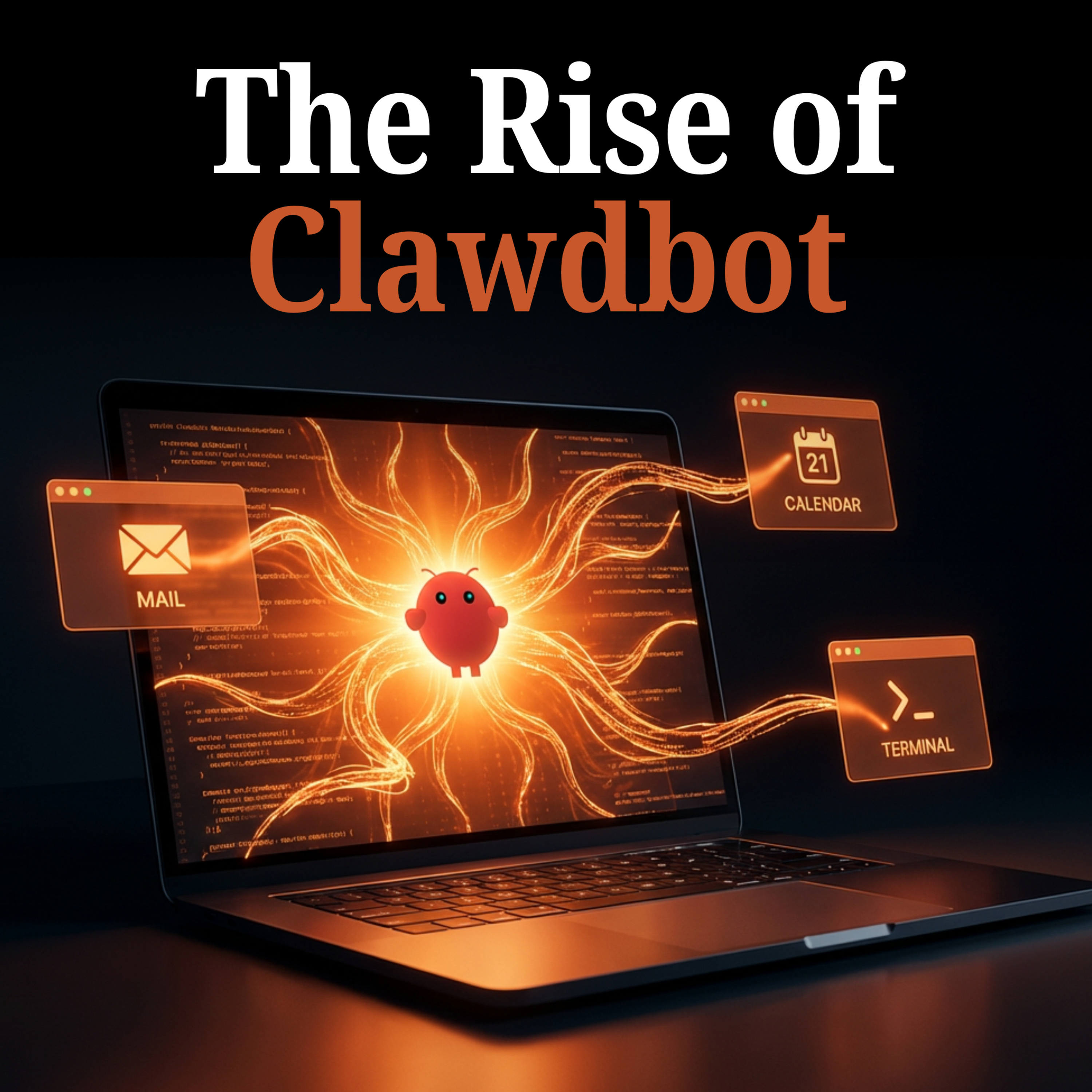
The true capability of AI agents comes not just from the language model, but from having a full computing environment at their disposal. Vercel's internal data agent, D0, succeeds because it can write and run Python code, query Snowflake, and search the web within a sandbox environment.

As AI agents evolve from information retrieval to active work (coding, QA testing, running simulations), they require dedicated, sandboxed computational environments. This creates a new infrastructure layer where every agent is provisioned its own 'computer,' moving far beyond simple API calls and creating a massive market opportunity.
