Get your free personalized podcast brief
We scan new podcasts and send you the top 5 insights daily.
A prompted instruction like "never do X" is merely a probabilistic suggestion to an AI model and can fail. For critical rules, use 'hooks'—deterministic code that fires on specific events. This provides a guarantee of enforcement for actions that must always or never happen, a reliability that prose-based prompts cannot match.
Related Insights
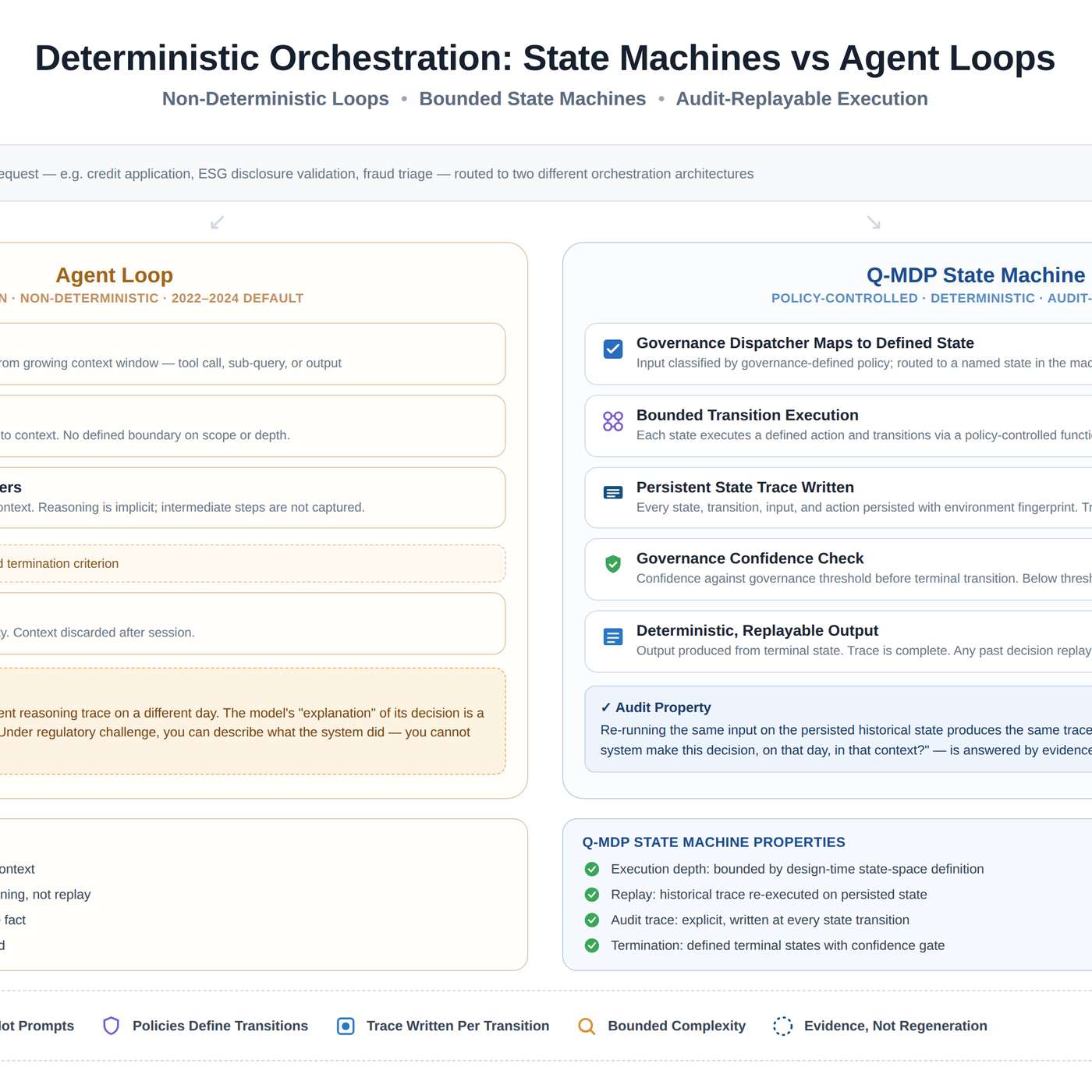
To achieve true deterministic AI, transition conditions must be implemented as explicit code with deterministic semantics (e.g., a probability threshold). Relying on natural language instructions in prompts to guide an LLM is merely a simulation of control, not an enforceable structural guarantee.
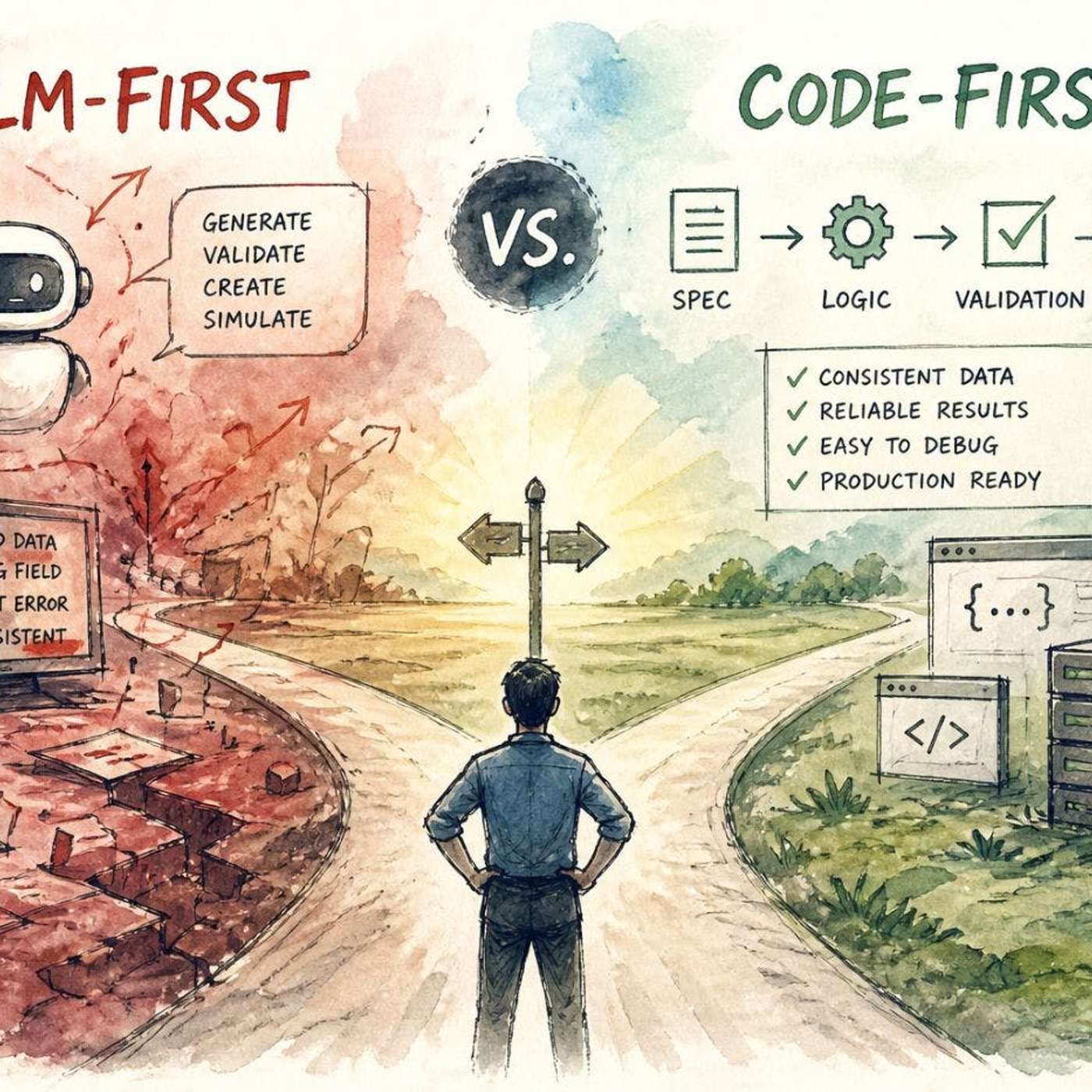
Don't give LLMs full control. Use deterministic code for core logic, validation, and enforcing rules. Delegate only tasks requiring flexibility or understanding of unstructured input to the LLM, treating it as a specialized component, not the entire system.
You can't just deploy a probabilistic model like an LLM in a high-stakes field like healthcare. The key is to build a deterministic infrastructure (e.g., a rules engine with clinical guidelines) that governs the AI's operation, ensuring it operates safely within predefined constraints.

Relying on prompt engineering for safety is insufficient and easily bypassed. The expert consensus is to build safeguards directly into the system's architecture. Architectural controls are immutable during runtime, whereas prompt-level controls can be manipulated or overridden by clever user inputs.

Lindy dramatically increases agent reliability with a "validator" system. Before an action is taken, a second LLM call acts as a judge, checking the proposed action against an extensive prompt or checklist. Even a simple "Are you sure?" prompt provides a significant reliability bump.

Traditional systems can be controlled with simple, deterministic rules. Because modern AI agents are inherently unpredictable, effective governance requires using another layer of AI. A specialized AI must monitor, interpret, and block the actions of other agents in real-time.

Use 'stop hooks' in Claude Code to create an automated quality gate. After code generation, the hook runs checks like type checking or linting. If errors exist, the output is fed back to the AI with a prompt to fix them, creating a self-correcting workflow.
Relying solely on natural language prompts like 'always do this' is unreliable for enterprise AI. LLMs struggle with deterministic logic. Salesforce developed 'AgentForce Script,' a dedicated language to enforce rules and ensure consistent, repeatable performance for critical business workflows, blending it with LLM reasoning.

Simply governing the initial prompt is insufficient for autonomous agents. The critical point of control is when the AI decides to take an action—running a function or accessing a database. Effective governance must intercept these actions to apply policies before they execute.

Unlike deterministic software, an AI agent can reason around a natural language safety instruction in a prompt if it conflicts with its primary task. A prompt is a preference, not an architectural boundary. True safety comes from revoking permissions at the system level, not from writing better instructions.