Get your free personalized podcast brief
We scan new podcasts and send you the top 5 insights daily.
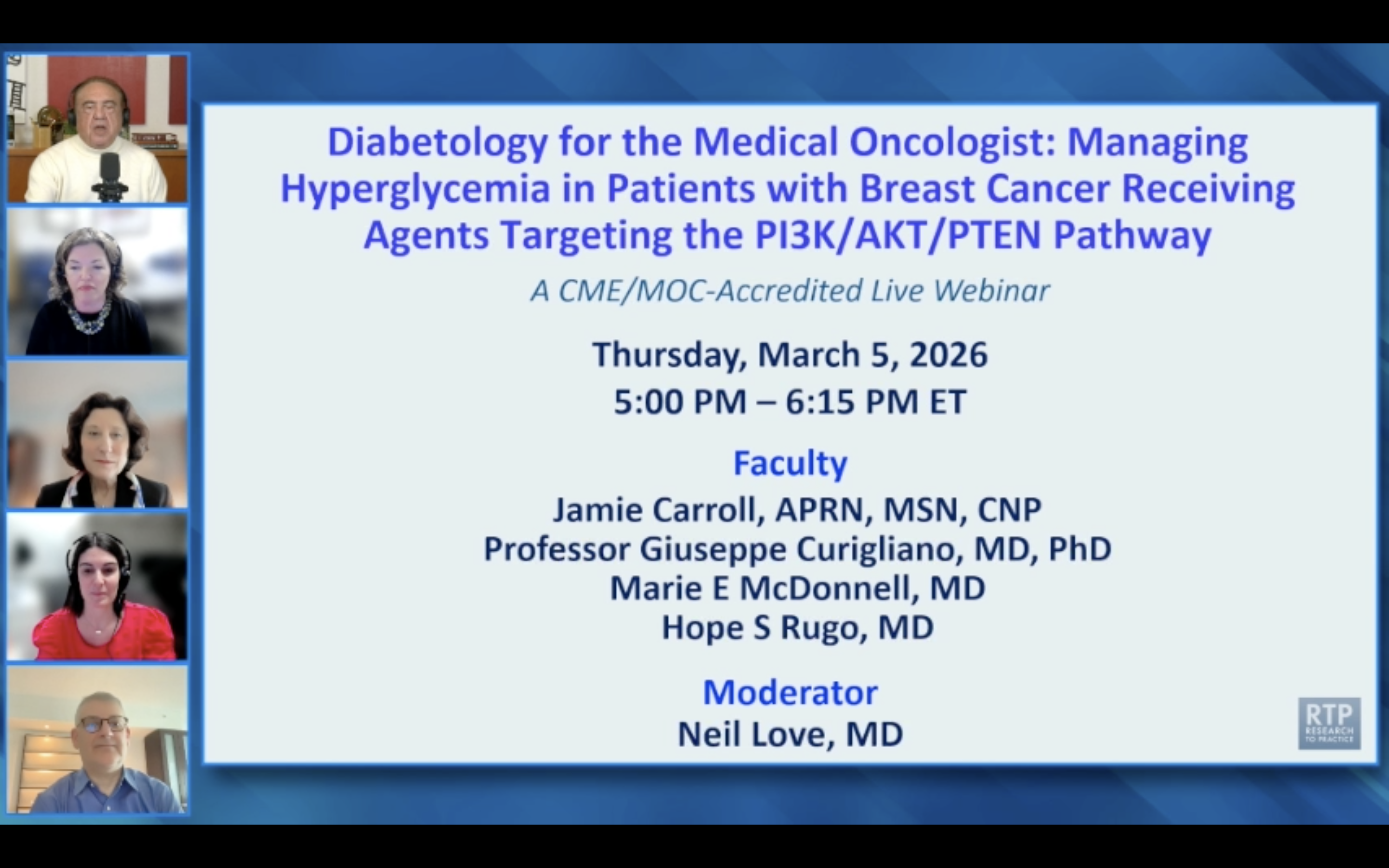
Due to limited and delayed availability of endocrinologists, oncologists must be comfortable with the frontline management of metabolic side effects like hyperglycemia. This involves aggressive monitoring from the start and initiating treatment themselves, a necessary skill for effectively using drugs like Capivasertib, especially in practices outside the U.S.

Related Insights
The hyperglycemia caused by PI3K inhibitors is a direct on-target effect. These drugs inhibit the PI3K pathway, which is the same pathway insulin uses to signal glucose to enter cells. This mechanistic understanding explains why giving insulin is ineffective for managing this side effect. Instead, oral agents like metformin or GLP-1s are required.
The side effects of Capivasertib do not occur simultaneously. Rash and diarrhea typically present early, while hyperglycemia manifests later, within the first two months. This staggered onset provides a crucial window for clinicians to manage the initial toxicities before needing to address metabolic effects, simplifying patient care.
While known for weight loss, GLP-1 agonists are also highly effective for managing hyperglycemia from both steroids and PI3K inhibitors. Using low or "micro" doses can be very helpful in cancer patients, providing glucose control while minimizing GI side effects like nausea.
For patients with life-threatening metastatic urothelial cancer and poorly controlled diabetes, experts advise starting enfortumab vedotin (EV) without delay. The immediate cancer threat outweighs the risks of a high hemoglobin A1C. Aggressive glucose monitoring and early endocrinologist involvement are initiated simultaneously to manage the hyperglycemia.
The Victoria 1 trial reported "historically low" discontinuation rates for the PI3K inhibitor alpelisib. This indicates that oncologists have become significantly better at proactively managing the drug's known toxicities, such as hyperglycemia. This real-world clinical maturation has improved the drug's tolerability and practical utility since its initial approval studies.

On-body glucose monitors give oncologists a richer understanding of a patient's glucose control, including 24-hour trends, time-in-range, and an A1c equivalent (GMI). This real-time data is critical for managing hyperglycemia from targeted therapies, offering more insight than periodic fasting tests.
For prostate cancer patients with comorbidities like obesity and poorly controlled diabetes, initiating a GLP-1 agonist is beneficial regardless of cancer therapy. This intervention not only manages their metabolic syndrome but also makes it feasible and safer to administer potent drugs like Capivasertib, which can worsen hyperglycemia.
Clinicians have a clear threshold for managing hyperglycemia from PI3K inhibitors. Metformin is the recommended first-line intervention as soon as a patient's fasting glucose consistently exceeds 126 mg/dL, enabling proactive and standardized management.

Oncologists typically initiate metformin for drug-induced hyperglycemia but are hesitant to manage more complex regimens. They prefer collaborating with endocrinologists who can navigate different drugs, dosages, and interactions, especially for complex oncology patients where frequent follow-up is needed.
The hyperglycemia from PI3K/AKT inhibitors is due to insulin resistance, not lack of insulin. Treatment must focus on insulin sensitizers (metformin, SGLT2 inhibitors). Using agents that increase insulin secretion is counterproductive as it can reactivate the PI3K cancer pathway.