Get your free personalized podcast brief
We scan new podcasts and send you the top 5 insights daily.
On-body glucose monitors give oncologists a richer understanding of a patient's glucose control, including 24-hour trends, time-in-range, and an A1c equivalent (GMI). This real-time data is critical for managing hyperglycemia from targeted therapies, offering more insight than periodic fasting tests.
Related Insights
While known for weight loss, GLP-1 agonists are also highly effective for managing hyperglycemia from both steroids and PI3K inhibitors. Using low or "micro" doses can be very helpful in cancer patients, providing glucose control while minimizing GI side effects like nausea.
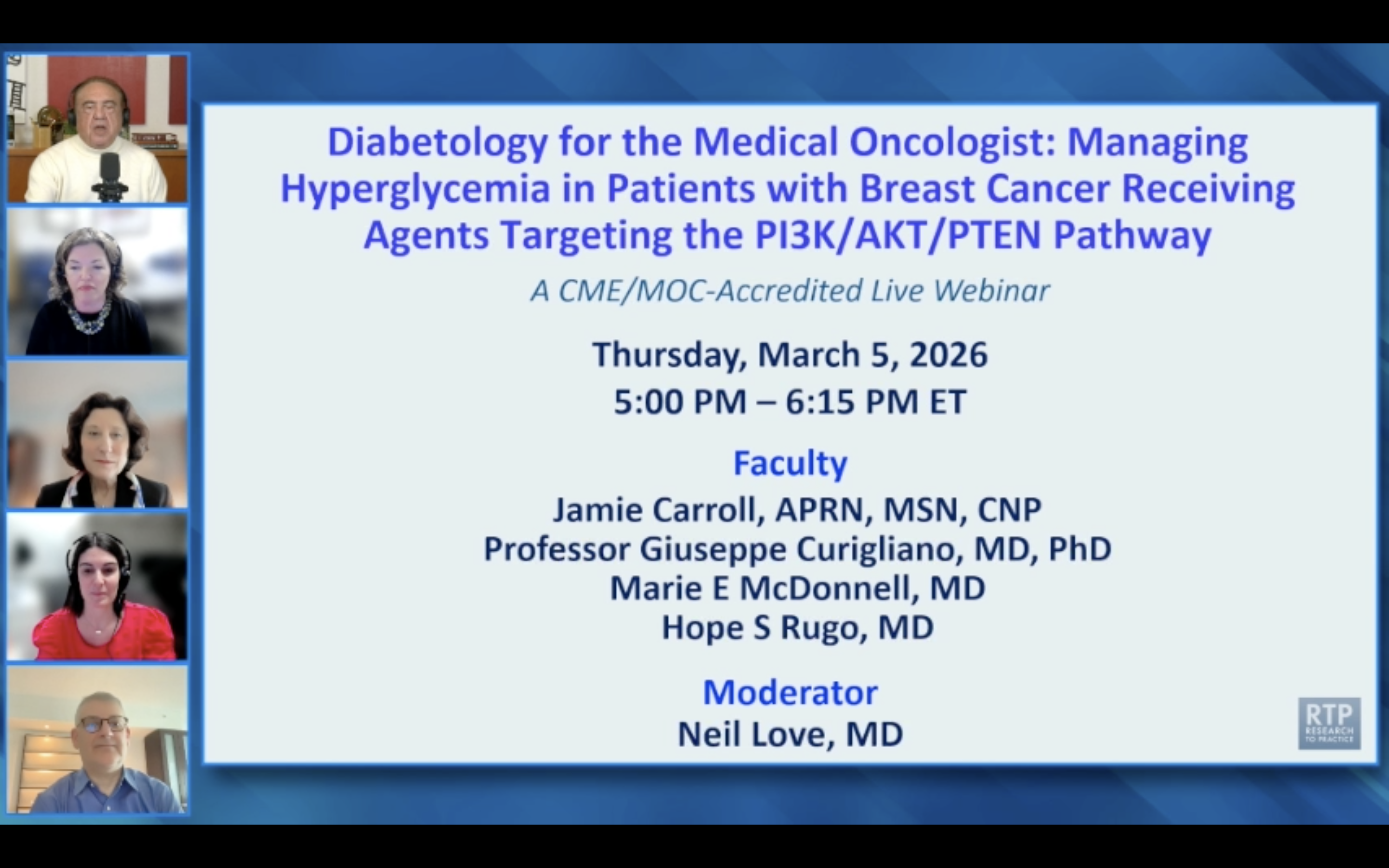
Advances in drug design mean newer PI3K inhibitors are more targeted, resulting in significantly less off-target toxicity. For example, some investigational agents have a hyperglycemia risk under 15%, a substantial improvement over earlier drugs, making them easier to manage clinically.
Broad diagnostic categories like 'diabetes' or 'insomnia' likely encompass several distinct underlying conditions. Continuous data streams from wearables and CGMs can help researchers identify these subtypes, paving the way for more personalized treatments.

By continuously measuring a drug's effect on the body (pharmacodynamics), the wearable device provides a real-time view of a patient's phenotype. This granular data can revolutionize clinical trial design, safety monitoring, and drug dosing, moving beyond static genomic data to understand real-world drug response.

Oncologists typically initiate metformin for drug-induced hyperglycemia but are hesitant to manage more complex regimens. They prefer collaborating with endocrinologists who can navigate different drugs, dosages, and interactions, especially for complex oncology patients where frequent follow-up is needed.
For select patients who find frequent lab checks for hyperglycemia monitoring to be a significant barrier, a continuous glucose monitor (CGM) can be a practical alternative. While off-label, it provides valuable data for management in patients who might otherwise be non-adherent with monitoring.

Steroid-induced hyperglycemia is a primary driver of cancer-related high blood sugar. Patients with prediabetes (A1C 5.7-6.4%) are often overlooked but frequently develop hyperglycemia on high-dose dexamethasone, making proactive warnings and dietary guidance crucial for this group.
Testing for PI3K/AKT alterations at the initial diagnosis of metastatic disease, rather than waiting for progression, provides a crucial window of time. This allows clinicians to implement proactive dietary and medical strategies to mitigate future side effects like hyperglycemia before the targeted therapy is even started.
While Continuous Glucose Monitors and insulin pumps are life-changing, they also introduce a new burden. The constant data, alarms, and risk of tech failure create a state of continuous vigilance that can be mentally exhausting for families.

The hyperglycemia from PI3K/AKT inhibitors is due to insulin resistance, not lack of insulin. Treatment must focus on insulin sensitizers (metformin, SGLT2 inhibitors). Using agents that increase insulin secretion is counterproductive as it can reactivate the PI3K cancer pathway.