Get your free personalized podcast brief
We scan new podcasts and send you the top 5 insights daily.
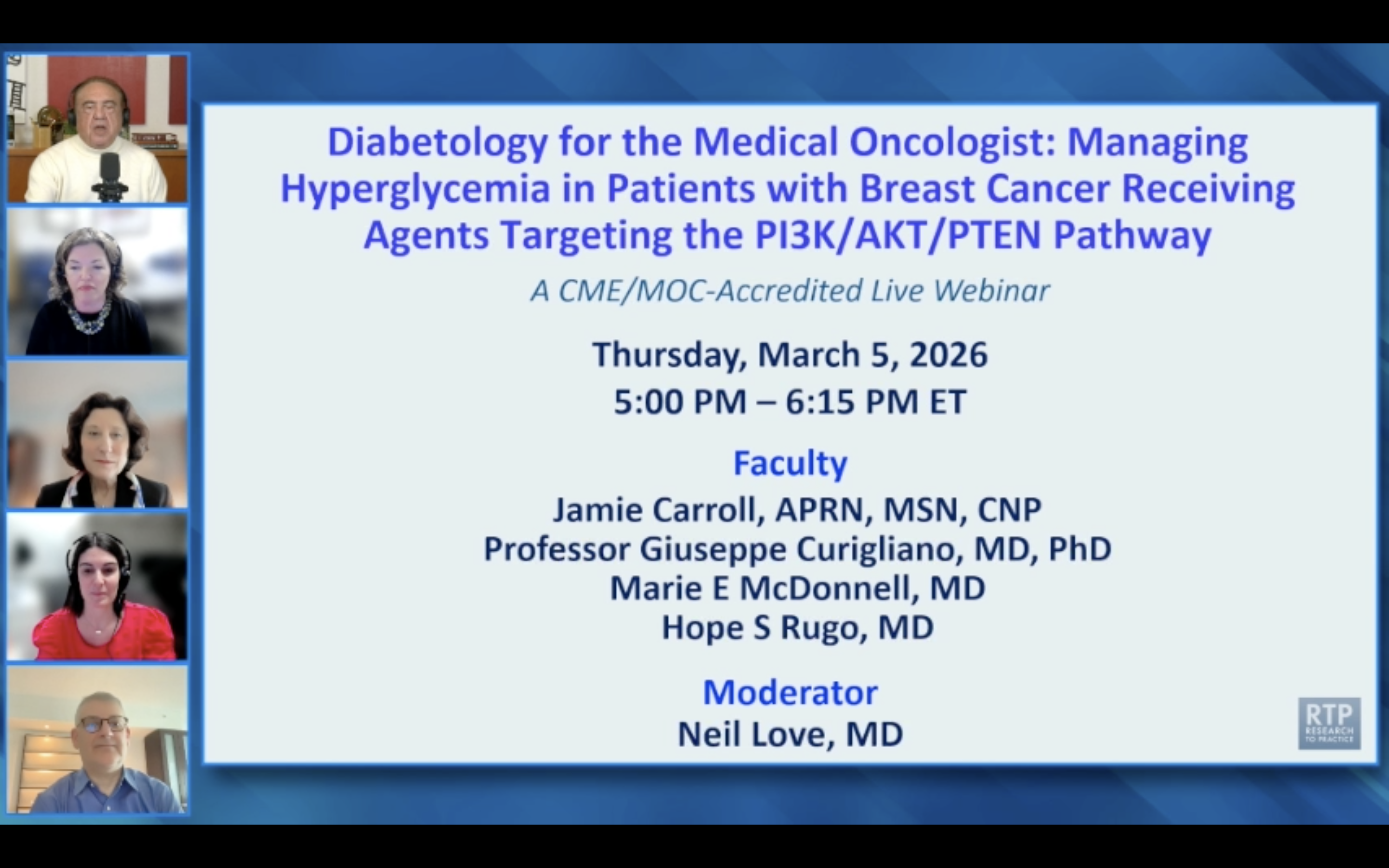
The hyperglycemia caused by PI3K inhibitors is a direct on-target effect. These drugs inhibit the PI3K pathway, which is the same pathway insulin uses to signal glucose to enter cells. This mechanistic understanding explains why giving insulin is ineffective for managing this side effect. Instead, oral agents like metformin or GLP-1s are required.

Related Insights
The next evolution in this drug class involves inhibitors that only target mutated PI3K. This specificity aims to avoid effects on wild-type PI3K, which is involved in insulin signaling. The goal is to dramatically reduce severe side effects like hyperglycemia, which could allow for higher, more effective drug doses.

While known for weight loss, GLP-1 agonists are also highly effective for managing hyperglycemia from both steroids and PI3K inhibitors. Using low or "micro" doses can be very helpful in cancer patients, providing glucose control while minimizing GI side effects like nausea.
Advances in drug design mean newer PI3K inhibitors are more targeted, resulting in significantly less off-target toxicity. For example, some investigational agents have a hyperglycemia risk under 15%, a substantial improvement over earlier drugs, making them easier to manage clinically.
Hyperglycemia, a common side effect of the PI3K inhibitor Inavolycib, is directly linked to better patient outcomes. Patients with more hyperglycemia showed a stronger response (hazard ratio 0.38 vs. 0.51). This reframes a negative side effect as a potential biomarker of efficacy, urging physicians to manage it rather than discontinue treatment.
Clinicians are hesitant to use insulin for PI3K inhibitor-induced hyperglycemia. The primary concern is that exogenous insulin, a potent growth factor, could theoretically counteract the therapy's anti-tumor effect by promoting cancer cell survival, although this risk remains unproven.
Clinicians have a clear threshold for managing hyperglycemia from PI3K inhibitors. Metformin is the recommended first-line intervention as soon as a patient's fasting glucose consistently exceeds 126 mg/dL, enabling proactive and standardized management.

Second-generation PI3K inhibitor enovalisib has a 7% discontinuation rate compared to 25% for its predecessor, alpelisib. This is due to a better toxicity profile (e.g., 6% vs. 33% high-grade hyperglycemia) and improved proactive side effect management by clinicians.
Unlike earlier PI3K inhibitors notorious for severe hyperglycemia and rash, new pan-mutant selective agents tersolasib and zovagelisib have remarkably improved safety profiles. Tersolasib's most common grade 3 event was manageable liver enzyme elevation (7%), not the class-defining toxicities. This superior tolerability could enable broader use and better patient compliance.
While its IV administration is a hurdle, the pan-PI3K/mTOR inhibitor gedotolisib is clinically compelling because of its distinct safety profile. It causes significantly less hyperglycemia and diarrhea compared to oral PI3K inhibitors like alpelisib, making it an attractive option for patients where those specific toxicities are a major concern.

The hyperglycemia from PI3K/AKT inhibitors is due to insulin resistance, not lack of insulin. Treatment must focus on insulin sensitizers (metformin, SGLT2 inhibitors). Using agents that increase insulin secretion is counterproductive as it can reactivate the PI3K cancer pathway.