Get your free personalized podcast brief
We scan new podcasts and send you the top 5 insights daily.
The side effects of Capivasertib do not occur simultaneously. Rash and diarrhea typically present early, while hyperglycemia manifests later, within the first two months. This staggered onset provides a crucial window for clinicians to manage the initial toxicities before needing to address metabolic effects, simplifying patient care.

Related Insights
A critical and often overlooked factor in managing hyperglycemia is hydration. Volume depletion from drug-induced diarrhea impairs the kidneys' ability to excrete glucose. This traps sugar in the body, creating a vicious cycle that dramatically elevates blood glucose levels.
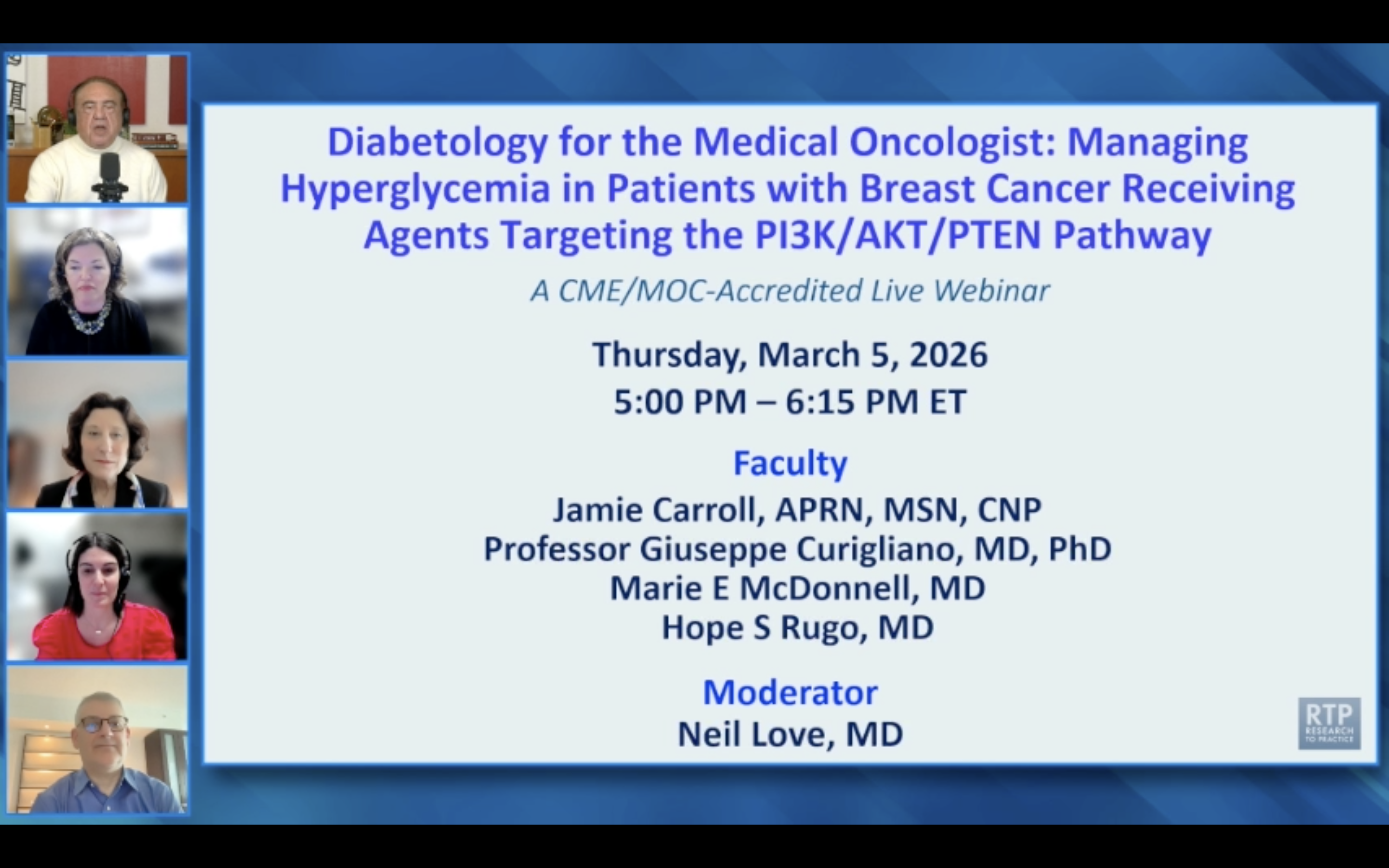
A subgroup analysis from Capitello-291 suggests patients treated with capivasertib in the first-line setting experienced less diarrhea and rash than those in later lines. This aligns with a broader trend where heavily pre-treated patients exhibit poorer drug tolerance. This finding supports considering potent targeted agents earlier in the treatment sequence to potentially improve tolerability and outcomes.
Given that diarrhea from Capivasertib has a rapid onset within 12 days, clinicians should consider prophylactic loperamide. This proactive approach, especially for patients with pre-existing bowel issues, can help them tolerate the therapy from the start, rather than waiting for symptoms to appear.
To manage the common rash associated with the AKT inhibitor capivasertib, clinicians should prescribe non-sedating antihistamines twice daily. Crucially, patients should begin taking the antihistamine the day *before* starting capivasertib and continue for at least four weeks. This preemptive approach significantly reduces the incidence and severity of the rash.
When using the AKT inhibitor capivasertib, preventing rash is more effective than treating it. A recommended strategy for physicians unfamiliar with the drug is to prescribe twice-daily non-drowsy antihistamines proactively for the first 6-8 weeks, as the rash is difficult to manage once it appears.

The side effect profile of capivasertib is front-loaded. Key toxicities like diarrhea and rash appear quickly, leading to the majority (63%) of drug discontinuations occurring within the first three months. This highlights a critical window for proactive management and patient education to improve adherence.

Due to limited and delayed availability of endocrinologists, oncologists must be comfortable with the frontline management of metabolic side effects like hyperglycemia. This involves aggressive monitoring from the start and initiating treatment themselves, a necessary skill for effectively using drugs like Capivasertib, especially in practices outside the U.S.
Nurses can better anticipate and educate patients about immunotherapy side effects by understanding their typical timeline. Skin and GI issues often appear within the first month, while thyroid or other endocrine problems may not manifest for two months or more.

Real-world use of capivaseratib reveals more challenging rash and diarrhea than trial data may suggest. The speaker recommends proactive management with non-sedating antihistamines starting the day *before* therapy and prophylactic loperamide. This strategy, combined with dose reductions that don't compromise PFS, is key for patient tolerance.
Patient-reported outcome data from the CAPITELLO-281 trial showed superimposable curves for well-being between the capivasertib and placebo arms. This suggests that while toxicities like rash and diarrhea exist and require management, they do not detract from patients' overall quality of life.