Get your free personalized podcast brief
We scan new podcasts and send you the top 5 insights daily.
While known for weight loss, GLP-1 agonists are also highly effective for managing hyperglycemia from both steroids and PI3K inhibitors. Using low or "micro" doses can be very helpful in cancer patients, providing glucose control while minimizing GI side effects like nausea.
Related Insights
A critical and often overlooked factor in managing hyperglycemia is hydration. Volume depletion from drug-induced diarrhea impairs the kidneys' ability to excrete glucose. This traps sugar in the body, creating a vicious cycle that dramatically elevates blood glucose levels.
Advances in drug design mean newer PI3K inhibitors are more targeted, resulting in significantly less off-target toxicity. For example, some investigational agents have a hyperglycemia risk under 15%, a substantial improvement over earlier drugs, making them easier to manage clinically.
Long-term, high-dose GLP-1 use leads to diminishing returns and significant muscle loss. A more effective strategy is using micro-doses in 90-day cycles, paired with nutritional coaching. This approach uses the drug as a temporary tool to eliminate carb cravings and establish lasting dietary habits.

Clinicians are hesitant to use insulin for PI3K inhibitor-induced hyperglycemia. The primary concern is that exogenous insulin, a potent growth factor, could theoretically counteract the therapy's anti-tumor effect by promoting cancer cell survival, although this risk remains unproven.
As the obesity market matures, the key differentiator may shift from maximum weight loss to tolerability. High discontinuation rates for GLP-1s due to GI side effects create an opportunity for drugs with slightly lower efficacy but a stellar safety profile, which could capture a large and underserved patient segment.

Oncologists typically initiate metformin for drug-induced hyperglycemia but are hesitant to manage more complex regimens. They prefer collaborating with endocrinologists who can navigate different drugs, dosages, and interactions, especially for complex oncology patients where frequent follow-up is needed.
Steroid-induced hyperglycemia is a primary driver of cancer-related high blood sugar. Patients with prediabetes (A1C 5.7-6.4%) are often overlooked but frequently develop hyperglycemia on high-dose dexamethasone, making proactive warnings and dietary guidance crucial for this group.
The obesity market is evolving beyond maximum weight loss. Key differentiators will become dosing convenience, side effect profiles, and preserving lean muscle. This creates space for novel mechanisms, potentially as add-on therapies to lower GLP-1 doses and mitigate side effects.

Unlike most drugs with targeted effects, GLP-1s are remarkable for their broad-based impact. They concurrently improve metabolism, mitochondrial creation, cellular cleanup (autophagy), and inflammation, explaining their profound and varied benefits.

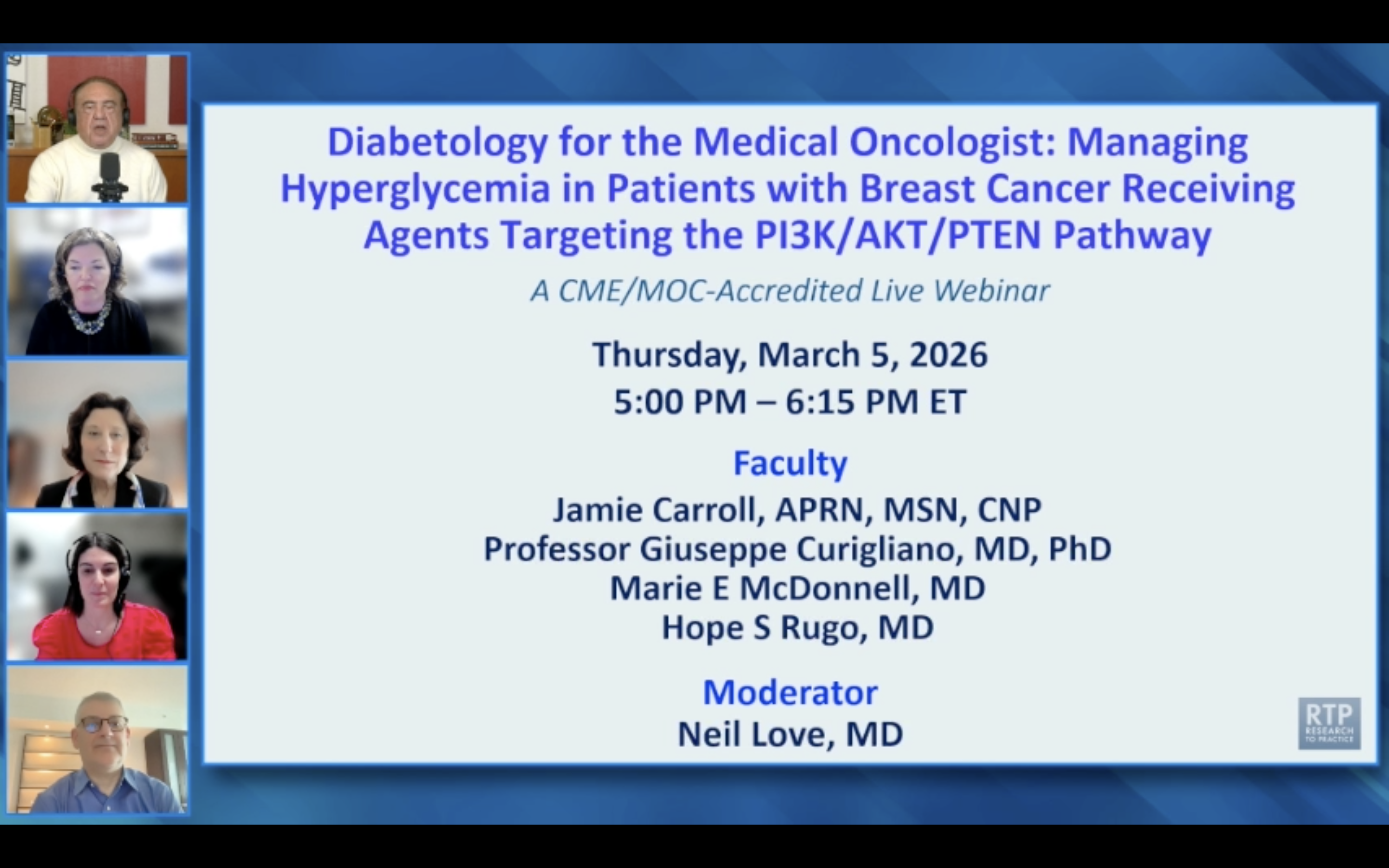
The hyperglycemia from PI3K/AKT inhibitors is due to insulin resistance, not lack of insulin. Treatment must focus on insulin sensitizers (metformin, SGLT2 inhibitors). Using agents that increase insulin secretion is counterproductive as it can reactivate the PI3K cancer pathway.