Get your free personalized podcast brief
We scan new podcasts and send you the top 5 insights daily.
The legacy of a novel like "Pride and Prejudice" isn't solely defined by its intellectual or social influence. The immense and lasting joy it brings to readers across generations is a profound, often underrated, form of changing the world.
Related Insights
Aspiring creators often get stuck on "what problem am I solving?" This is a flawed premise. Providing entertainment, joy, and an escape from reality is an incredibly valuable contribution—just as valid as solving a practical business or life problem for your audience.

Author Morgan Housel observes that even life-changing non-fiction books aren't remembered in their entirety. Their lasting impact comes from two or three memorable sentences or core ideas that the reader internalizes. For authors, this reframes the goal from comprehensive recall to crafting a few powerful, sticky takeaways.

In an age of infinite content, the most powerful filter for quality is time (the Lindy effect). Prioritizing books, art, and ideas that have remained relevant for centuries ensures you are consuming profound, time-tested wisdom rather than transient trends, optimizing your 'mental diet' for depth.

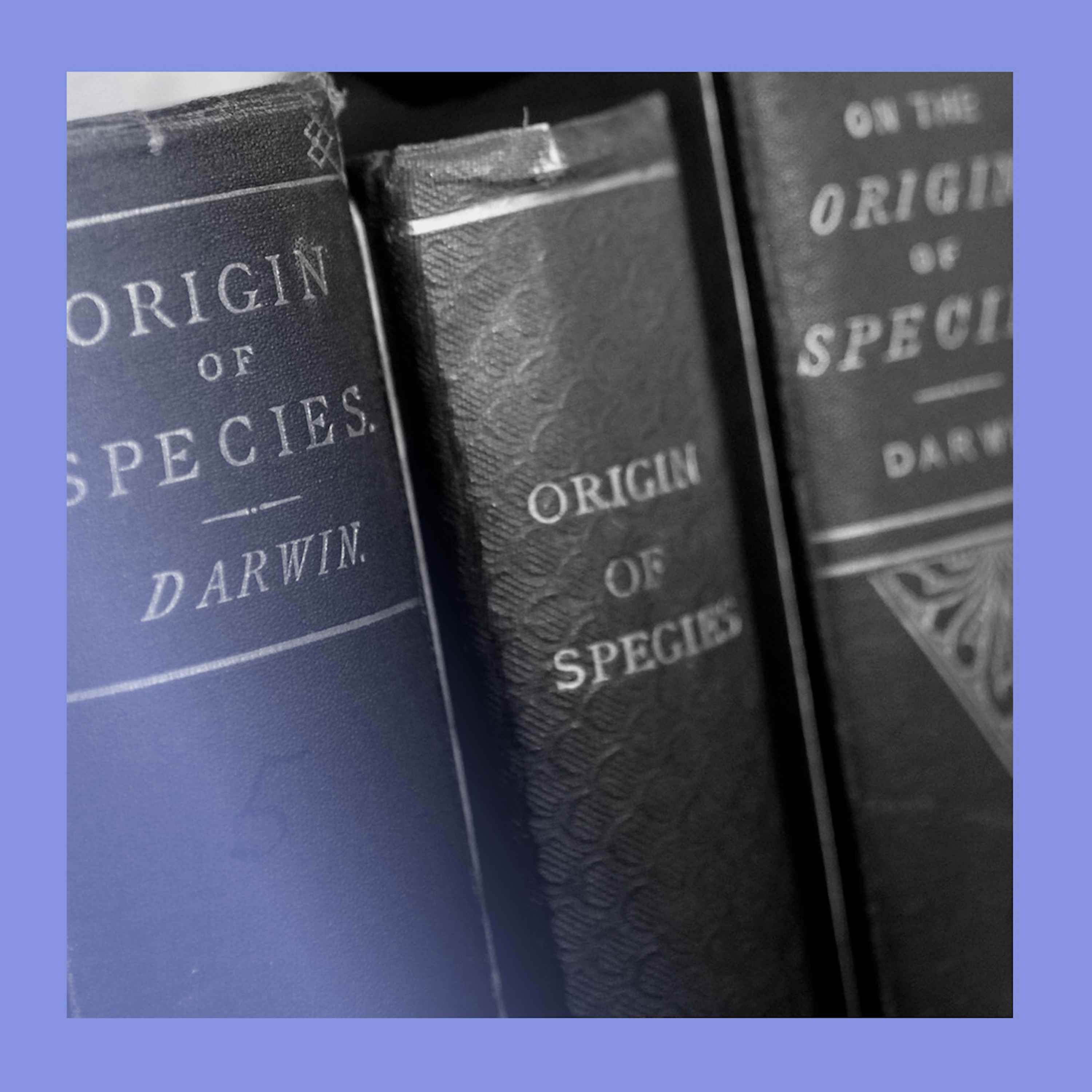
The shift to a scientific worldview, exemplified by Darwin, wasn't just a triumphant march of progress. For many in the Victorian era, it created a painful void by removing the perceived "sucker of religion." This highlights that with every world-changing book that opens a new world, a previous worldview is lost.
The popular perception of Galileo challenging religious dogma has a greater cultural impact than the specific, nuanced arguments in his actual writings. A book's power can derive from what people believe it represents, even if they've never read it or misunderstand its contents.
Unlike watching a movie as an observer, reading makes you embody the character, lighting up the brain as if you're living their experiences. This unique power to generate deep empathy is why books face such intense banning efforts from those who want to control who children empathize with.

The fear of irrelevance is paralyzing for many creators. A healthier perspective is to see relevance not as a measure of self-worth, but as a vehicle for utility. It is a temporary tool that allows your ideas to have an impact and contribute to the broader cultural conversation.
Citing Kurt Vonnegut, the host and artist agree that the best creative work uses entertainment as a vehicle for delivering deeper insights. Rather than just being fun, its purpose is to inform and share experiences, making complex ideas accessible and memorable for the audience.

A story's core mechanic for engagement is not just emotion, but the constant betrayal of the audience's expectations. People are drawn to narratives, jokes, and songs precisely because they want their predictions about what happens next to be wrong. This element of surprise is what makes a story satisfying and compels an audience to continue.
A book's success is measured by the ripples it creates—the podcasts, reviews, and debates it generates. More people engage with the ideas *about* the book than read it. Authors create a "boulder to drop in a lake" to generate waves, not just to sell a physical object.