Get your free personalized podcast brief
We scan new podcasts and send you the top 5 insights daily.
The popular perception of Galileo challenging religious dogma has a greater cultural impact than the specific, nuanced arguments in his actual writings. A book's power can derive from what people believe it represents, even if they've never read it or misunderstand its contents.
Related Insights
Author Morgan Housel observes that even life-changing non-fiction books aren't remembered in their entirety. Their lasting impact comes from two or three memorable sentences or core ideas that the reader internalizes. For authors, this reframes the goal from comprehensive recall to crafting a few powerful, sticky takeaways.

Despite being a "fundamentally reactionary" and anti-industrialization book, "Lord of the Rings" is heavily referenced by Silicon Valley leaders. This highlights a profound ideological disconnect where builders of a Mordor-like industrial future misread the text to see themselves as the pastoral, persecuted hobbits.
A useful interpretation of Nietzsche's famous quote is not about religion itself, but the death of a society's unified value system. Without a common set of foundational beliefs, factions can no longer find common ground, leading to the "horrific consequences" of intractable conflict.

"Frankenstein" is foundational because it captures a crucial turning point in Western thought. It explores the shift from God as the sole creator to humans as creators, introducing anxieties about scientific overreach and moral responsibility that have defined technological discourse ever since.
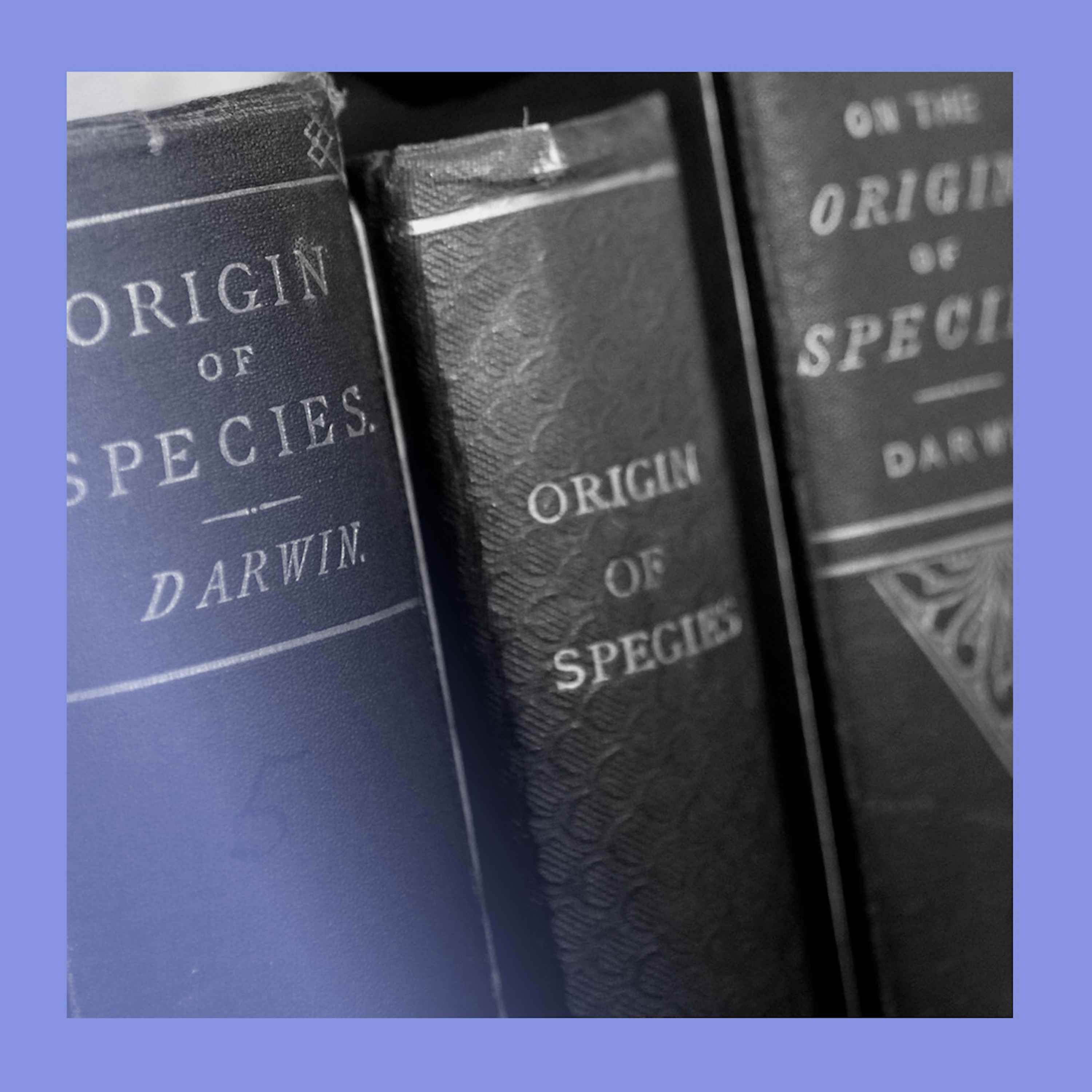
The shift to a scientific worldview, exemplified by Darwin, wasn't just a triumphant march of progress. For many in the Victorian era, it created a painful void by removing the perceived "sucker of religion." This highlights that with every world-changing book that opens a new world, a previous worldview is lost.
Art is a mechanism for changing perception. It often makes audiences uncomfortable at first by introducing a novel idea or form. Over time, great art guides people from that initial discomfort to a new state of understanding, fundamentally altering how they see the world.

Unlike watching a movie as an observer, reading makes you embody the character, lighting up the brain as if you're living their experiences. This unique power to generate deep empathy is why books face such intense banning efforts from those who want to control who children empathize with.

The legacy of a novel like "Pride and Prejudice" isn't solely defined by its intellectual or social influence. The immense and lasting joy it brings to readers across generations is a profound, often underrated, form of changing the world.
Germ theory was resisted by the medical establishment and adopted last by doctors. The shift was driven by outside cultural forces, like the 'Rainy Day Club,' that created social proof and new public expectations. This shows that profound change is often forced upon institutions from the outside in.
A book's success is measured by the ripples it creates—the podcasts, reviews, and debates it generates. More people engage with the ideas *about* the book than read it. Authors create a "boulder to drop in a lake" to generate waves, not just to sell a physical object.