Get your free personalized podcast brief
We scan new podcasts and send you the top 5 insights daily.
When tasked with integrating a $10k/year event platform (HeySummit), a Replit agent proactively questioned the need for the third-party tool. Unprompted, it then designed and built a superior, fully integrated replacement in just one hour, demonstrating that agents will actively seek to consolidate tool stacks.

Related Insights
AI agents often default to "build it yourself" because SaaS products aren't designed for them. To stay relevant, SaaS companies must create agent-friendly CLIs, APIs, and even add hints in help text to guide agents through complex workflows.

The narrative of AI freeing up time for "higher value" work is incomplete. Advanced users interact with their agents daily as true collaborators, with the AI proactively generating strategic ideas like replacing entire software vendors.

While users building their own tools is a risk, the more profound disruption comes from AI agents performing knowledge work autonomously. This could eliminate the need for human-centric software like project management tools entirely, as agents handle tasks, tracking, and completion without manual input.

Users are leveraging AI agents to build their own bespoke software, stripping away unused features from SaaS giants like Notion. This trend toward hyper-personalization threatens the one-size-fits-all SaaS model as users create cheaper, more effective personal tools.
For decades, buying generalized SaaS was more efficient than building custom software. AI coding agents reverse this. Now, companies can build hyper-specific, more effective tools internally for less cost than a bloated SaaS subscription, because they only need to solve their unique problem.

A design agency professional with no coding experience used the Moltbot agent to build 25 internal web services simply by describing the problems. This signals a paradigm shift where non-technical users can create their own hyper-personalized software, bypassing traditional development cycles and SaaS subscriptions.
Instead of integrating with existing SaaS tools, AI agents can be instructed on a high-level goal (e.g., 'track my relationships'). The agent can then determine the need for a CRM, write the code for it, and deploy it itself.
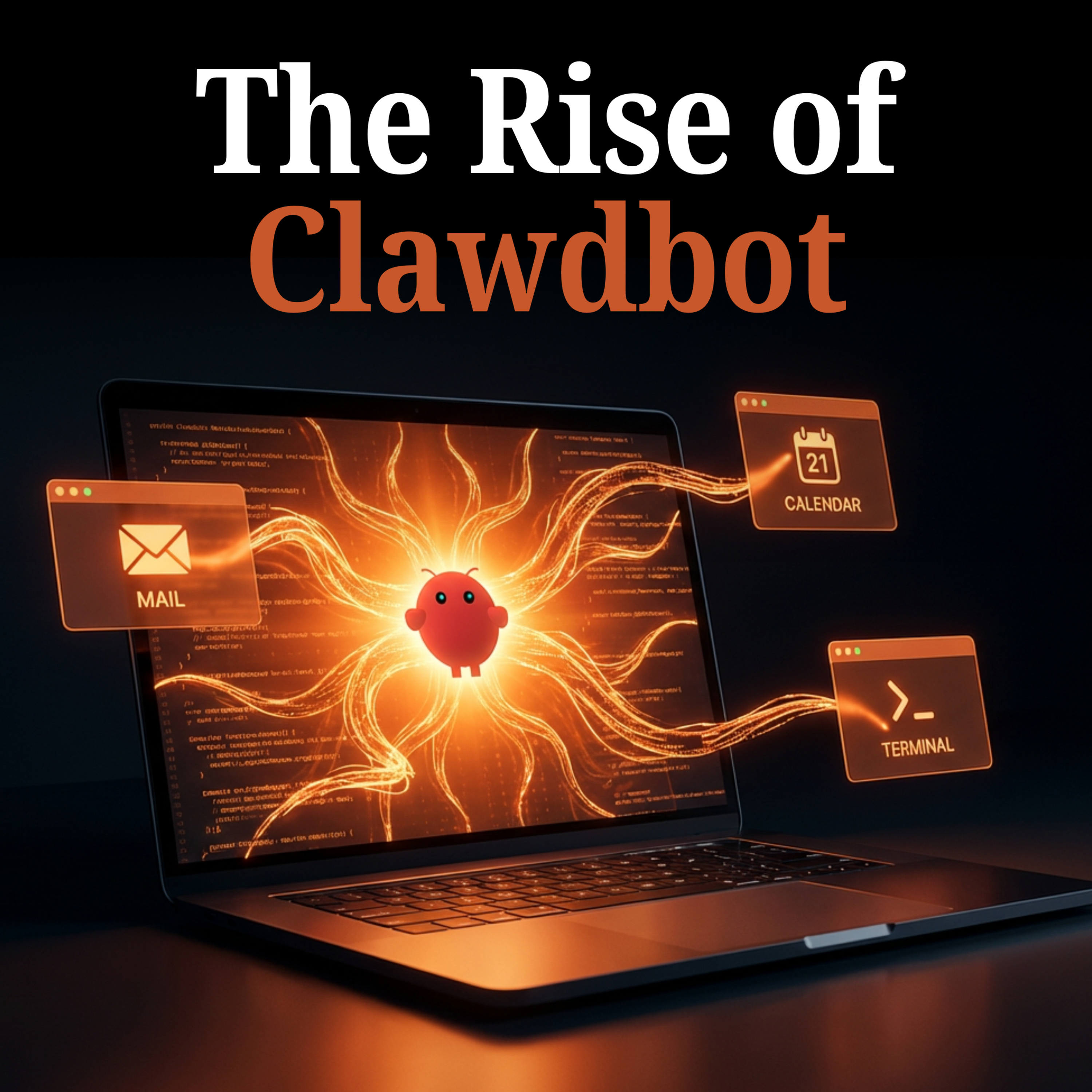
Unlike static tools, agents like Clawdbot can autonomously write and integrate new code. When faced with a new challenge, such as needing a voice interface or GUI control, it can build the required functionality itself, compounding its abilities over time.

Non-technical users are leveraging agents like Moltbot to build their own hyper-personalized software. By simply describing a problem in natural language, they can create internal tools that perfectly solve their needs, eliminating the need to subscribe to many single-purpose SaaS applications.

Instead of integrating third-party SaaS tools for functions like observability, developers can now prompt code-generating AIs to build these features directly into their applications. This trend makes the traditional dev tool market less relevant, as custom-built solutions become faster to implement than adopting external platforms.