Get your free personalized podcast brief
We scan new podcasts and send you the top 5 insights daily.
The narrative of AI freeing up time for "higher value" work is incomplete. Advanced users interact with their agents daily as true collaborators, with the AI proactively generating strategic ideas like replacing entire software vendors.

Related Insights
A KPMG analysis of 1.4 million AI interactions reveals that the most effective users don't just write sophisticated prompts. They treat AI as a collaborative partner, guiding its thinking, framing problems, and iterating to achieve better outcomes. This reframes the key skill from engineering to strategic reasoning.

Users who treat AI as a collaborator—debating with it, challenging its outputs, and engaging in back-and-forth dialogue—see superior outcomes. This mindset shift produces not just efficiency gains, but also higher quality, more innovative results compared to simply delegating discrete tasks to the AI.
The value of an AI agent is unlocked through a mental shift. Instead of treating it as a passive tool like a dashboard, actively engage with it as a coworker. SaaStr's team talks to their agent and bounces ideas off it, incorporating it into daily creative sessions and workflows.

The primary benefit of AI for experienced users has evolved from efficiency gains to enabling entirely new tasks and boosting overall throughput. Time savings, once the top benefit, is now third, especially for heavy users focused on strategic value over simple task automation.
The transition from AI as a productivity tool (co-pilot) to an autonomous agent integrated into team workflows represents a quantum leap in value creation. This shift from efficiency enhancement to completing material tasks independently is where massive revenue opportunities lie.

Apply the collaborative, iterative model of AI pair programming to all knowledge work, including writing, strategy, and planning. This shifts the dynamic from a simple command-and-response tool to a constant thought partner, improving the quality and speed of all your work.

Contrary to the narrative that AI will reduce work hours, early adopters use agents to massively increase their output. They are working more, not less, because AI provides unprecedented leverage to accomplish more, faster. This suggests AI's primary effect is ambition amplification.
Clawdbot can autonomously identify market trends (like X's new article feature), propose new product features, and even write the code for them, acting more like a chief of staff than a simple task-doer.
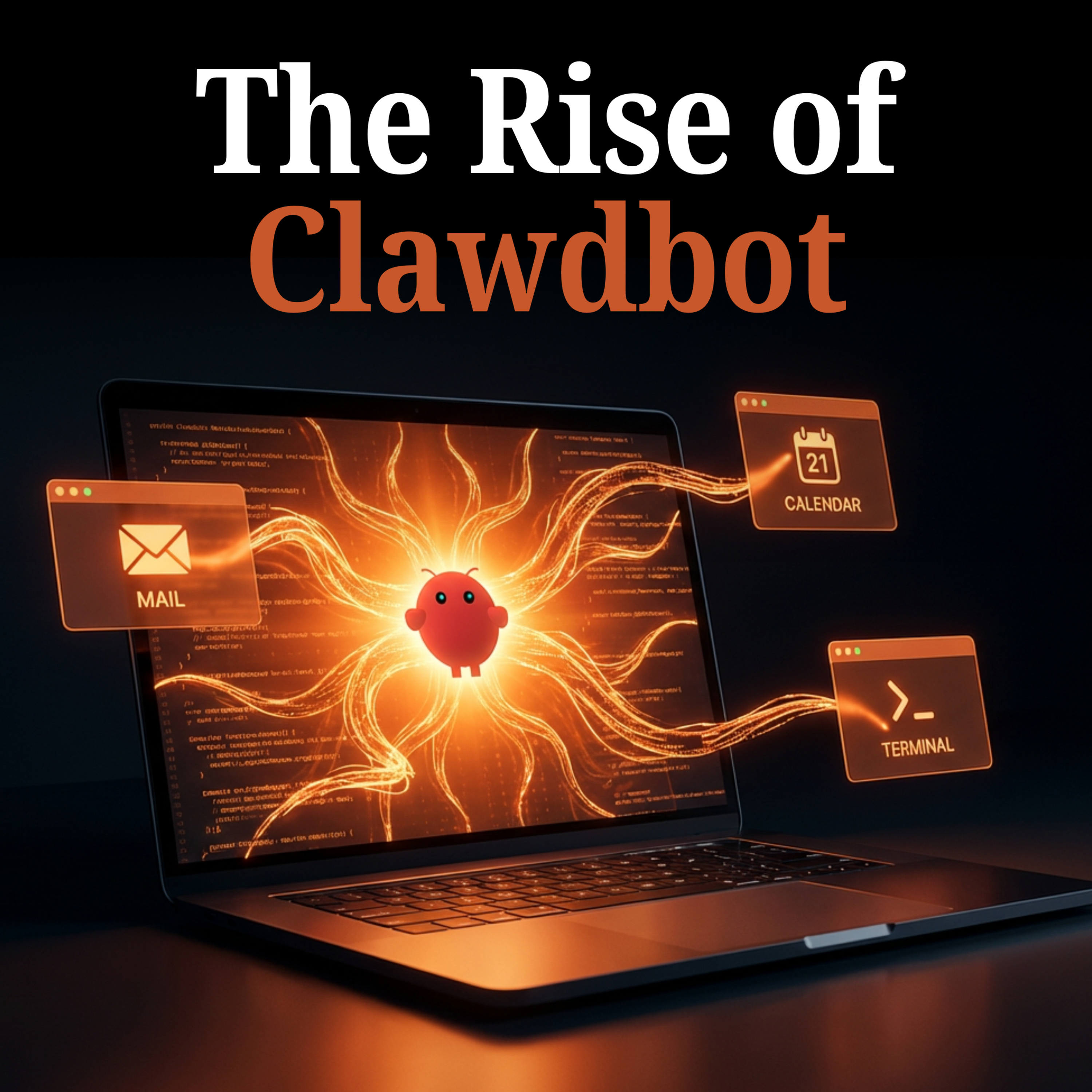
The paradigm shift with AI agents is from "tools to click buttons in" (like CRMs) to autonomous systems that work for you in the background. This is a new form of productivity, akin to delegating tasks to a team member rather than just using a better tool yourself.

The paradigm for using software is shifting from providing explicit instructions to defining high-level objectives. AI agents act like a team of digital employees, empowering every user to operate like an executive who decides *what* to do, while the AI figures out *how* to do it, increasing individual leverage.
