Get your free personalized podcast brief
We scan new podcasts and send you the top 5 insights daily.
The physics of fusion were understood in the 1950s, but the technology required—high-power semiconductors and nanosecond-fast electronics—only became available through decades of progress driven by Moore's Law. This highlights how hardware breakthroughs often depend on seemingly unrelated technological advancements.

Related Insights
Jensen Huang emphasizes that Moore's Law is dead as a primary performance driver. The 50x gain from Hopper to Blackwell came overwhelmingly from architecture and computer science breakthroughs, with raw transistor improvements providing only marginal benefit.

Investor Shaun Maguire posits that the hardware industry is moving beyond the silicon-centric scaling of Moore's Law. The next wave of innovation will branch into entirely new "tech trees" such as humanoid robotics, silicon photonics, and orbital data centers, creating decades of new progress and distinct from semiconductor advancements.

For two decades, silicon chips have been thermally constrained to a power density of about 1 watt per square millimeter. New R&D efforts are finally overcoming this barrier, which could lead to smaller, more powerful chips, despite significant thermal and electrical engineering challenges.

While the theories behind neural networks existed for decades, their practical application was infeasible. The true catalyst wasn't a new algorithm, but the parallel processing power of GPUs and the availability of massive datasets, which finally made training complex models a reality.
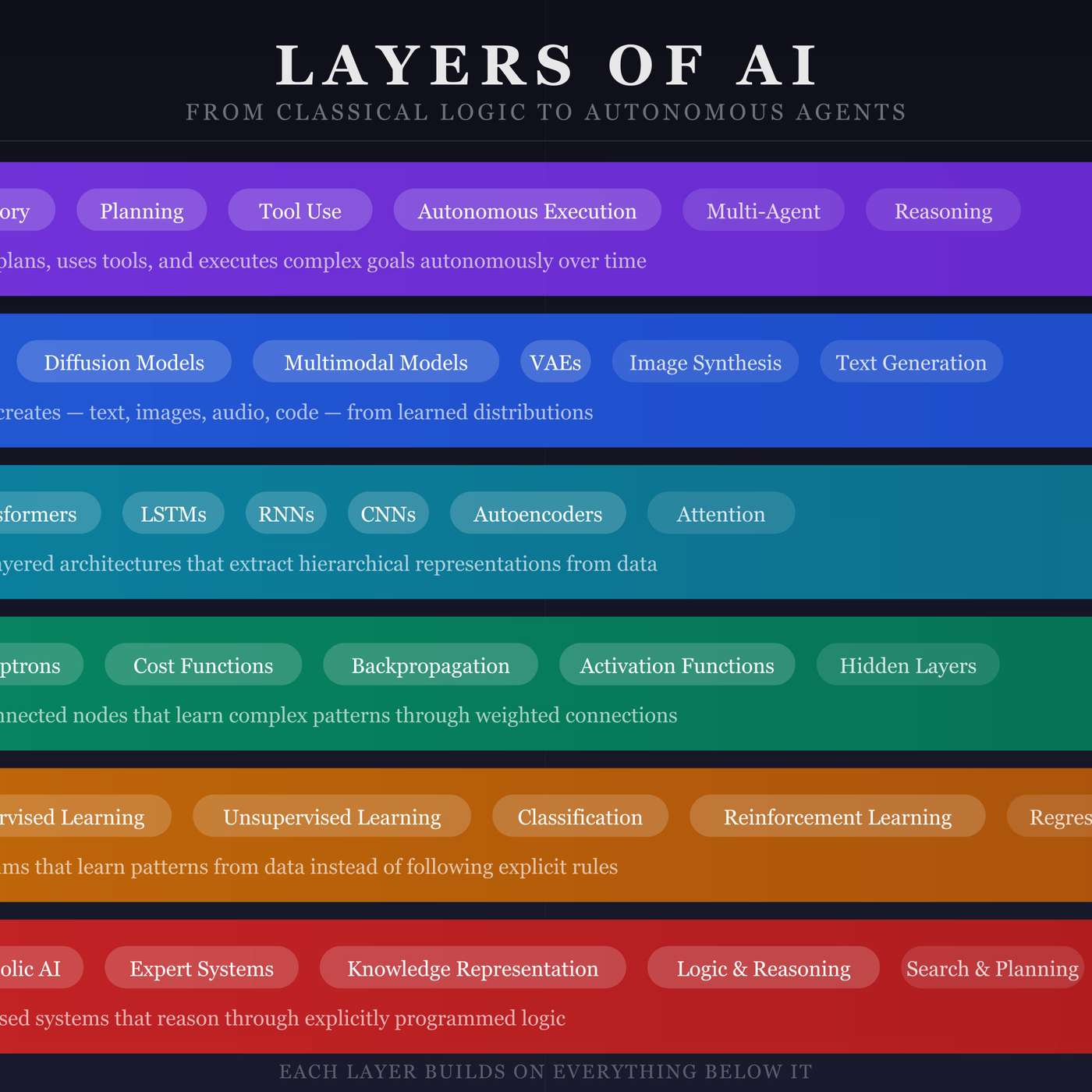
Instead of focusing only on new technology, it's crucial to see how old technologies disrupt industries in new ways. Mala Gaonkar cites lithium-ion batteries, invented in 1976, revolutionizing the modern auto industry, and gaming GPUs from the past now powering the AI boom.

While Moore's Law continued adding transistors, the failure of Dennard scaling around 2005 meant they no longer became more power-efficient. This created a "power wall," making single cores too hot and forcing the industry to use multiple, simpler cores to continue performance gains.

Pure, curiosity-driven research into quantum physics over a century ago, with no immediate application in sight, became the foundation for today's multi-billion dollar industries like lasers, computer chips, and medical imaging. This shows the immense, unpredictable ROI of basic science.

The ability to rapidly simulate complex hardware is the single biggest unlock for deep tech investing. Where it once took years to run simulations for a new reactor, it can now be done in hours. This compresses the hardware development cycle, making it fast enough to fit within venture capital timelines and expectations.

A counterintuitive view of Moore's Law is that for it to hold, the economic value of computation must halve every 18 months because we historically run out of uses for it. The recent rise in H100 GPU rental costs suggests AI is the first application where demand is growing faster than supply, breaking this trend.

Cerebras CEO Andrew Feldman claims that new AI chip architectures are breaking from the traditional 18-month doubling cycle of Moore's Law. Unlike mature GPU designs that rely on smaller manufacturing nodes for gains, new architectures have significant room for optimization, promising performance improvements far greater than 2x in the next cycle.
