/
© 2026 RiffOn. All rights reserved.

Get your free personalized podcast brief

We scan new podcasts and send you the top 5 insights daily.

  1. The Peterman Pod
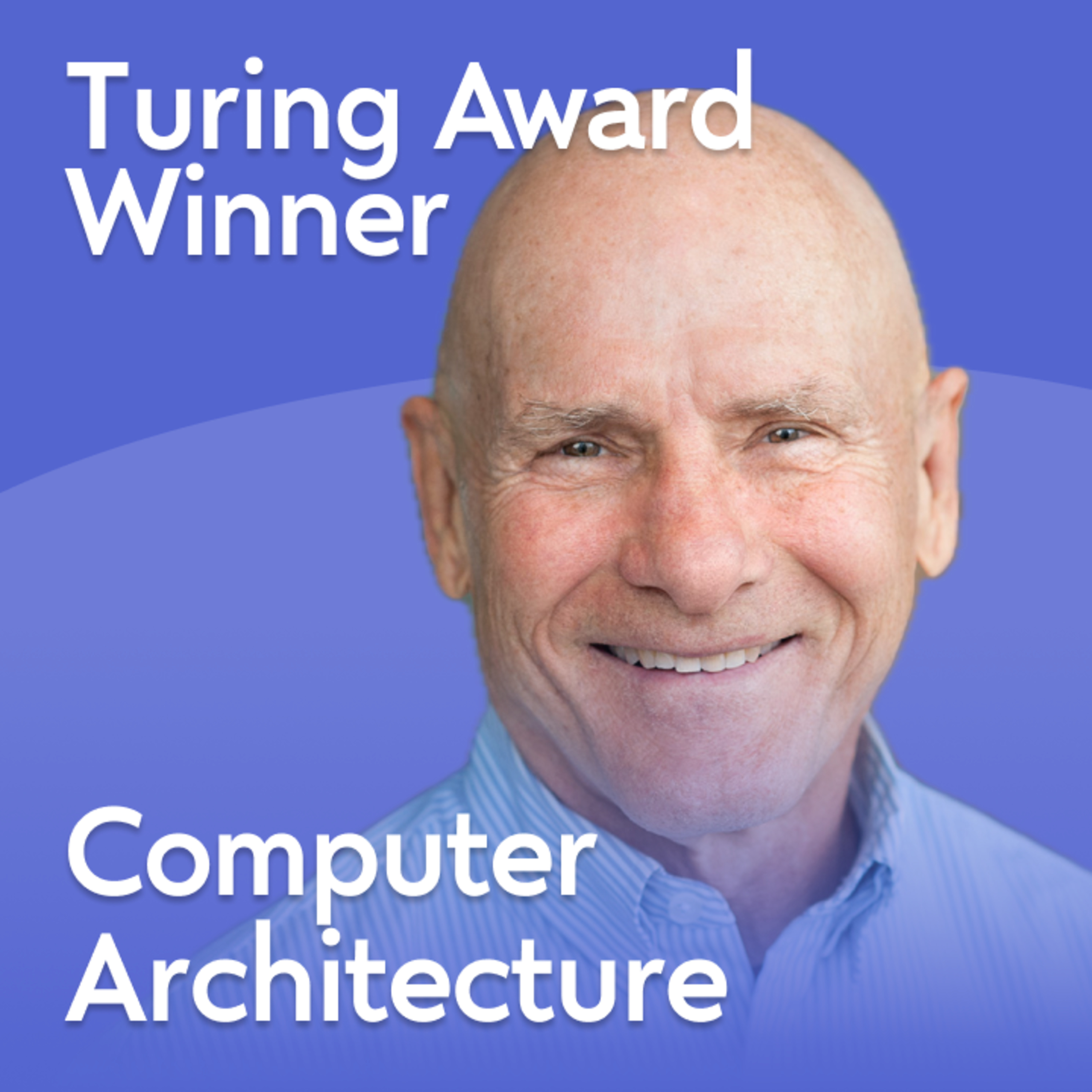
  2. Turing Award Winner: TPU vs GPU vs CPU, Computer Architecture, RISC vs CISC | David Patterson
Turing Award Winner: TPU vs GPU vs CPU, Computer Architecture, RISC vs CISC | David Patterson

Turing Award Winner: TPU vs GPU vs CPU, Computer Architecture, RISC vs CISC | David Patterson

The Peterman Pod · Jul 13, 2026

Turing Award winner David Patterson discusses the RISC vs. CISC debate, the end of Moore's Law, and the rise of specialized GPUs and TPUs.

ARM's 99% Market Share Proves RISC Won the Architecture War Over CISC

Despite the x86 (CISC) architecture's long reign in PCs, the proliferation of ARM-based (RISC) chips in mobile and other devices means RISC architectures now account for 99% of all processors, effectively winning the historic debate.

Turing Award Winner: TPU vs GPU vs CPU, Computer Architecture, RISC vs CISC | David Patterson thumbnail

Turing Award Winner: TPU vs GPU vs CPU, Computer Architecture, RISC vs CISC | David Patterson

The Peterman Pod·2 days ago

Intel's x86 Chips Survived by Translating CISC Instructions into RISC-like Micro-ops

To compete with the speed of RISC architectures, Intel's CISC-based x86 processors adopted a hybrid approach. They internally translate complex x86 instructions into simpler, RISC-like instructions for execution, gaining performance benefits while maintaining crucial backward compatibility.

Turing Award Winner: TPU vs GPU vs CPU, Computer Architecture, RISC vs CISC | David Patterson thumbnail

Turing Award Winner: TPU vs GPU vs CPU, Computer Architecture, RISC vs CISC | David Patterson

The Peterman Pod·2 days ago

The End of Dennard Scaling, Not Moore's Law, Forced the Shift to Multi-Core CPUs

While Moore's Law continued adding transistors, the failure of Dennard scaling around 2005 meant they no longer became more power-efficient. This created a "power wall," making single cores too hot and forcing the industry to use multiple, simpler cores to continue performance gains.

Turing Award Winner: TPU vs GPU vs CPU, Computer Architecture, RISC vs CISC | David Patterson thumbnail

Turing Award Winner: TPU vs GPU vs CPU, Computer Architecture, RISC vs CISC | David Patterson

The Peterman Pod·2 days ago

Compiler Advancements Were the Linchpin for RISC Architecture's Success

The viability of RISC architecture hinged on compilers becoming sophisticated enough to efficiently manage low-level instructions and register allocation. This software co-evolution was critical to bridging the gap between high-level programming languages and the simpler hardware.

Turing Award Winner: TPU vs GPU vs CPU, Computer Architecture, RISC vs CISC | David Patterson thumbnail

Turing Award Winner: TPU vs GPU vs CPU, Computer Architecture, RISC vs CISC | David Patterson

The Peterman Pod·2 days ago

Google's TPU Ditched Caches and Invented a New Float Format for AI Dominance

The first TPU's breakthrough performance came from radical design choices. It eliminated hardware caches, which are less useful for predictable AI memory access, and introduced bfloat16, a floating-point format prioritizing range (exponent) over precision (fraction), perfectly suited for neural networks.

Turing Award Winner: TPU vs GPU vs CPU, Computer Architecture, RISC vs CISC | David Patterson thumbnail

Turing Award Winner: TPU vs GPU vs CPU, Computer Architecture, RISC vs CISC | David Patterson

The Peterman Pod·2 days ago

NVIDIA's CUDA Moat is Built on Optimized Libraries, Not Just the Language

The difficulty of competing with NVIDIA isn't just the CUDA language. A larger barrier is their massive investment in specialized software libraries. NVIDIA's army of engineers constantly optimizes these for new hardware and applications, creating a performance moat that startups struggle to cross.

Turing Award Winner: TPU vs GPU vs CPU, Computer Architecture, RISC vs CISC | David Patterson thumbnail

Turing Award Winner: TPU vs GPU vs CPU, Computer Architecture, RISC vs CISC | David Patterson

The Peterman Pod·2 days ago

Domain-Specific Architectures like GPUs are the New Engine for Performance Gains

As performance gains from general-purpose CPUs stalled, the industry shifted to domain-specific architectures (DSAs). By designing hardware like GPUs and TPUs for narrow tasks like AI, architects can achieve dramatic performance improvements that are no longer possible with traditional CPUs.

Turing Award Winner: TPU vs GPU vs CPU, Computer Architecture, RISC vs CISC | David Patterson thumbnail

Turing Award Winner: TPU vs GPU vs CPU, Computer Architecture, RISC vs CISC | David Patterson

The Peterman Pod·2 days ago

Your Career is Defined by the 5-6 Big Projects You Finish, Not the Hundreds You Start

To build a meaningful career, concentrate your efforts on finishing a few important projects rather than starting many. As Stanford President John Hennessy noted, you will ultimately be remembered for only five or six key accomplishments. This intense focus is essential for achieving significant impact.

Turing Award Winner: TPU vs GPU vs CPU, Computer Architecture, RISC vs CISC | David Patterson thumbnail

Turing Award Winner: TPU vs GPU vs CPU, Computer Architecture, RISC vs CISC | David Patterson

The Peterman Pod·2 days ago

Prioritize Happiness Over Wealth; Wealth Often Follows, But the Reverse is Not True

David Patterson advises making life decisions that optimize for happiness, not wealth, noting they are two distinct goals. He observes that in a field like technology, a happy and fulfilling career often leads to financial success, whereas chasing wealth alone does not guarantee happiness.

Turing Award Winner: TPU vs GPU vs CPU, Computer Architecture, RISC vs CISC | David Patterson thumbnail

Turing Award Winner: TPU vs GPU vs CPU, Computer Architecture, RISC vs CISC | David Patterson

The Peterman Pod·2 days ago