Get your free personalized podcast brief
We scan new podcasts and send you the top 5 insights daily.
Many users of generative AI tools like Suno and Midjourney are creating content for their own enjoyment, not for professional use. This reveals a 'creation as entertainment' consumer behavior, distinct from the traditional focus on productivity or job displacement.

Related Insights
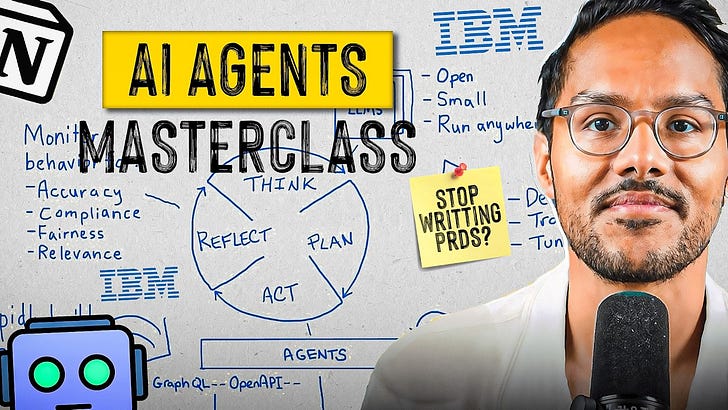
While AI tools once gave creators an edge, they now risk producing democratized, undifferentiated output. IBM's AI VP, who grew to 200k followers, now uses AI less. The new edge is spending more time on unique human thinking and using AI only for initial ideation, not final writing.
Today's dominant AI tools like ChatGPT are perceived as productivity aids, akin to "homework helpers." The next multi-billion dollar opportunity is in creating the go-to AI for fun, creativity, and entertainment—the app people use when they're not working. This untapped market focuses on user expression and play.

Don't view generative AI video as just a way to make traditional films more efficiently. Ben Horowitz sees it as a fundamentally new creative medium, much like movies were to theater. It enables entirely new forms of storytelling by making visuals that once required massive budgets accessible to anyone.

Users are dissatisfied with purely AI-generated creative outputs like interior design, calling it "slop." This creates an opportunity for platforms that blend AI's efficiency with a human's taste and curation, for which consumers are willing to pay a premium.

Proficiency with AI video generators is a strategic business advantage, not just a content skill. Like early mastery of YouTube or Instagram, it creates a defensible distribution channel by allowing individuals and startups to own audience attention, which is an unfair advantage in the market.

Contrary to the focus on professional use cases, OpenAI's largest study shows that 46% of messages from adult consumer users are from the 18-25 age group. This indicates the emergence of an "AI native" generation whose approach to work and education will be fundamentally different.
The OpenAI team believes generative video won't just create traditional feature films more easily. It will give rise to entirely new mediums and creator classes, much like the film camera created cinema, a medium distinct from the recorded stage plays it was first used for.

The surprising success of Dia's custom "Skills" feature revealed a huge user demand for personalized tools. This suggests a key value of AI is enabling non-technical users to build "handmade software" for their specific, just-in-time needs, moving beyond one-size-fits-all applications.
Nano Banana's popularity stemmed from fun, accessible entry points like creating self-portraits. This 'fun gateway' successfully onboarded users, who then discovered deeper, practical applications like photo editing, learning, and problem-solving within the same tool.
The next generation of social networks will be fundamentally different, built around the creation of functional software and AI models, not just media. The status game will shift from who has the best content to who can build the most useful or interesting tools for the community.