Get your free personalized podcast brief
We scan new podcasts and send you the top 5 insights daily.
The pressure of a short, critical meeting is eased when the organization has already engaged the customer through various channels like events, medical team interactions, and clinical trials. This allows the rep to have a strategic conversation instead of a transactional data dump.

Related Insights
Relying on a CRM for sales-to-success handoffs is a recipe for failure. A mandatory, conversational meeting is required to transfer crucial context about the customer's goals and history. This prevents customers from having to repeat themselves, which immediately erodes trust and lowers expectations.

Go beyond persuasion during a sales call. Use "pre-suasion" to shape the conversation's context beforehand. By strategically sending relevant content, links, and discussion topics, you can prime the prospect to focus on your strengths, making the eventual sales meeting far more effective.

Jason Bay's data shows the most effective call to action isn't "want to meet?" but an "offer of value." Sell the meeting as a "blind date" where the prospect gains value (e.g., a free plan audit, industry benchmarks) even if they don't buy. This overcomes buyer hesitation from past bad sales calls.

Prospects often decline meetings to avoid another bad sales experience. Counter this by explicitly stating the value they'll receive (e.g., free ideas, best practices) even if they don't purchase, making the meeting a low-risk proposition for them.

Adopt the mindset that the meeting's purpose is for you to determine if the prospect qualifies to be your customer, not for you to convince them to buy. This posture shifts control, positions you as the prize, and forces the prospect to prove they are a serious potential partner.

For every formal weekly meeting with the core evaluation group, an enterprise rep should have at least three to four one-on-one conversations with individual stakeholders. This high ratio of offline, individual alignment to formal group sessions is critical for navigating politics and driving consensus in complex sales cycles.
Instead of asking prospects to educate you with generic questions, conduct pre-call research and present a hypothesis on why you're meeting. This shows preparation and elevates the conversation. Even if you're wrong, the prospect will correct you, getting you to the right answer faster.

Shift the first meeting's goal from gathering information ("discovery") to providing tangible value ("consultation"). Prospects agree to meetings when they expect to learn something useful for their role or company, just as patients expect insights from a doctor.

For large, complex deals, effective sales sequences should be designed for the long haul—sometimes a year or more—with less frequent touchpoints. This strategy prioritizes staying top-of-mind for future opportunities over the quick, intense cadences used for short-cycle sales.

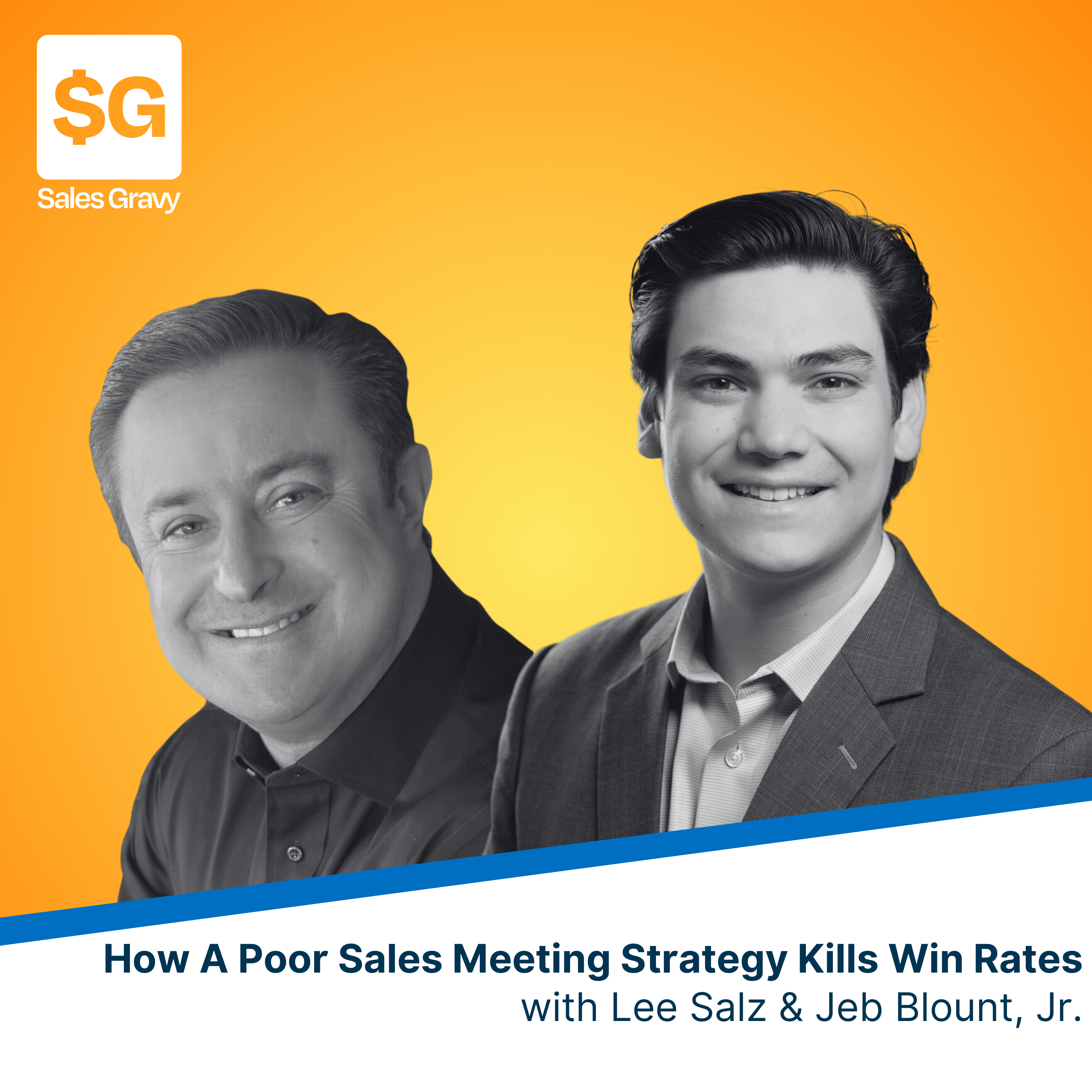
Sales teams often focus on improving late-stage closing skills to boost win rates. However, the real leverage is in the first meeting. A weak initial interaction creates a flawed deal foundation that even the best closing tactics cannot salvage.