Get your free personalized podcast brief
We scan new podcasts and send you the top 5 insights daily.
YouTube's decision to share 55% of ad revenue with creators on a video-by-video basis was a novel concept that has since distributed over $100 billion. This business model was the fundamental economic engine that built an entirely new class of entrepreneurs and established the creator economy.

Related Insights
Elite YouTube creators aren't just passive recipients of ad revenue. They actively buy their own ad inventory from YouTube and then resell it directly to brands, packaging it like traditional TV with guaranteed "adjacency" to specific content. This strategy dramatically increases monetization and business valuation.
![Media M&A - [Business Breakdowns, EP.230] thumbnail](https://megaphone.imgix.net/podcasts/8404be2a-a3c6-11f0-9d01-7b00b28a9d50/image/9a48597af1149c3b024e8d2f7327aa89.jpg?ixlib=rails-4.3.1&max-w=3000&max-h=3000&fit=crop&auto=format,compress)
In the attention economy, high-paid talent at legacy companies like CNN are cost centers on a bloated P&L. By using platforms like YouTube or Substack, these individuals can become high-margin businesses, capturing value directly from their audience instead of a corporate employer.

Unlike newer platforms with opaque payout systems, YouTube is locked into a 55% revenue share with creators. Hank Green suggests this is now seen as a strategic mistake by YouTube, a system so entrenched that changing it would cause a massive creator revolt, giving creators unique leverage.

A growing number of Chinese creators are uploading content to YouTube, motivated by the potential for direct ad revenue from a global audience. This trend, inspired by pioneers like Li Ziqi, marks a deliberate strategy to tap into overseas markets.

YouTube now generates more advertising revenue than Disney, Paramount, and Warner Bros combined. This marks its ascendance as the world's largest media company, proving the economic dominance of a platform with infinite, user-generated niche channels over traditional, top-down content studios.

The economics of media have flipped. Previously, the 'means of production' (studios, networks) captured most value, giving talent ~15% of revenue. Now, with democratized platforms like podcasting, the means of production are commoditized, and top talent can command 70% or more of the revenue.

A common practice among rapidly growing channels is to reinvest all AdSense and sponsorship income directly back into production. This funds better editors and designers, creating a virtuous cycle of quality improvement that accelerates growth far more effectively than personal profit-taking.

Unlike studios risking billions on upfront investments, YouTube only pays for successful content via revenue sharing. Creators then reinvest this money into better productions, improving the platform's overall quality and capturing more audience attention in a virtuous, self-funding cycle.

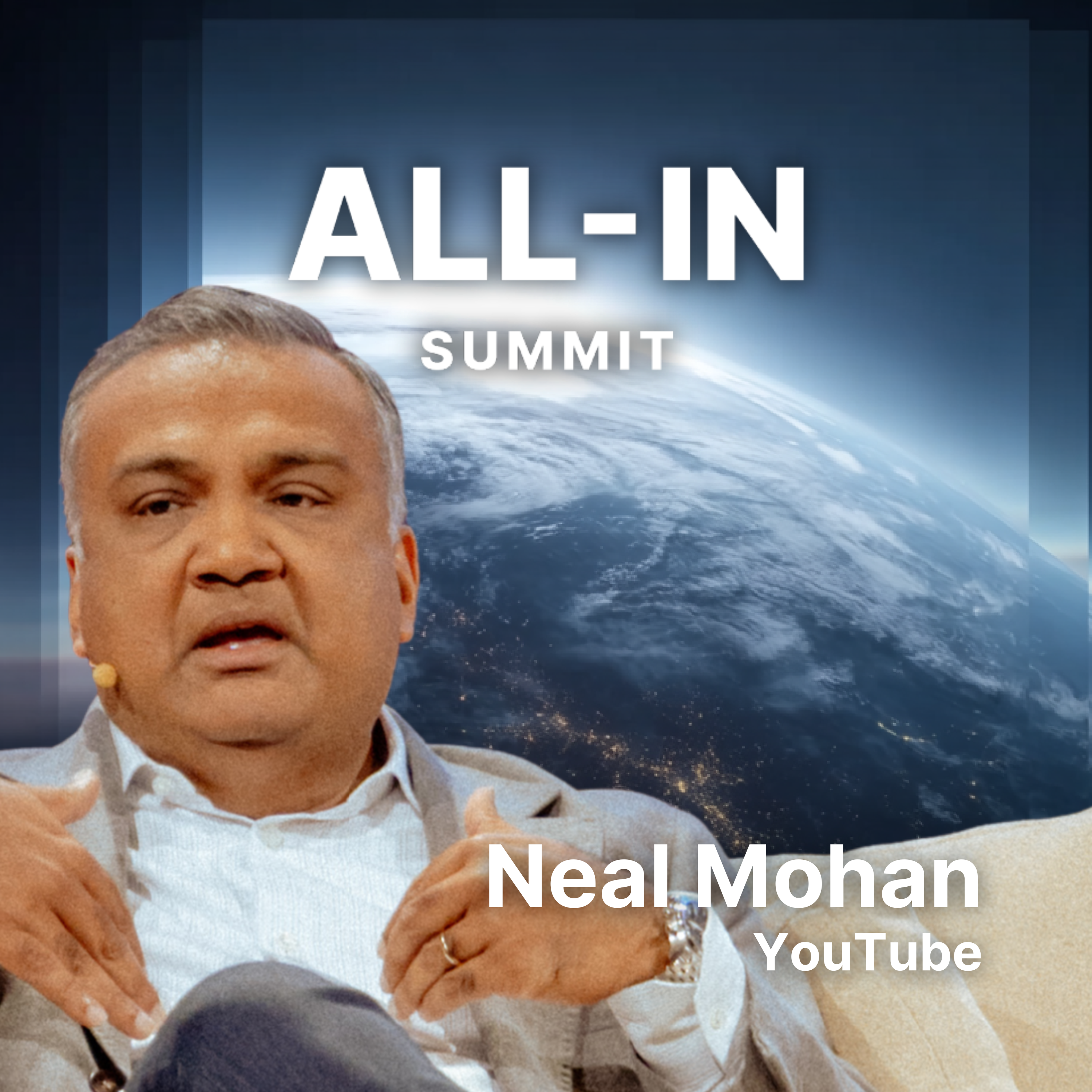
Neal Mohan defends YouTube's revenue split by positioning it as a model where creators bet on their own growth, contrasting with traditional media's upfront payments. For top creators who self-monetize, he frames this as a flexible choice, not a platform weakness, allowing them to select the model that best suits their business.
Viewing podcasting through its $5B advertising market is misleading. Its true market is the $100B creator economy, as many podcasts monetize indirectly through subscriptions, merchandise, live events, or by serving as a marketing channel for a larger business.