Get your free personalized podcast brief
We scan new podcasts and send you the top 5 insights daily.
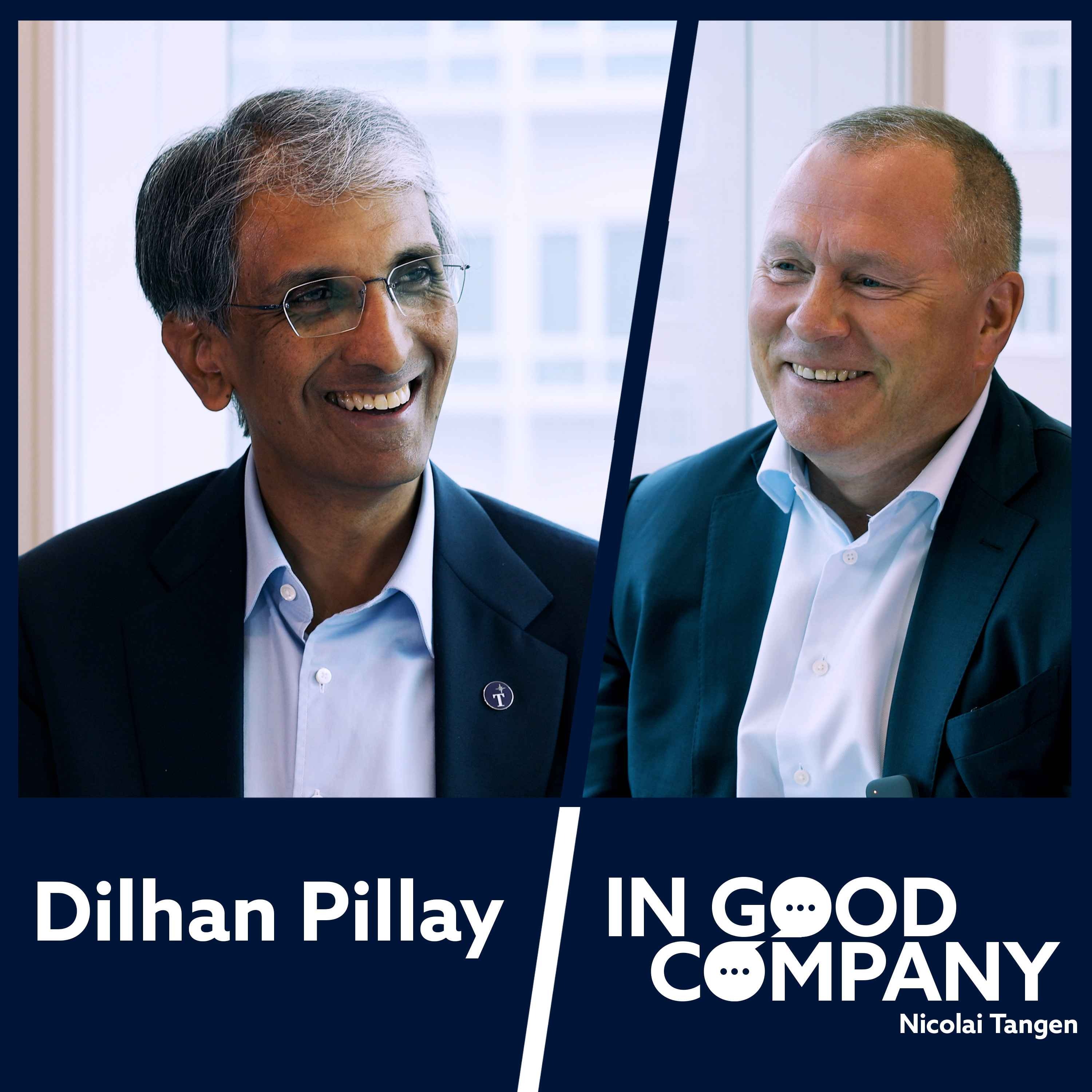
Temasek's partnership philosophy is not about risk diversification. Instead, it prioritizes collaborating with partners who can augment its internal capabilities and provide specific skill sets it lacks for a given opportunity. This makes partnership a strategic tool for capability building, not just capital sharing.
Related Insights
Architecture giant Gensler implements a co-leadership model not just at the CEO level but throughout the firm. This structure thrives by pairing leaders with complementary skills ("aces and spaces") and is built on a foundation of deep trust, allowing partners to defer to one another's judgment in disagreements.

Temasek evaluates global investments on two fronts: financial returns and the strategic insights they generate. This "network effect" allows them to transfer knowledge from one portfolio company to others, enhancing value across their entire ecosystem and justifying investments beyond pure financial metrics.
To avoid stifling talent, Sequoia uses 'freedom within frameworks.' It provides guiding principles—shared values and a common value chain (sourcing, picking, winning)—but allows partners total autonomy in their methods. This enables diverse, authentic styles, from deep thematic work to high-volume networking, to coexist effectively.

Centerbridge initially sought investors equally skilled in PE and credit, a "switch hitter" model they found unrealistic. They evolved to a "majors and minors" approach, allowing professionals to specialize in one area while gaining significant experience in the other. This fosters deep expertise without sacrificing the firm's integrated strategy.

To win highly sought-after deals, growth investors must build relationships years in advance. This involves providing tangible help with hiring, customer introductions, and strategic advice, effectively acting as an investor long before deploying capital.
![David George - Building a16z Growth, Investing Across the AI Stack, and Why Markets Misprice Growth - [Invest Like the Best, EP.450] thumbnail](https://megaphone.imgix.net/podcasts/8da7dbd8-ceeb-11f0-941c-ef83bcdd4c9f/image/d44107bc94719f78fbe91befb141073e.jpg?ixlib=rails-4.3.1&max-w=3000&max-h=3000&fit=crop&auto=format,compress)
Recognizing that investment capabilities alone are insufficient, Temasek proactively established a geopolitical team and a Washington D.C. office in 2017. This was done not in reaction to a crisis but in anticipation of global shifts that could have widespread ramifications on their portfolio.
When a talented partner is too risk-averse, advice alone fails. The solution is to actively co-pilot their initial risky decisions, saying, 'We're going to invest in that company.' This 'teach by showing' approach gradually builds the courage and comfort level necessary to pursue asymmetric upside independently in the future.
Exor is strategically entering the healthcare sector not through a large acquisition, but by taking significant minority stakes in companies like Philips and Institut Mérieux. This gives them a "front row seat" to learn the industry, build knowledge, and establish credibility for a long-term pivot.
![Exor: Fiat Crisis to Ferrari Glory - [Business Breakdowns, EP.229] thumbnail](https://megaphone.imgix.net/podcasts/81a71ab6-9e6b-11f0-8aff-7bd806e17203/image/1c411f84b9b949374f0accaa0a5ff38a.jpg?ixlib=rails-4.3.1&max-w=3000&max-h=3000&fit=crop&auto=format,compress)
The extreme cost and technical risk of engine development make risk-sharing partnerships a strategic necessity. GE's most successful franchise, CFM International, is a 50-year-old joint venture with Safran that demonstrates how collaboration is essential to tackle projects that are too large for any single company to bear alone.
![GE Aerospace: Full Throttle - [Business Breakdowns, EP.234] thumbnail](https://megaphone.imgix.net/podcasts/b4e183c0-c0f9-11f0-9cb9-1fd84f161334/image/52fc2070fb32ee2a270fcf835e7c161a.jpg?ixlib=rails-4.3.1&max-w=3000&max-h=3000&fit=crop&auto=format,compress)
Unlike Norway's model of direct government ownership, Singapore's Temasek acts as a holding company. This structure allows it to convene portfolio company leaders (e.g., in a Sustainability Council) to share insights and best practices, creating synergies that would be impossible with disparate ownership.