Get your free personalized podcast brief
We scan new podcasts and send you the top 5 insights daily.
Before letting an AI modify files, use its 'plan mode' to have it outline its approach. Ask it to identify files to change, potential risks, and what it's intentionally leaving out. This provides a chance to review and course-correct, preventing wasted effort and unexpected side effects, similar to a human code review process.

Related Insights
Before coding a complex AI project, validate the plan by presenting it to diverse AI models (including different families like Chinese open models). Use their critical feedback to identify blind spots, challenge assumptions, and refine the core concept before committing to development.

When using AI development tools, first leverage their "planning" mode. The AI may correctly identify code to change but misinterpret the strategic goal. Correct the AI's plan (e.g., from a global change to a user-specific one) before implementation to avoid rework.
![Building a Personal AI Model Map [AI Operators Bonus Episode] thumbnail](https://d3t3ozftmdmh3i.cloudfront.net/staging/podcast_uploaded_nologo/41472609/41472609-1752234663609-8665756a468e5.jpg)
Before writing any code for a complex feature or bug fix, delegate the initial discovery phase to an AI. Task it with researching the current state of the codebase to understand existing logic and potential challenges. This front-loads research and leads to a more informed, efficient approach.

LLMs often get stuck or pursue incorrect paths on complex tasks. "Plan mode" forces Claude Code to present its step-by-step checklist for your approval before it starts editing files. This allows you to correct its logic and assumptions upfront, ensuring the final output aligns with your intent and saving time.

As AI writes most of the code, the highest-leverage human activity will shift from reviewing pull requests to reviewing the AI's research and implementation plans. Collaborating on the plan provides a narrative journey of the upcoming changes, allowing for high-level course correction before hundreds of lines of bad code are ever generated.

Borrowing from classic management theory, the most effective way to use AI agents is to fix problems at the earliest 'lowest value stage'. This means rigorously reviewing the agent's proposed plan *before* it writes any code, preventing costly rework later on.

To get better results from AI, don't ask for the final output immediately. Instead, prompt the AI to first provide a detailed process. This allows you to review and debug its logic, then instruct it to execute each step for a more accurate outcome.

Developers often skip optional quality checks. To ensure consistent AI-powered plan reviews, implement a mandatory hook—a script that blocks the development process (e.g., exiting plan mode) until the external AI review has been verifiably completed. This engineers compliance into the workflow, guaranteeing a quality check every time.
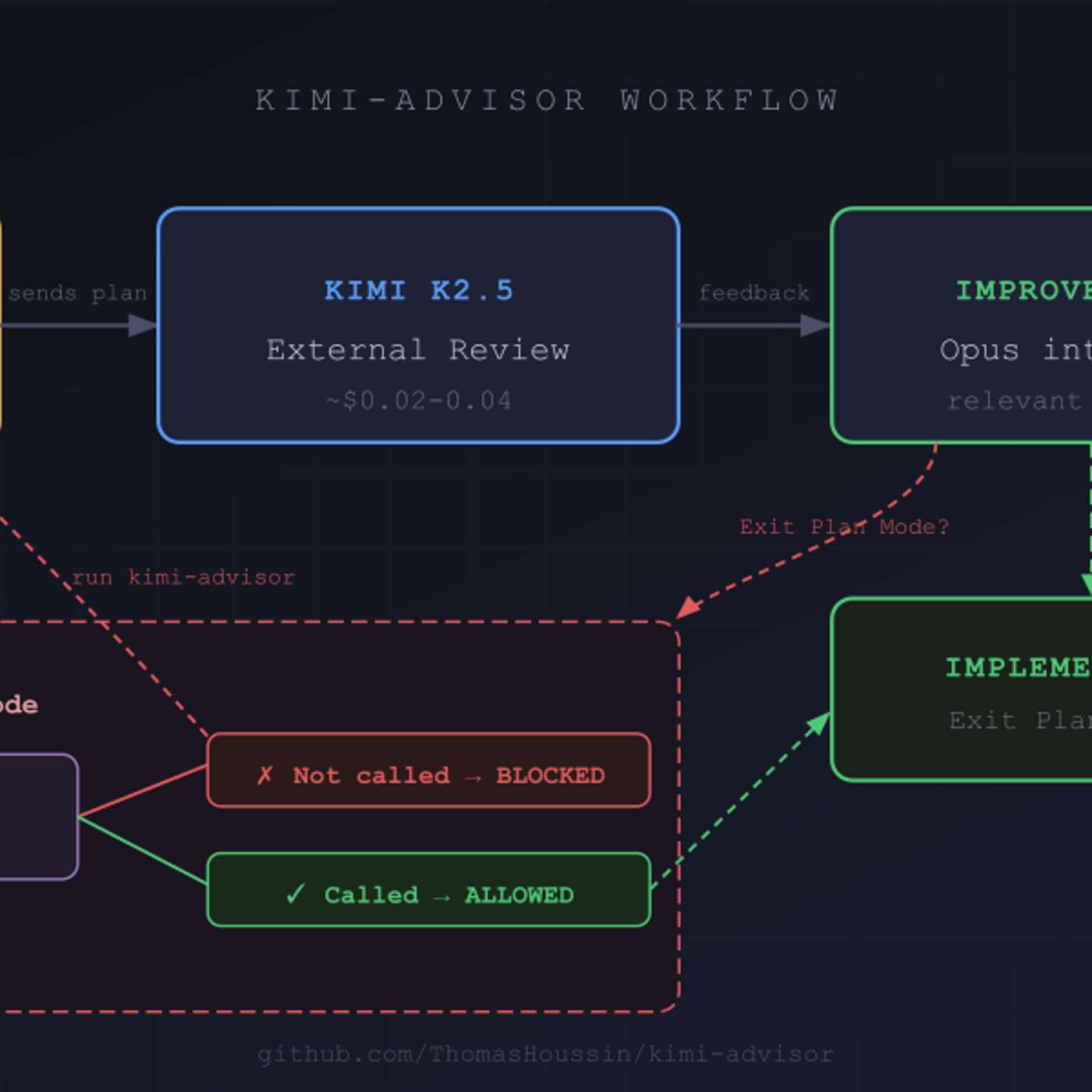
A powerful technique for creating robust software plans is to use AI as an adversarial partner. After drafting a specification, prompt an AI to "tear it apart" by identifying underspecified or inconsistent points. Iterate on this process until the AI's feedback becomes niche, indicating a solid spec.

Before asking an AI agent to perform a complex task like building an app, instruct it to "plan this" first. This forces the agent to outline its architecture, features, and steps. This allows you to review and approve the plan, preventing wasted time, tokens, and incorrect execution.