Get your free personalized podcast brief
We scan new podcasts and send you the top 5 insights daily.
A device designed to track falls in dementia patients failed because the patients, confused about its purpose, simply took it off. This highlights a critical layer of usability beyond ergonomics: the device's function and presence must be comprehensible and non-threatening to the target patient's cognitive state.

Related Insights
While longer wear-time is a key market goal, it creates a development bottleneck. A clinical trial for a 30-day device inherently takes at least 30 days plus analysis time. This slows iteration to a crawl and makes it imperative to develop reliable lab tests that can serve as a proxy for real-world use.
Extending a wearable's wear time has two major benefits beyond convenience. It lowers costs by reducing device waste and the need for frequent healthcare worker assistance. More importantly, it dramatically increases patient compliance, as a once-a-month application is far easier to adhere to than a daily routine.
Common frustrations, like chronically forgetting which stove knob controls which burner, are not personal failings. They are examples of poor design that lacks intuitive mapping. Users often internalize these issues as their own fault when the system itself is poorly designed.

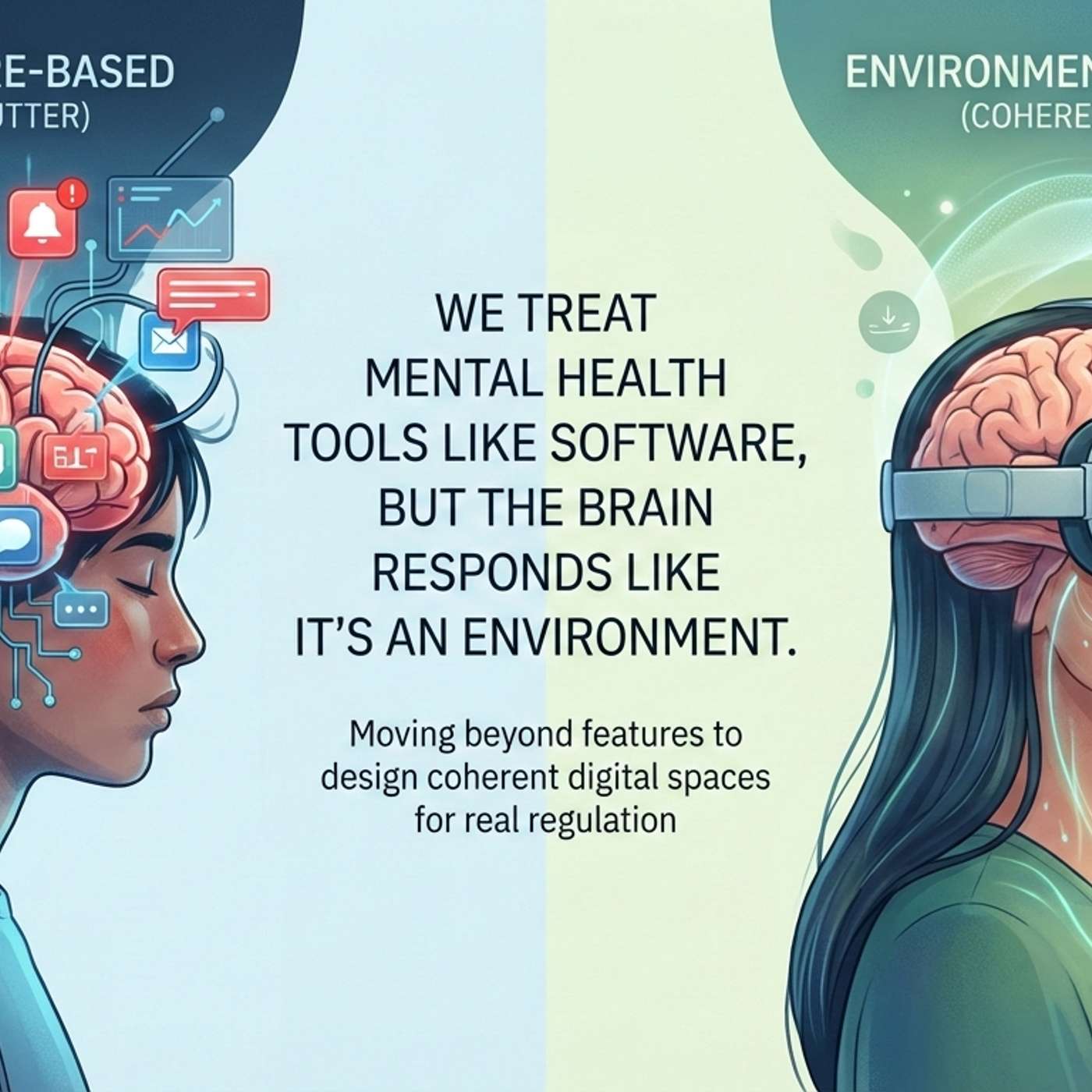
Tech culture incorrectly equates sensory immersion with therapeutic impact. High intensity can overwhelm the nervous system, causing fatigue or dissociation, even with positive content. The goal of immersive tech in mental health should be to orient the user and create predictability, not to 'impress' them, as the nervous system benefits from orientation, not just stimulation.
While wearables generate vast amounts of health data, the medical system lacks the evidence to interpret these signals accurately for healthy individuals. This creates a risk of false positives ('incidentalomas'), causing unnecessary anxiety and hindering adoption of proactive health tech.

To combat non-adherence, Zyda coaches patients to 'habit stack' by using their device while watching a specific weekly TV show. This behavioral design strategy of linking a new action to an established routine is more effective than relying solely on a device's ease of use.

A primary cause of wearable device failure is not major trauma, but frequent, minor impacts from daily life, such as brushing against a doorframe. Adding a thin, flexible overlay on top of the device absorbs these stresses, prevents edge lifting, and can increase the device's survival rate by four times.
The success of a medical wearable is no longer determined by clinical efficacy alone. These devices are merging with consumer electronics, meaning factors like being ultra-thin and aesthetically pleasing are now critical for user adoption. This requires balancing usability, manufacturability, and clinical performance from day one.
The massive abandonment rate of health apps stems from a core design flaw: they are built to achieve company objectives (e.g., increase diagnosis) rather than integrating into patients' and doctors' existing workflows and behaviors, making them burdensome to use.

The brain perceives digital products as environments, not isolated features. A calming feature within a fragmented, attention-hungry app will fail because the surrounding context constantly pulls the nervous system into stress. The 'container' is more critical for lasting results than the specific intervention or content.