Get your free personalized podcast brief
We scan new podcasts and send you the top 5 insights daily.
The massive abandonment rate of health apps stems from a core design flaw: they are built to achieve company objectives (e.g., increase diagnosis) rather than integrating into patients' and doctors' existing workflows and behaviors, making them burdensome to use.

Related Insights
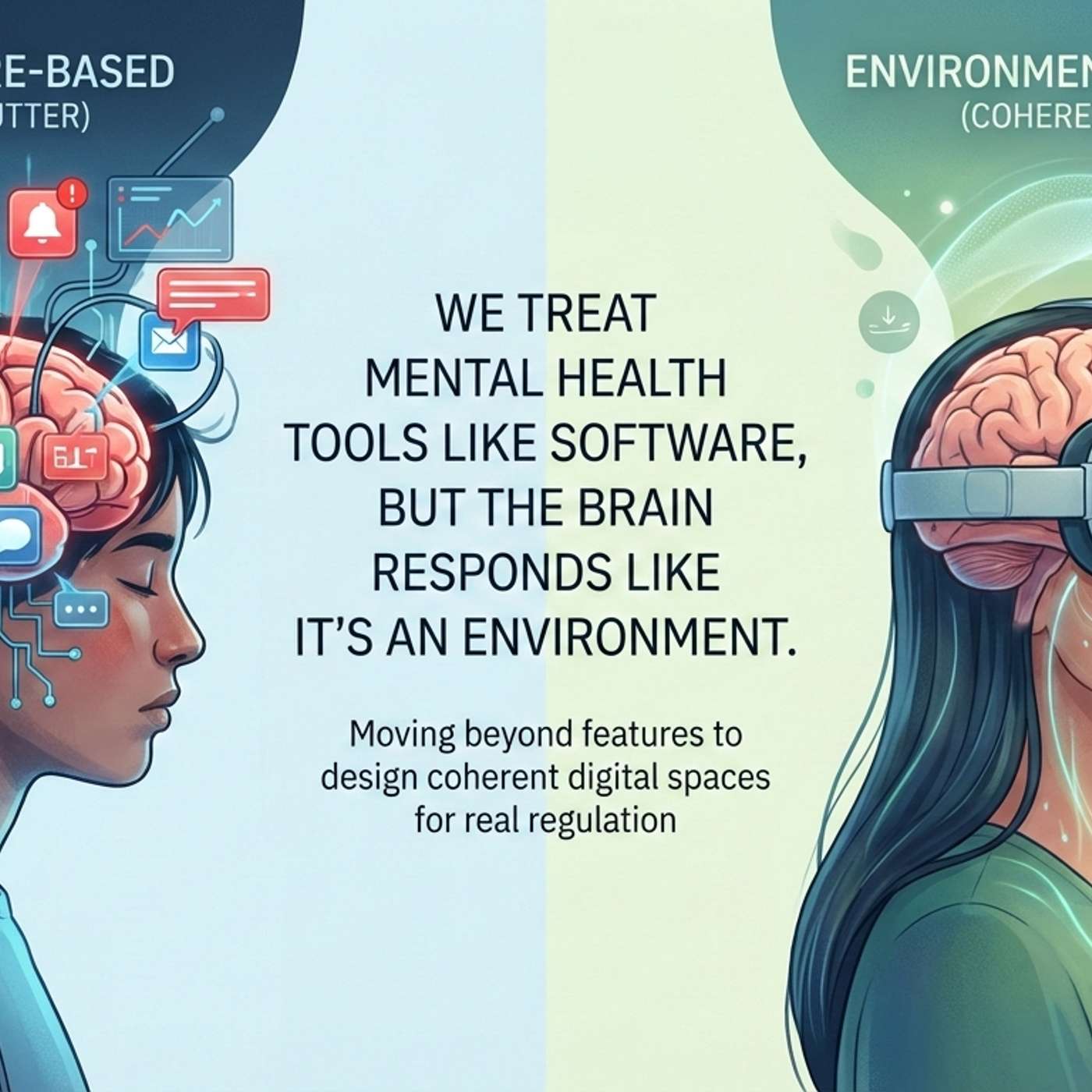
Effective recovery from burnout or stress requires restoring a sense of self, not just managing symptoms. Most apps focus on tasks and interventions, which can reinforce a user's feeling of disconnection. Lasting change happens when a digital environment supports a user's self-continuity, rather than treating them as an operator completing exercises.
Pharma leaders often rush to launch pilots with new technology like VR without a sustainable engagement plan. This results in countless one-off projects that fail to scale. The crucial question isn't "Can we do it?" but "What happens after the first interaction?"
Companies run numerous disconnected AI pilots in R&D, commercial, and other silos, each with its own metrics. This fragmented approach prevents enterprise-wide impact and disconnects AI investment from C-suite goals like share price or revenue growth. The core problem is strategic, not technical.

Despite industry rhetoric, healthcare technology development overwhelmingly prioritizes physicians over patients. This creates a significant gap, as the ultimate end-user's needs are often an afterthought in solution design.
The friction of navigating insurance and pharmacies is so high that chronic disease patients often give up, skipping tests or medications and directly worsening their health. AI can automate these tedious tasks, removing the barriers that lead to non-compliance and poor health outcomes.

Many pharma companies allow various departments to run numerous, disconnected AI pilots without a central strategy. This lack of strategic alignment means most pilots fail to move beyond the proof-of-concept stage, with 85% yielding no measurable return on investment.
To combat non-adherence, Zyda coaches patients to 'habit stack' by using their device while watching a specific weekly TV show. This behavioral design strategy of linking a new action to an established routine is more effective than relying solely on a device's ease of use.

When patient engagement is owned by a single department, it's often treated as optional. To make it a core business driver, responsibility must be shared across R&D, medical, regulatory, and commercial teams. This requires a structural and cultural shift to become truly transformational for the organization.

The speaker's failure with a weight-loss drug by not changing his eating habits ("eating through the shot") mirrors how businesses fail with new tools. A new CRM or marketing automation platform won't deliver results if the underlying sales or marketing processes don't also adapt.

The primary barrier to successful AI implementation in pharma isn't technical; it's cultural. Scientists' inherent skepticism and resistance to new workflows lead to brilliant AI tools going unused. Overcoming this requires building 'informed trust' and effective change management.