Get your free personalized podcast brief
We scan new podcasts and send you the top 5 insights daily.
Instead of shipping compiled libraries, provide a detailed specification for an AI coding agent to read and implement locally. This emerging 'ghost library' model creates minimal, custom implementations, reducing bloat and making the code fully owned and modifiable by the local agent ecosystem.
Related Insights
Instead of building a walled-garden AI, the Zed IDE created the Agent Client Protocol (ACP), allowing any coding agent to integrate. This 'Switzerland' strategy, modeled after the Language Server Protocol, lets Zed benefit from all AI innovation rather than competing against it, even attracting competitors like JetBrains to adopt the standard.

Snyk founder's new venture, TESOL, posits that AI will make code disposable. Instead of code being the source of truth, a durable, versioned 'spec' document defining requirements will become the core asset. AI agents will generate the implementation, fundamentally changing software development.

Agentic frameworks like OpenClaw are pioneering a new software paradigm where 'skills' act as lightweight replacements for entire applications. These skills are essentially instruction manuals or recipes in simple markdown files, combining natural language prompts with calls to deterministic code ('tools'), condensing complex functionality into a tiny, efficient format.
Instead of importing external libraries, AI agents can rewrite them from scratch. This 'in-housing' of dependencies strips away unnecessary generic features, focusing only on required functionality. This simplifies security reviews and patching, as the code becomes first-party.
Inspired by fully automated manufacturing, this approach mandates that no human ever writes or reviews code. AI agents handle the entire development lifecycle from spec to deployment, driven by the declining cost of tokens and increasingly capable models.

A new software paradigm, "agent-native architecture," treats AI as a core component, not an add-on. This progresses in levels: the agent can do any UI action, trigger any backend code, and finally, perform any developer task like writing and deploying new code, enabling user-driven app customization.

Instead of building shared libraries, teams can grant an AI access to different codebases. The AI acts as a translator, allowing developers to understand and reimplement logic from one tech stack into a completely different one, fostering reuse without the overhead of formal abstraction.
Instead of integrating with existing SaaS tools, AI agents can be instructed on a high-level goal (e.g., 'track my relationships'). The agent can then determine the need for a CRM, write the code for it, and deploy it itself.
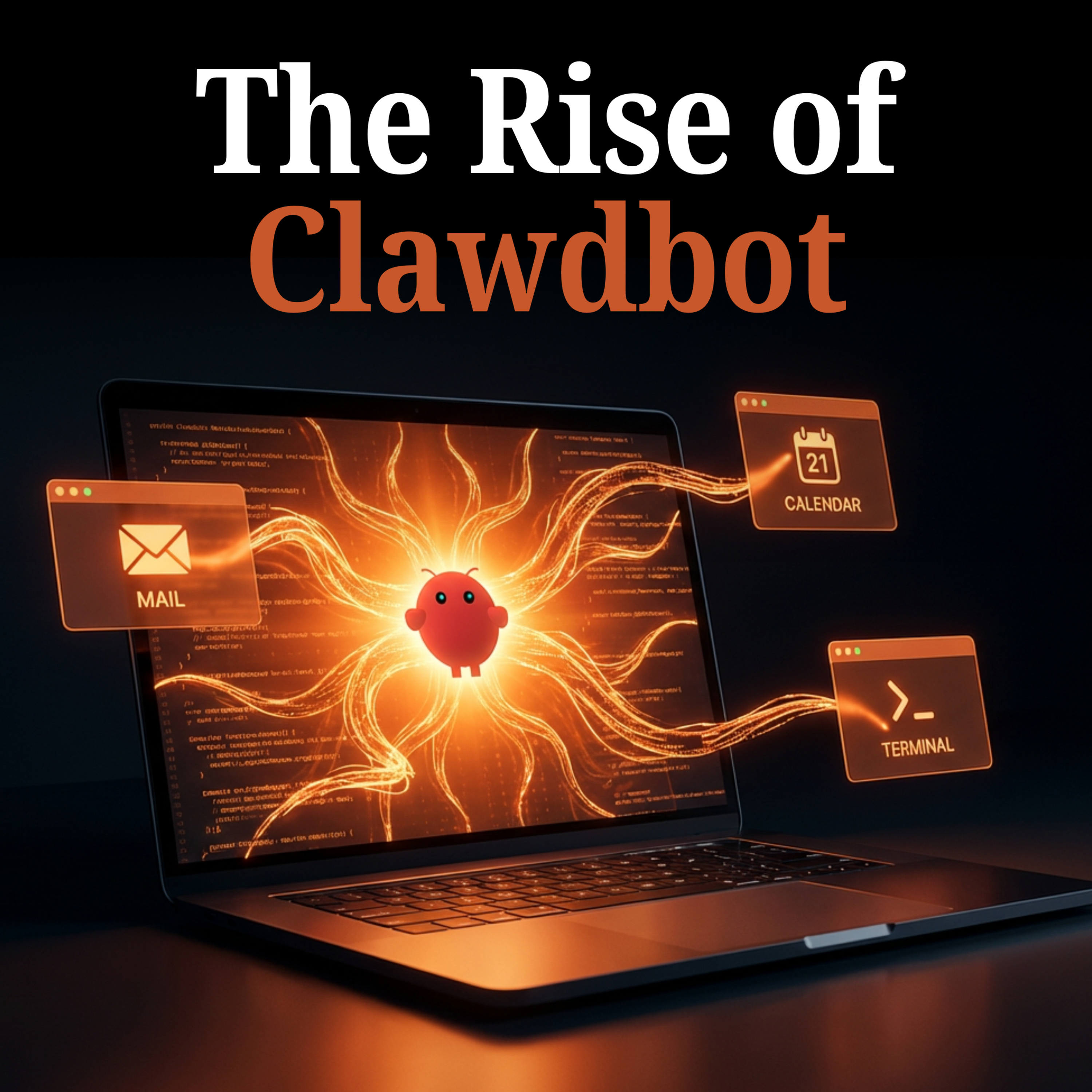
Instead of a standard package install, providing a manual installation from a Git repository allows an AI agent to access and modify its own source code. This unique setup empowers the agent to reconfigure its functionality, restart, and gain new capabilities dynamically.

Instead of relying on platform-specific, cloud-based memory, the most robust approach is to structure an agent's knowledge in local markdown files. This creates a portable and compounding 'AI Operating System' that ensures your custom context and skills are never locked into a single vendor.
