Get your free personalized podcast brief
We scan new podcasts and send you the top 5 insights daily.
We often fail to recognize how differently people experience reality because social norms compress our outward behavior into a narrow, acceptable range. This illusion of uniformity hides vast internal psychological differences, making a diverse toolkit for self-improvement essential.

Related Insights
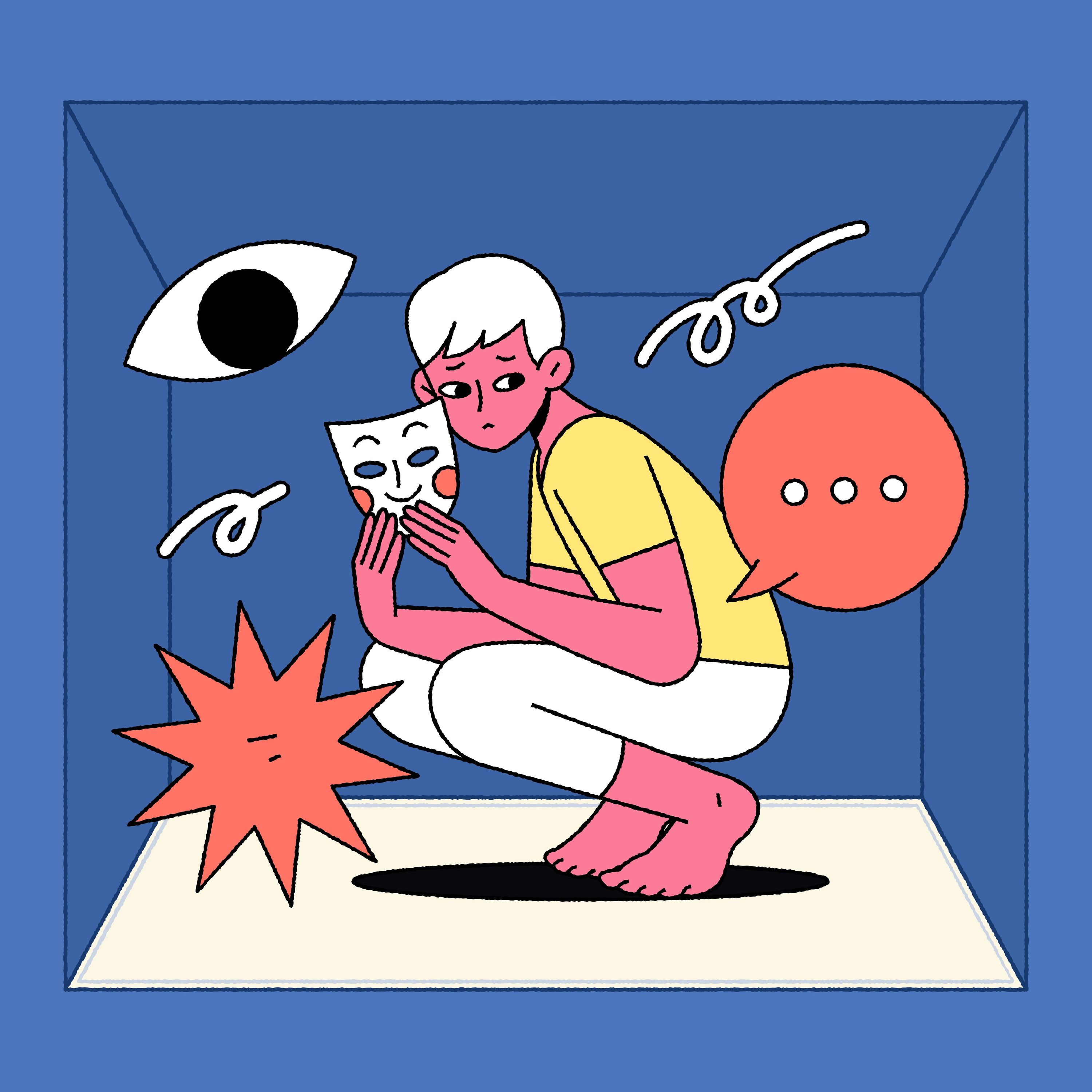
We judge ourselves based on our chaotic, unfiltered internal monologue while judging others by their curated external presentation. This massive data imbalance fosters the false belief that we are uniquely strange or broken, damaging our self-esteem.

Psychologist Nicholas Epley's “lesser minds problem” suggests we assume strangers have less complex inner lives—less intelligence, willpower, and emotion—because we can't see their thoughts. This creates a barrier to connection, but also means we're often pleasantly surprised when we engage and discover their full humanity.

We project our paths to happiness onto others, forgetting values are individually conditioned. One person's dream (entrepreneurship, multigenerational living) is another's nightmare. This awareness fosters humility and prevents giving prescriptive, biased advice about how to live wisely.

One of the biggest obstacles to personal growth is that the people around you have a fixed mental model of who you are. When you change, you destabilize their reality, and they will unconsciously try to nudge you back into your familiar role. This social pressure makes reinvention feel like breaking out of an invisible prison.
A significant portion of what we consider our 'personality' is actually a collection of adaptive behaviors developed to feel loved and accepted. When you learn to generate that feeling internally, for instance through meditation, many of these compensatory traits can dissolve, revealing they were not your core identity.

Because secrets are inherently invisible, we only see our own. This creates a psychological bias where we falsely assume we are the only ones harboring shameful thoughts or experiences. This isolation amplifies the burden of our secrets, a feeling that is often exacerbated by the curated perfection seen on social media.
The speakers observe that an American who identifies as an introvert can appear highly extroverted to a British person. This highlights how personality labels are not absolute but are defined and perceived relative to a cultural baseline of social behavior.

'Pluralistic ignorance' is when we privately believe one thing but think everyone else believes the opposite. We feel stuck but see others' curated successes, leading us to feel isolated in our struggles. The solution is to realize most people feel the same way.

A prevalent falsehood in the self-help world is that a single technique is a universal solution for everyone. Human minds vary so widely that a toolbox of different approaches is necessary, as no single method works for all people or all problems.
Human brains are optimized to interpret social patterns, which was critical for survival. This social focus makes us inherently poor at perceiving objective physical reality directly. Individuals less sensitive to social cues might possess a cognitive architecture better suited for scientific inquiry.
