Get your free personalized podcast brief
We scan new podcasts and send you the top 5 insights daily.
MongoDB CEO CJ Desai considers Frontier AI labs the "Holy Grail" customer segment. Their explosive, non-linear growth in users and data provides the ultimate stress test for an infrastructure platform's architecture. Successfully supporting their vertical scaling spikes gives immense confidence that the platform can handle any enterprise workload.

Related Insights
Fal's competitive advantage lies in the operational complexity of hosting 600+ different AI models simultaneously. While competitors may optimize a single marquee model, Fal built sophisticated systems for elastic scaling, multi-datacenter caching, and GPU utilization across diverse architectures. This ability to efficiently manage variety at scale creates a deep technical moat.

To build a multi-billion dollar database company, you need two things: a new, widespread workload (like AI needing data) and a fundamentally new storage architecture that incumbents can't easily adopt. This framework helps identify truly disruptive infrastructure opportunities.

CoreWeave argues that large tech companies aren't just using them to de-risk massive capital outlays. Instead, they are buying a superior, purpose-built product. CoreWeave’s infrastructure is optimized from the ground up for parallelized AI workloads, a fundamental shift from traditional cloud architecture.

Fast-scaling AI-native companies are so focused on model development that they lack the personnel to manage infrastructure. They expect providers like MongoDB to offer fully autonomous, auto-scaling solutions, shifting the responsibility of capacity management entirely to the vendor, a significant evolution from the traditional managed service model.
The CEO of SambaNova describes the current AI infrastructure market—from hyperscalers to sovereign clouds—as a "land grab." The primary focus is on rapidly scaling to acquire users and customers, as historical tech cycles show that the first large-scale players often establish enduring market dominance.
Since 2022, AI has created a pivotal moment where the long-term value of existing software is being questioned by both investors and customers. MongoDB's CEO asserts that in this new stack, only two layers feel certain to endure: the foundational data layer where information is stored and the LLM layer that provides intelligence. Everything in between must now re-prove its value.

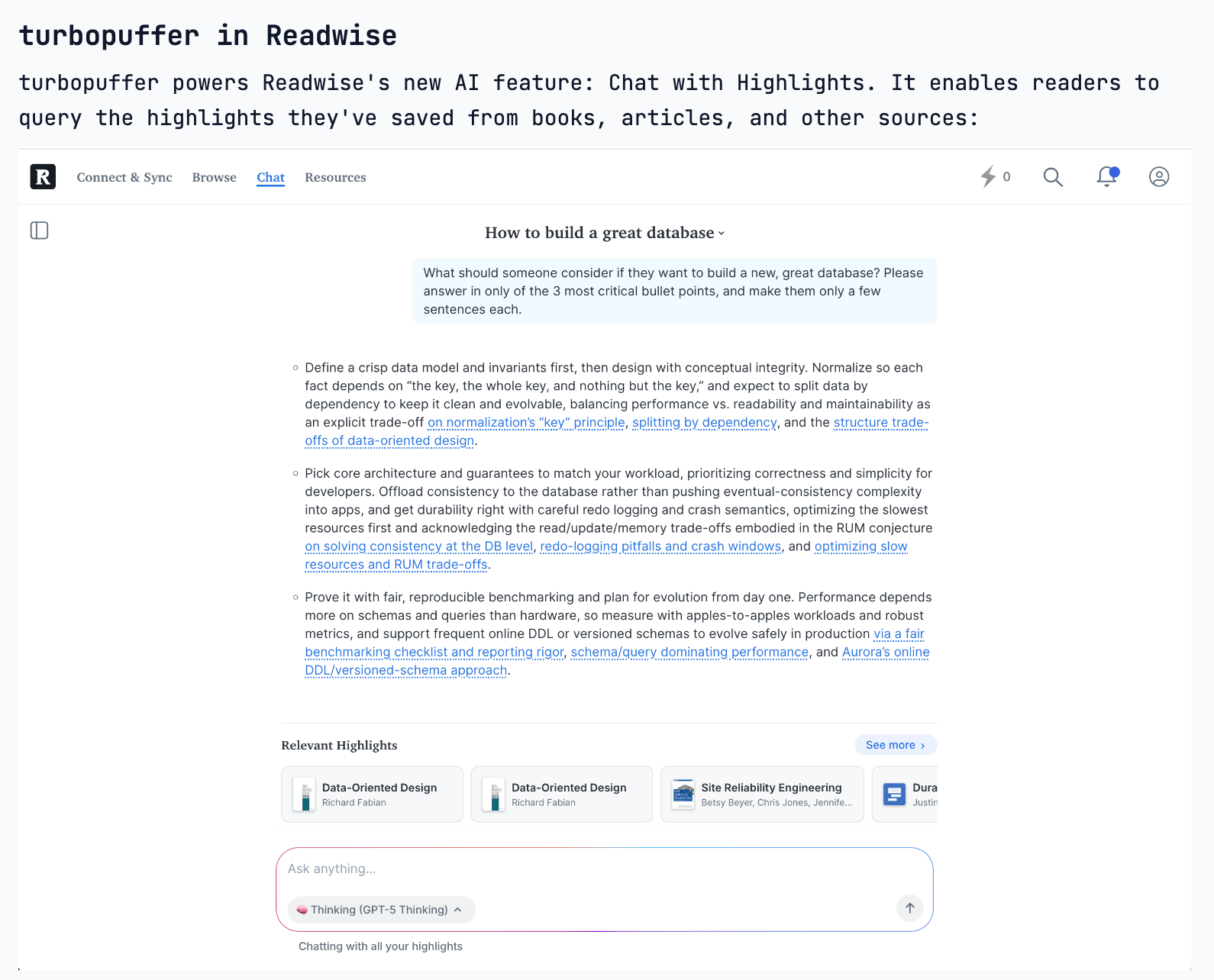
Truly massive database companies only emerge every ~15 years when three conditions are met: a new ubiquitous workload (like AI), a new underlying storage architecture that predecessors can't adopt (like NVMe SSDs and S3), and a long-term roadmap to handle all possible data queries.
While AI proofs-of-concept are easy, SAP's CTO states the real engineering hurdle is scaling reliably. The complexity lies in managing thousands of APIs, handling massive document volumes, and applying granular, user-specific context (like regional policies) consistently and accurately.
MongoDB's CEO highlights a key shift in enterprise priorities. Driven by recent major cloud outages, customers are now more concerned with the high cost of data resiliency (multi-region/multi-cloud setups) than raw storage costs. This makes multi-cloud capabilities a critical competitive differentiator for data platforms.

MongoDB's CEO argues that while a wedge product provides entry, long-term defensibility comes from becoming a platform. Platforms are sticky because customers build integrations around them, making them much harder to remove than a single-purpose tool. This rarity of platforms is why few software companies surpass $10 billion in revenue.