Get your free personalized podcast brief
We scan new podcasts and send you the top 5 insights daily.
‘Punk Tech’ is a rebellious, anti-corporate approach to technology reminiscent of the early web's anarchic spirit. It involves running your own servers for email, file storage, and other services to break free from dependency on large tech companies like Google and Dropbox.

Related Insights
Lorenz describes her ideal internet as one driven by user control, not corporate profit. She advocates for civil liberties, free expression, and privacy laws. This vision includes federated social media where users own their data and followers, algorithmic transparency, and a focus on open-source models.

SaaS versions of automation platforms often have usage-based pricing that becomes expensive. By using a virtual private server (VPS) from a provider like Hostinger, you can install the open-source version of the tool for a low, fixed monthly fee, enabling unlimited workflow executions and significant cost savings.

A USDA chief of staff predicts a cultural shift back to on-prem or local data hosting as trust in global cloud providers erodes. He envisions a future with community-based data centers where people host their data with local companies they align with, similar to choosing a local coffee shop.

The core appeal of open-source projects like OpenClaw is that they run locally on user hardware, granting full control over personal data. This contrasts with cloud-based agents from Meta, positioning data ownership and privacy as a key differentiator against convenience.

By running locally on a user's machine, AI agents can interact with services like Gmail or WhatsApp without needing official, often restrictive, API access. This approach works around the corporate "red tape" that stifles innovation and effectively liberates user data from platform control.
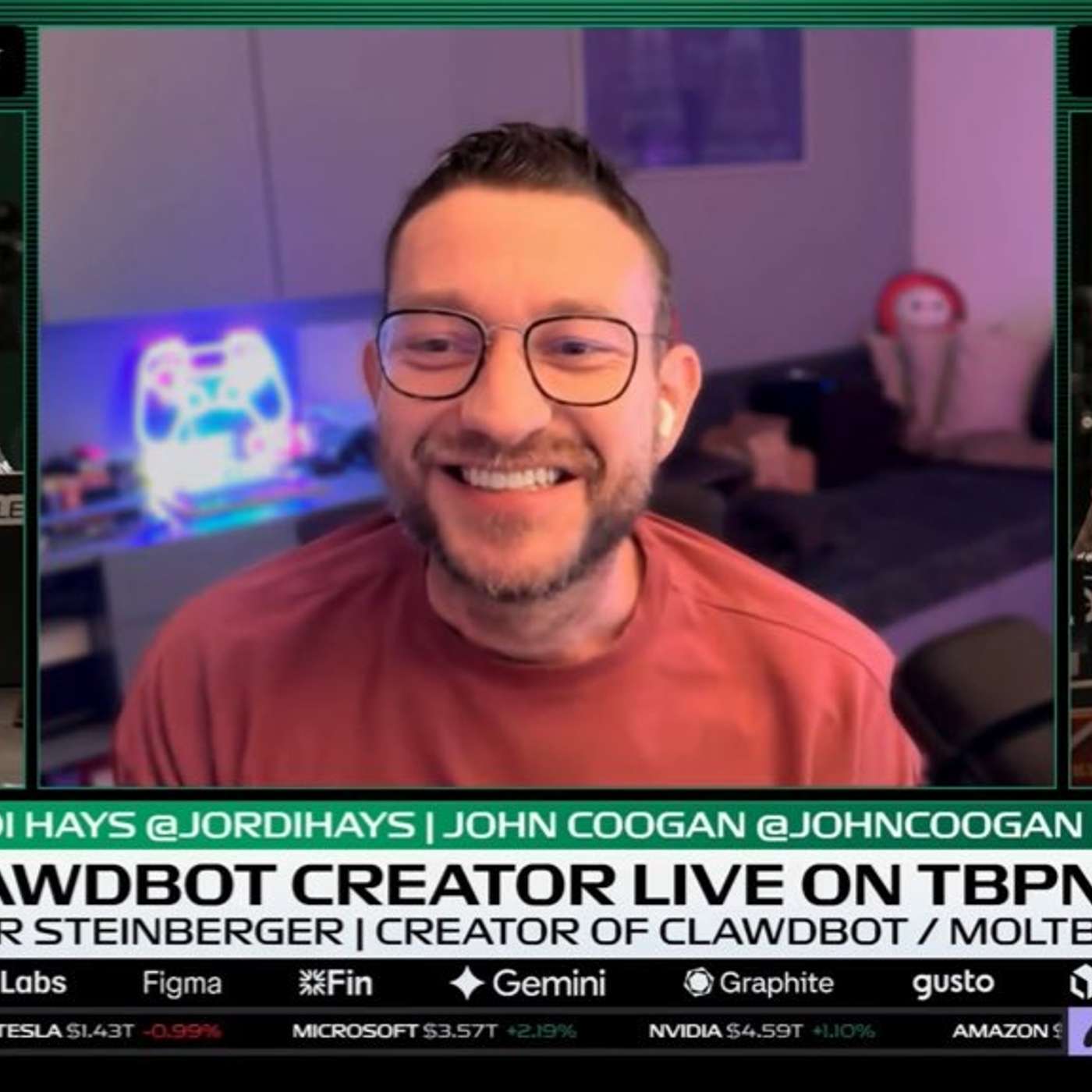
OpenClaw "skills" represent a shift from cloud-hosted SaaS. Users can download a skill—a complete application that runs locally on their machine. This eliminates hosting costs and gives the user full ownership to modify the code, as demonstrated with a SuperX alternative the guest built.
An independent AI ecosystem free from big tech dominance is being built via open-source models, local compute, and decentralized networks. Its current technical difficulty and 'kludginess' are not weaknesses but indicators of its potential, mirroring the early, hard-to-use internet that eventually became ubiquitous and accessible to all.

Recent breakdowns in student loan processing, AI governance, and cloud infrastructure highlight the vulnerability of centralized systems. This pattern underscores a key personal finance strategy: mitigate risk by decentralizing your money, data, and income streams across various platforms and sources.

The problem isn't anonymous speech, but that a few tech giants control the information landscape, making them targets for authoritarian influence. The structural solution is promoting a decentralized, federated social media ecosystem to diffuse control.

Running a personal AI on your own hardware is fundamentally different than using a cloud service. The key advantage is data sovereignty. This protects user data from third-party access, subpoenas, and control by large corporations, which is a critical differentiator for privacy-conscious users and businesses.
