Get your free personalized podcast brief
We scan new podcasts and send you the top 5 insights daily.
OpenClaw "skills" represent a shift from cloud-hosted SaaS. Users can download a skill—a complete application that runs locally on their machine. This eliminates hosting costs and gives the user full ownership to modify the code, as demonstrated with a SuperX alternative the guest built.

Related Insights
Agentic frameworks like OpenClaw are pioneering a new software paradigm where 'skills' act as lightweight replacements for entire applications. These skills are essentially instruction manuals or recipes in simple markdown files, combining natural language prompts with calls to deterministic code ('tools'), condensing complex functionality into a tiny, efficient format.
The core appeal of open-source projects like OpenClaw is that they run locally on user hardware, granting full control over personal data. This contrasts with cloud-based agents from Meta, positioning data ownership and privacy as a key differentiator against convenience.

The barrier to creating software is collapsing. Non-coders can now build sophisticated, personalized applications for specific workflows in under an hour. This points to a future where individuals and teams create their own disposable, custom tools, replacing subscriptions to numerous niche SaaS products.

Users are leveraging AI agents to build their own bespoke software, stripping away unused features from SaaS giants like Notion. This trend toward hyper-personalization threatens the one-size-fits-all SaaS model as users create cheaper, more effective personal tools.
For decades, buying generalized SaaS was more efficient than building custom software. AI coding agents reverse this. Now, companies can build hyper-specific, more effective tools internally for less cost than a bloated SaaS subscription, because they only need to solve their unique problem.

Investor Dave Morin identifies three core features that make OpenClaw feel qualitatively different: local memory files you control, a community hub for sharing skills, and a "heartbeat" feature enabling proactive, recurring tasks. This combination creates a sense of an agent that is always on and looking out for you.

By running on a local machine, Clawdbot allows users to own their data and interaction history. This creates an 'open garden' where they can swap out the underlying AI model (e.g., from Claude to a local one) without losing context or control.
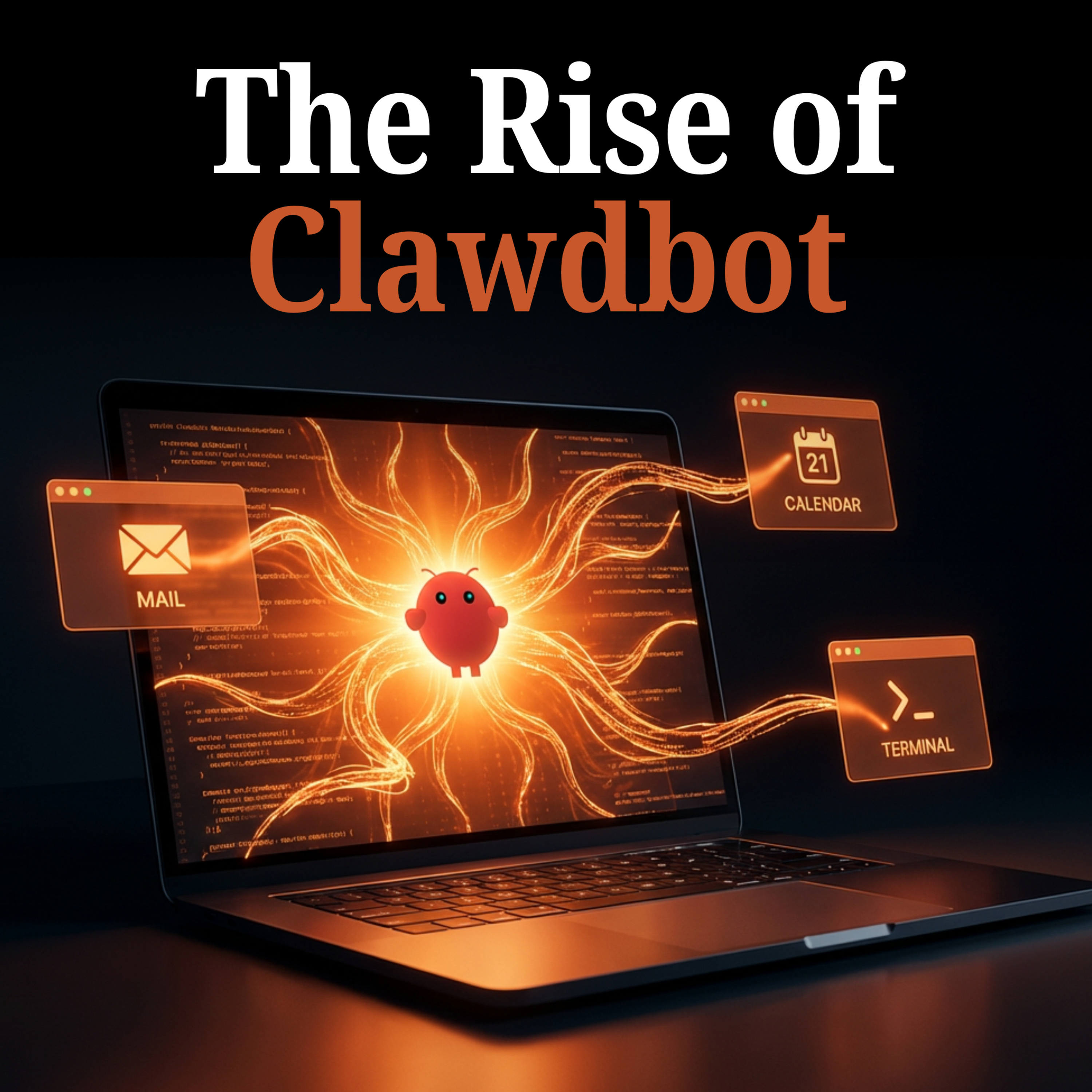
The excitement around tools like OpenClaw stems from their ability to empower non-programmers to create custom software and workflows. This replicates the feeling of creative power previously exclusive to developers, unlocking a long tail of niche, personalized applications for small businesses and individuals who could never build them before.
Non-technical users are leveraging agents like Moltbot to build their own hyper-personalized software. By simply describing a problem in natural language, they can create internal tools that perfectly solve their needs, eliminating the need to subscribe to many single-purpose SaaS applications.

AI may drastically lower the cost of software engineering, threatening the dominant SaaS model by enabling companies to affordably build bespoke in-house software, mirroring the current market dynamics in China.
