Get your free personalized podcast brief
We scan new podcasts and send you the top 5 insights daily.
By running locally on a user's machine, AI agents can interact with services like Gmail or WhatsApp without needing official, often restrictive, API access. This approach works around the corporate "red tape" that stifles innovation and effectively liberates user data from platform control.
Related Insights
The next generation of software may lack traditional user interfaces. Instead, they will be 'API-first' or 'agent-first,' integrating directly into existing workflows like Slack or email. Software will increasingly 'visit the user' rather than requiring the user to visit a dashboard.

As AI makes it trivial to scrape data and bypass native UIs, companies will retaliate by shutting down open APIs and creating walled gardens to protect their business models. This mirrors the early web's shift away from open standards like RSS once monetization was threatened.

Ubiquitous local AI agents that can script any service and reverse-engineer APIs fundamentally threaten the SaaS recurring revenue model. If software lock-in becomes impossible, business models may shift back to selling expensive, open hardware as a one-time asset, a return to the "shrink wrap" era.
Superhuman Go is not just another AI assistant; it's a platform designed to be the "mass transit" for third-party AI agents. By providing the underlying infrastructure, they enable partners like Radical Candor to embed their unique knowledge directly into users' workflows across any application, a powerful distribution strategy.
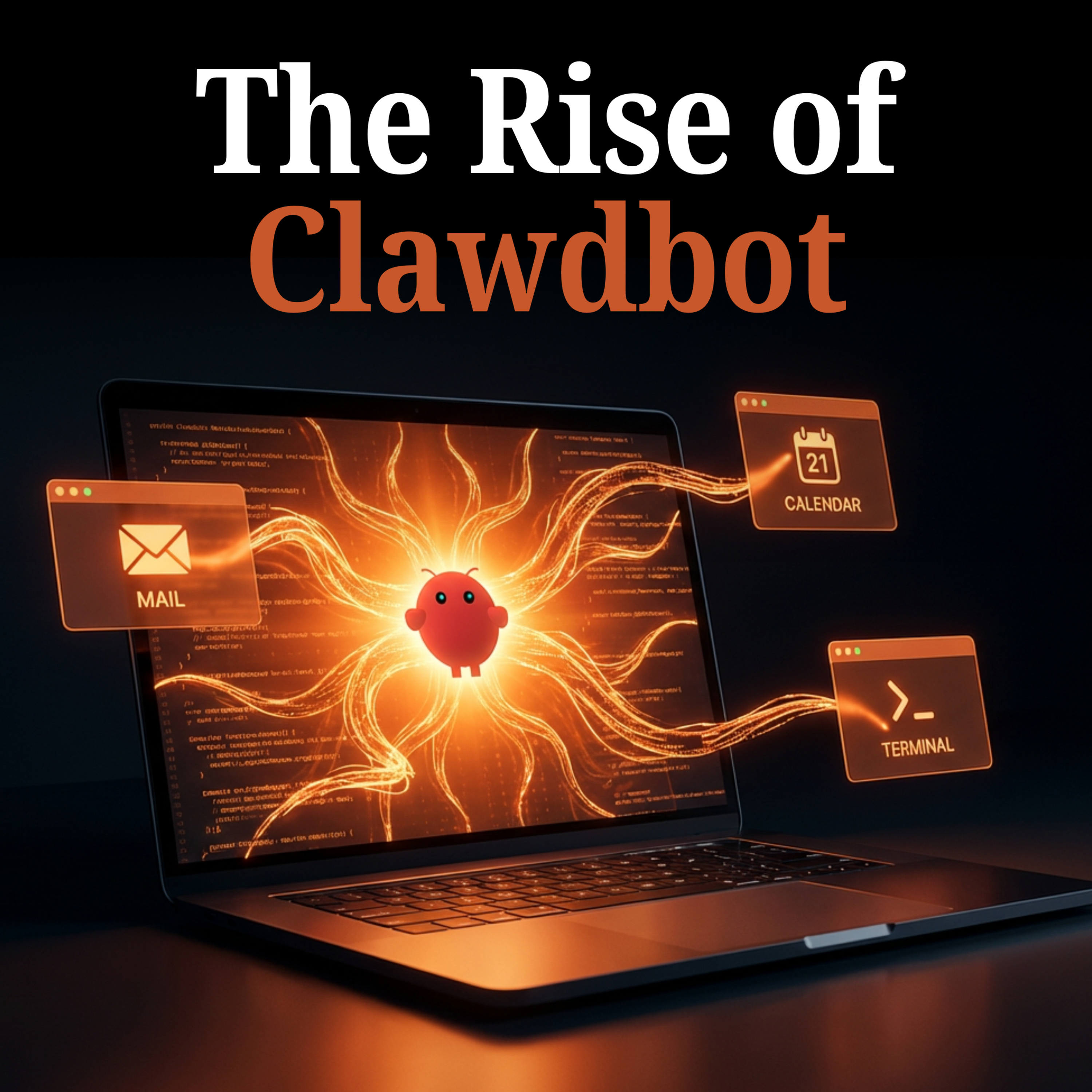
The focus on browser automation for AI agents was misplaced. Tools like Moltbot demonstrate the real power lies in an OS-level agent that can interact with all applications, data, and CLIs on a user's machine, effectively bypassing the browser as the primary interface for tasks.

By running AI models directly on the user's device, the app can generate replies and analyze messages without sending sensitive personal data to the cloud, addressing major privacy concerns.
Web agents often get blocked by services like Amazon because they operate from generic cloud IPs. Rabbit's agent uses the physical R1 device as a local proxy, so requests originate from the user's network, appearing legitimate and bypassing security measures.

A new software paradigm, "agent-native architecture," treats AI as a core component, not an add-on. This progresses in levels: the agent can do any UI action, trigger any backend code, and finally, perform any developer task like writing and deploying new code, enabling user-driven app customization.

By running on a local machine, Clawdbot allows users to own their data and interaction history. This creates an 'open garden' where they can swap out the underlying AI model (e.g., from Claude to a local one) without losing context or control.
Similar to how mobile gave rise to the App Store, AI platforms like OpenAI and Perplexity will create their own ecosystems for discovering and using services. The next wave of winning startups will be those built to distribute through these new agent-based channels, while incumbents may be slow to adapt.