Get your free personalized podcast brief
We scan new podcasts and send you the top 5 insights daily.
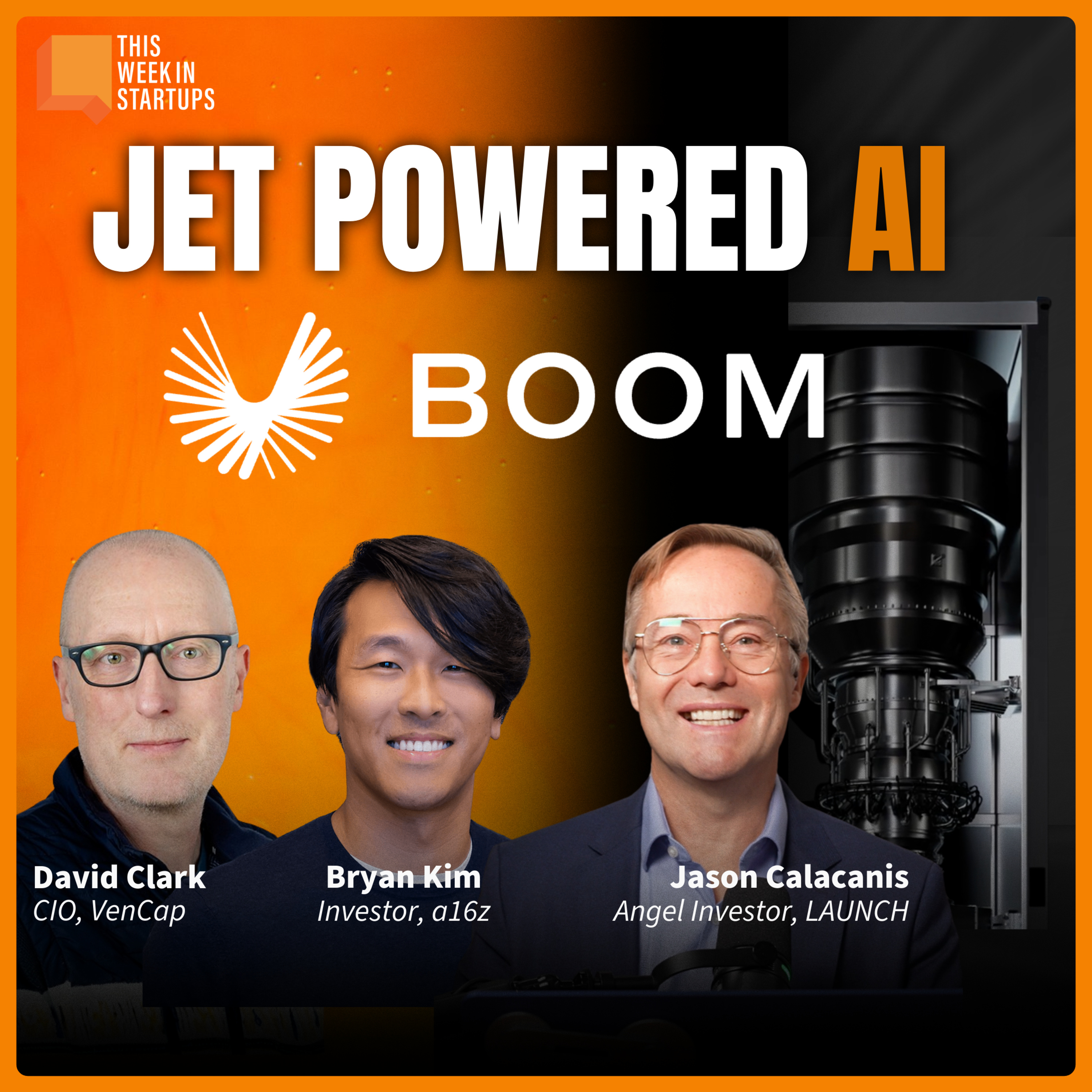
Boom repurposed its supersonic engine core for ground-based power generation, creating a highly profitable side business. This provides crucial funding and de-risks the capital-intensive primary mission of building passenger jets, turning a potential weakness into a financial strength.

Related Insights
After a public failure to outsource its engine, Boom took on the “impossible” task of building it in-house. This forced vertical integration became a core competency, enabling greater innovation, control, and ultimately led to their profitable power generation business.
To bypass supply chain backlogs for new power generation equipment, Elon Musk's data centers are retrofitting jet engines from retired Boeing 747s and 767s. This "hack" uses proven, available, last-generation technology to gain a speed advantage in the AI infrastructure race.

Boom Supersonic's founder explains that the Concorde was a commercial failure. However, a mere 30% improvement in fuel economy—achievable with modern materials and aerodynamics—is the key threshold that makes supersonic travel profitable at business-class prices.

Boom Supersonic is adapting its proprietary jet engine, originally for supersonic flight, into "SuperPower" ground turbines for AI data centers. This strategic move provides a path to profitability years sooner, generating the massive capital required to complete its Overture passenger airliner project.

FTAI's "Aero Derivatives" business repurposes end-of-life jet engines, which would otherwise be scrapped, into gas-powered turbines. This meets urgent power demand for data centers while monetizing an asset with a very low input cost, creating a high-margin, non-obvious revenue stream.

Instead of building its final passenger jet, Boom first developed a smaller, sub-scale prototype to prove its Mach 2.2 technology. This startup-like, sequential approach proves the core concept at a much lower cost, making the capital-intensive project more manageable and fundable.
In a unique pivot, Boom Supersonic, which is developing a Concorde successor, is selling its re-engineered jet turbines to Crusoe Cloud for power generation. This $1.2 billion deal provides a non-dilutive funding source for Boom's core aviation business by capitalizing on the massive, immediate demand for energy in the AI sector.
Boom Supersonic failed its mission to build supersonic planes because it couldn't source or build certified jet engines. However, the turbine technology it developed is now valuable for powering energy-hungry AI data centers, creating an accidental, and potentially lucrative, pivot from a flawed business idea.

Boom Supersonic secured non-binding Letters of Intent (LOIs) from major airlines early. This demonstrated market demand was crucial for convincing suppliers and investors to commit the significant capital needed for development, turning customer interest into a financing tool.
Boom Supersonic's move to power data centers with its engines isn't a failure, but a strategic way to fund its capital-intensive vision. This mirrors early Tesla's survival tactic of doing contract engineering for other automakers. Such projects can be a crucial source of non-dilutive capital for deep tech companies.