Get your free personalized podcast brief
We scan new podcasts and send you the top 5 insights daily.
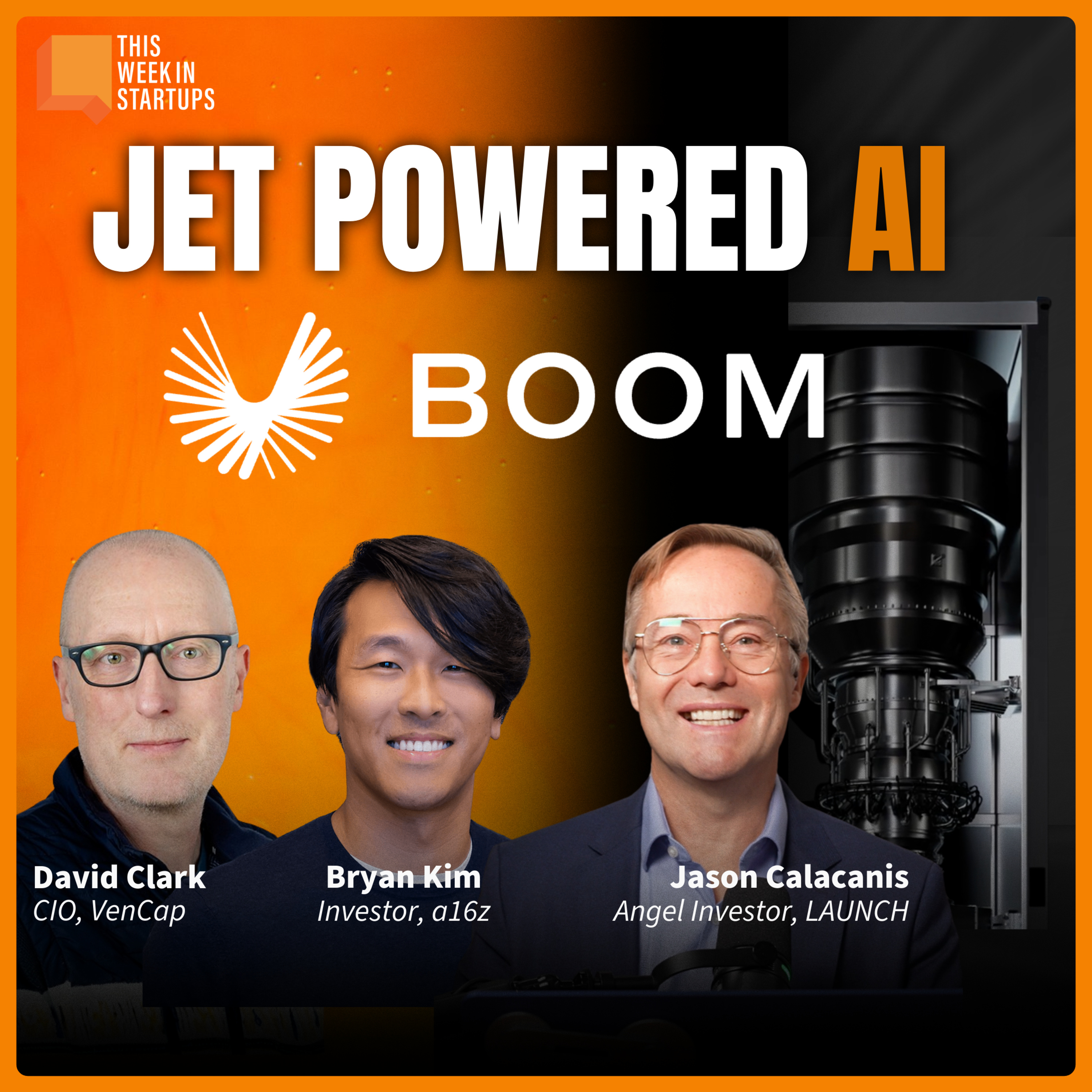
Boom Supersonic failed its mission to build supersonic planes because it couldn't source or build certified jet engines. However, the turbine technology it developed is now valuable for powering energy-hungry AI data centers, creating an accidental, and potentially lucrative, pivot from a flawed business idea.

Related Insights
To bypass supply chain backlogs for new power generation equipment, Elon Musk's data centers are retrofitting jet engines from retired Boeing 747s and 767s. This "hack" uses proven, available, last-generation technology to gain a speed advantage in the AI infrastructure race.

Boom Supersonic's founder explains that the Concorde was a commercial failure. However, a mere 30% improvement in fuel economy—achievable with modern materials and aerodynamics—is the key threshold that makes supersonic travel profitable at business-class prices.

Boom Supersonic is adapting its proprietary jet engine, originally for supersonic flight, into "SuperPower" ground turbines for AI data centers. This strategic move provides a path to profitability years sooner, generating the massive capital required to complete its Overture passenger airliner project.

FTAI's "Aero Derivatives" business repurposes end-of-life jet engines, which would otherwise be scrapped, into gas-powered turbines. This meets urgent power demand for data centers while monetizing an asset with a very low input cost, creating a high-margin, non-obvious revenue stream.

Instead of building its final passenger jet, Boom first developed a smaller, sub-scale prototype to prove its Mach 2.2 technology. This startup-like, sequential approach proves the core concept at a much lower cost, making the capital-intensive project more manageable and fundable.
Power for AI data centers is not limited to the traditional grid or a few turbine suppliers. Operators are turning to a diverse portfolio of 'behind-the-meter' power sources, including repurposed jet engines (aeroderivatives), large reciprocating engines from ships and trucks, and fuel cells to rapidly scale capacity.

In a unique pivot, Boom Supersonic, which is developing a Concorde successor, is selling its re-engineered jet turbines to Crusoe Cloud for power generation. This $1.2 billion deal provides a non-dilutive funding source for Boom's core aviation business by capitalizing on the massive, immediate demand for energy in the AI sector.

The company initially explored space-based solar but realized beaming power to Earth is highly inefficient. Since most new energy powers data centers anyway, they pivoted to moving the data centers to the power source in space, eliminating the massive energy loss from transmission.
Success isn't linear. Mobile gaming giant Supercell didn't start with mobile games, and drone delivery firm ZipLine began with a robotic toy. This shows that foundational failures in one area can be the necessary learning experiences that lead to market-defining success in another.

Boom Supersonic's move to power data centers with its engines isn't a failure, but a strategic way to fund its capital-intensive vision. This mirrors early Tesla's survival tactic of doing contract engineering for other automakers. Such projects can be a crucial source of non-dilutive capital for deep tech companies.