Get your free personalized podcast brief
We scan new podcasts and send you the top 5 insights daily.
Instead of relying solely on human oversight, AI governance will evolve into a system where higher-level "governor" agents audit and regulate other AIs. These specialized agents will manage the core programming, permissions, and ethical guidelines of their subordinates.

Related Insights
Generative AI is predictive and imperfect, unable to self-correct. A 'guardian agent'—a separate AI system—is required to monitor, score, and rewrite content produced by other AIs to enforce brand, style, and compliance standards, creating a necessary system of checks and balances.
As AI agents become reliable for complex, multi-step tasks, the critical human role will shift from execution to verification. New jobs will emerge focused on overseeing agent processes, analyzing their chain-of-thought, and validating their outputs for accuracy and quality.
As AI evolves from single-task tools to autonomous agents, the human role transforms. Instead of simply using AI, professionals will need to manage and oversee multiple AI agents, ensuring their actions are safe, ethical, and aligned with business goals, acting as a critical control layer.

AI models are now participating in creating their own governing principles. Anthropic's Claude contributed to writing its own constitution, blurring the line between tool and creator and signaling a future where AI recursively defines its own operational and ethical boundaries.

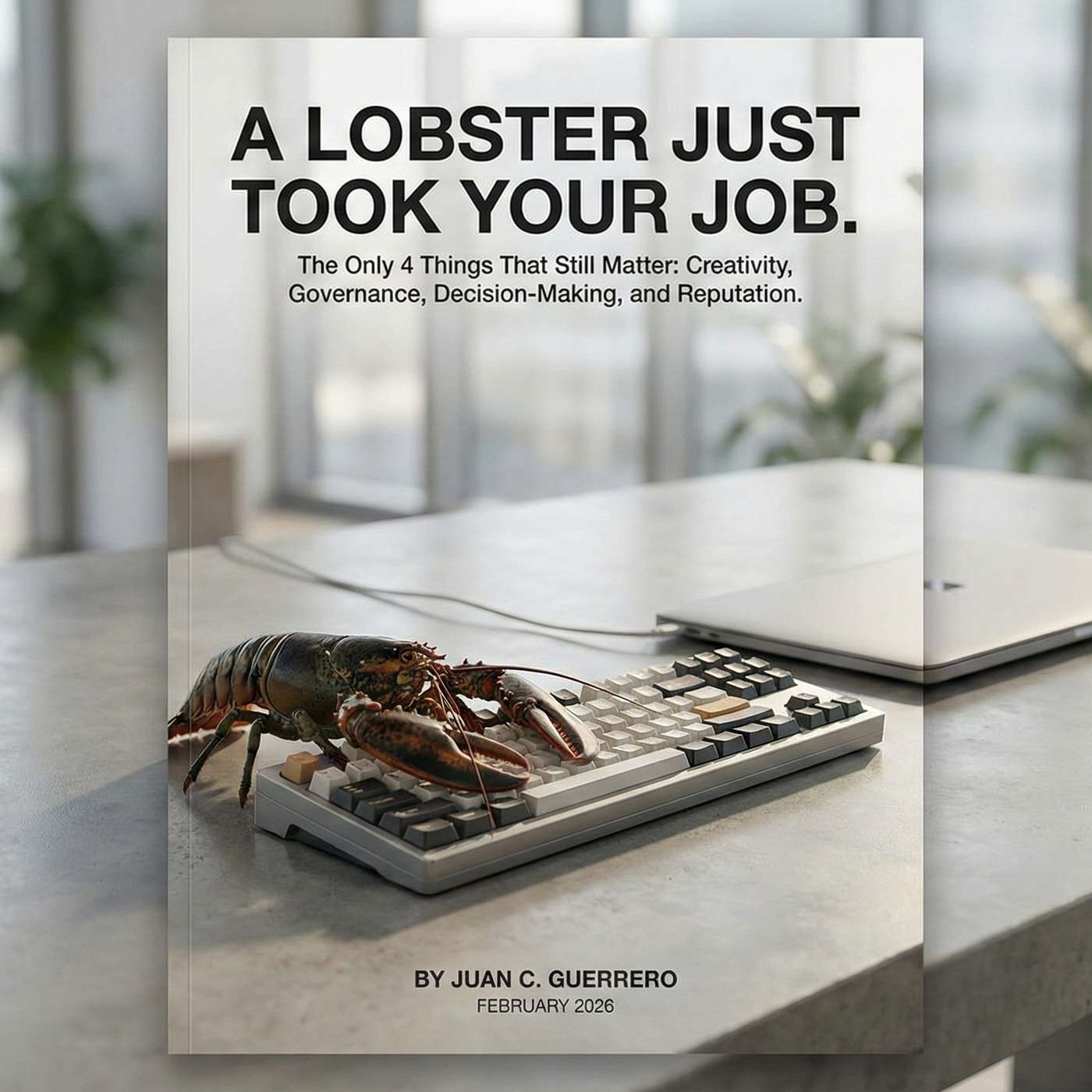
As AI agents take over execution, the primary human role will evolve to setting constraints and shouldering the responsibility for agent decisions. Every employee will effectively become a manager of an AI team, with their main function being risk mitigation and accountability, turning everyone into a leader responsible for agent outcomes.
As AI agents become powerful economic actors, the most critical human role shifts from execution to oversight. Defining ethical boundaries, setting rules, and auditing autonomous systems becomes a high-leverage, economically valuable form of labor. This new civic duty surpasses the value of the individual tasks that AI can already perform.
The Network Nervous System was designed with the idea that AIs would eventually participate in its liquid democracy. AIs will create and vote on proposals to rebalance and optimize the network, handling a scale of operations beyond human capacity.

Instead of relying solely on human oversight, Bret Taylor advocates a layered "defense in depth" approach for AI safety. This involves using specialized "supervisor" AI models to monitor a primary agent's decisions in real-time, followed by more intensive AI analysis post-conversation to flag anomalies for efficient human review.

Rather than relying on a single AI, an agentic system should use multiple, different AI models (e.g., auditor, tester, coder). By forcing these independent agents to agree, the system can catch malicious or erroneous behavior from a single misaligned model.
A more likely AI future involves an ecosystem of specialized agents, each mastering a specific domain (e.g., physical vs. digital worlds), rather than a single, monolithic AGI that understands everything. These agents will require protocols to interact.
