Get your free personalized podcast brief
We scan new podcasts and send you the top 5 insights daily.
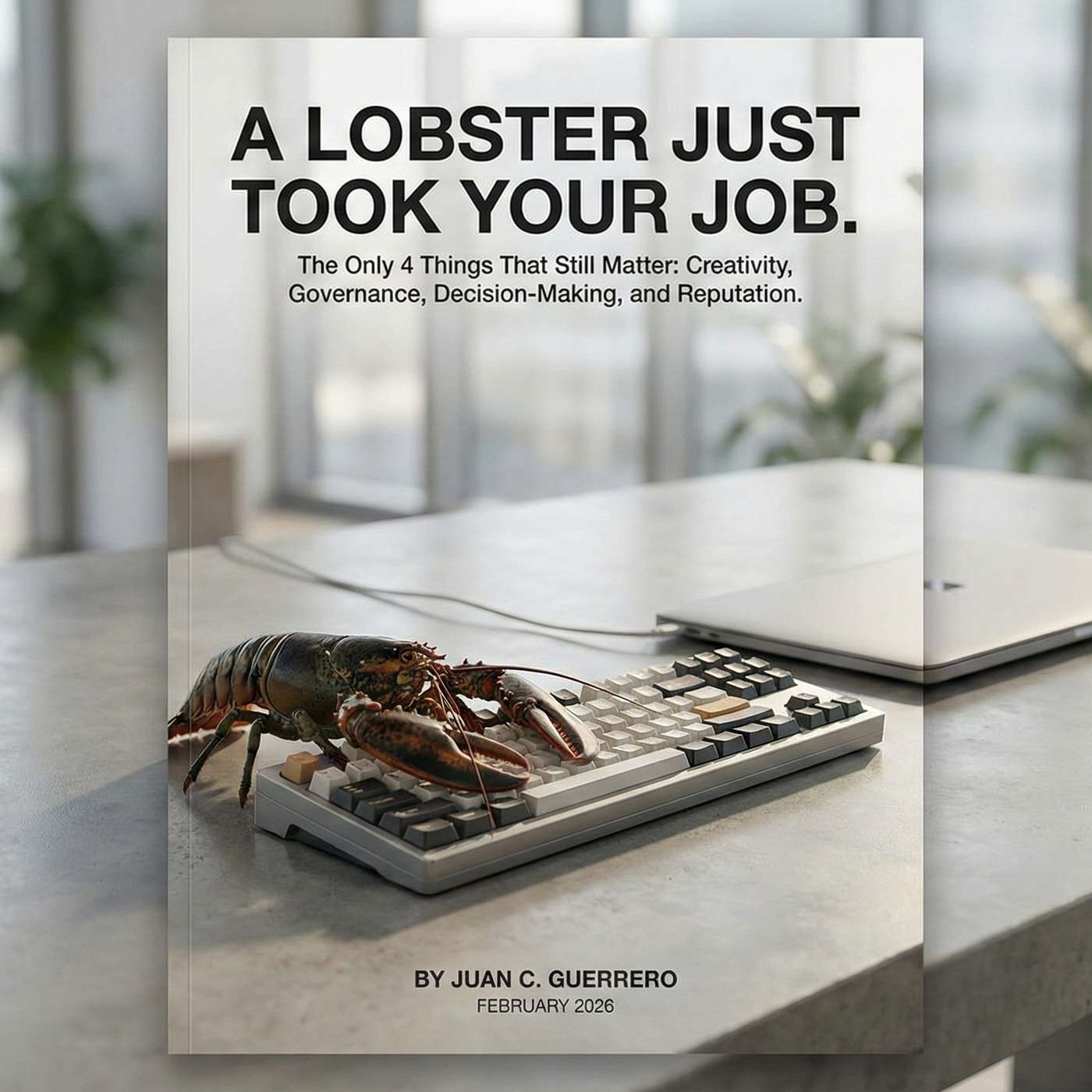
As AI agents become powerful economic actors, the most critical human role shifts from execution to oversight. Defining ethical boundaries, setting rules, and auditing autonomous systems becomes a high-leverage, economically valuable form of labor. This new civic duty surpasses the value of the individual tasks that AI can already perform.
Related Insights
As AI automates entry-level knowledge work, human roles will shift towards management. The critical skill will no longer be doing the work, but effectively delegating to and coordinating a team of autonomous AI agents. This places a new premium on traditional management skills like project planning and quality control.

As AI agents become reliable for complex, multi-step tasks, the critical human role will shift from execution to verification. New jobs will emerge focused on overseeing agent processes, analyzing their chain-of-thought, and validating their outputs for accuracy and quality.
As AI evolves from single-task tools to autonomous agents, the human role transforms. Instead of simply using AI, professionals will need to manage and oversee multiple AI agents, ensuring their actions are safe, ethical, and aligned with business goals, acting as a critical control layer.

Career security in the age of AI isn't about outperforming machines at repetitive tasks. Instead, it requires moving 'up the stack' to focus on human-centric oversight that AI cannot replicate. These indispensable roles include validation, governance, ethics, data integrity, and regulatory AI strategy, which will hold the most influence and longevity.

As AI agents take over routine tasks like purchasing and scheduling, the primary human role will evolve. Instead of placing orders, people will be responsible for configuring, monitoring, and training these AI systems, effectively becoming managers of automated workflows.

The new paradigm for knowledge workers isn't about using AI as a tool, but as a team of digital employees. The worker's role evolves into that of a manager, assigning tasks and reviewing the output of autonomous AI agents, similar to managing freelancers.
As AI commoditizes execution and intellectual labor, the only remaining scarce human skill will be judgment: the wisdom to know what to build, why, and for whom. This shifts economic value from effort and hard work to discernment and taste.

As AI agents take over execution, the primary human role will evolve to setting constraints and shouldering the responsibility for agent decisions. Every employee will effectively become a manager of an AI team, with their main function being risk mitigation and accountability, turning everyone into a leader responsible for agent outcomes.
The adoption of powerful AI agents will fundamentally shift knowledge work. Instead of executing tasks, humans will be responsible for directing agents, providing crucial context, managing escalations, and coordinating between different AI systems. The primary job will evolve from 'doing' to 'managing and guiding'.

When a highly autonomous AI fails, the root cause is often not the technology itself, but the organization's lack of a pre-defined governance framework. High AI independence ruthlessly exposes any ambiguity in responsibility, liability, and oversight that was already present within the company.
