Get your free personalized podcast brief
We scan new podcasts and send you the top 5 insights daily.
The trend toward cloud-native everything overlooks the power and convenience of the local machine. Providing an AI agent with local access avoids the immense friction of replicating a user's tools and authentication states in the cloud, making the agent far more capable.
Related Insights
Perplexity is launching a personal, always-on agent that runs on a local Mac Mini to access user files and apps securely. This mirrors the 'OpenClaw' concept, indicating that persistent, local system access is becoming a key competitive feature for AI agents, not just a niche experiment.

A "magical" use case for agents is giving them access to your local network to operate physical hardware. Being able to voice-command an agent to print a document eliminates friction and integrates AI into the physical home environment, moving beyond screen-based tasks.

By running locally on a user's machine, AI agents can interact with services like Gmail or WhatsApp without needing official, often restrictive, API access. This approach works around the corporate "red tape" that stifles innovation and effectively liberates user data from platform control.
While cloud hosting for AI agents seems cheap and easy, a local machine like a Mac Mini offers key advantages. It provides direct control over the agent's environment, easy access to local tools, and the ability to observe its actions in real-time, which dramatically accelerates your learning and ability to use it effectively.

The future of AI isn't just in the cloud. Personal devices, like Apple's future Macs, will run sophisticated LLMs locally. This enables hyper-personalized, private AI that can index and interact with your local files, photos, and emails without sending sensitive data to third-party servers, fundamentally changing the user experience.
A key advantage of Claude Cowork is its ability to run locally and access files directly on a user's computer. This provides the AI with vastly more context than is possible with cloud tools that have limited file uploads, enabling complex analysis of large, local datasets like hundreds of documents.

The true potential of local AI agents like OpenClaw is unlocked not by running a model locally, but by granting it deep, contextual access to a user's entire system—email, calendar, and files. This creates a massive security paradox, positioning OS-level players like Apple, who can manage that trust and security layer, as the likely long-term winners.

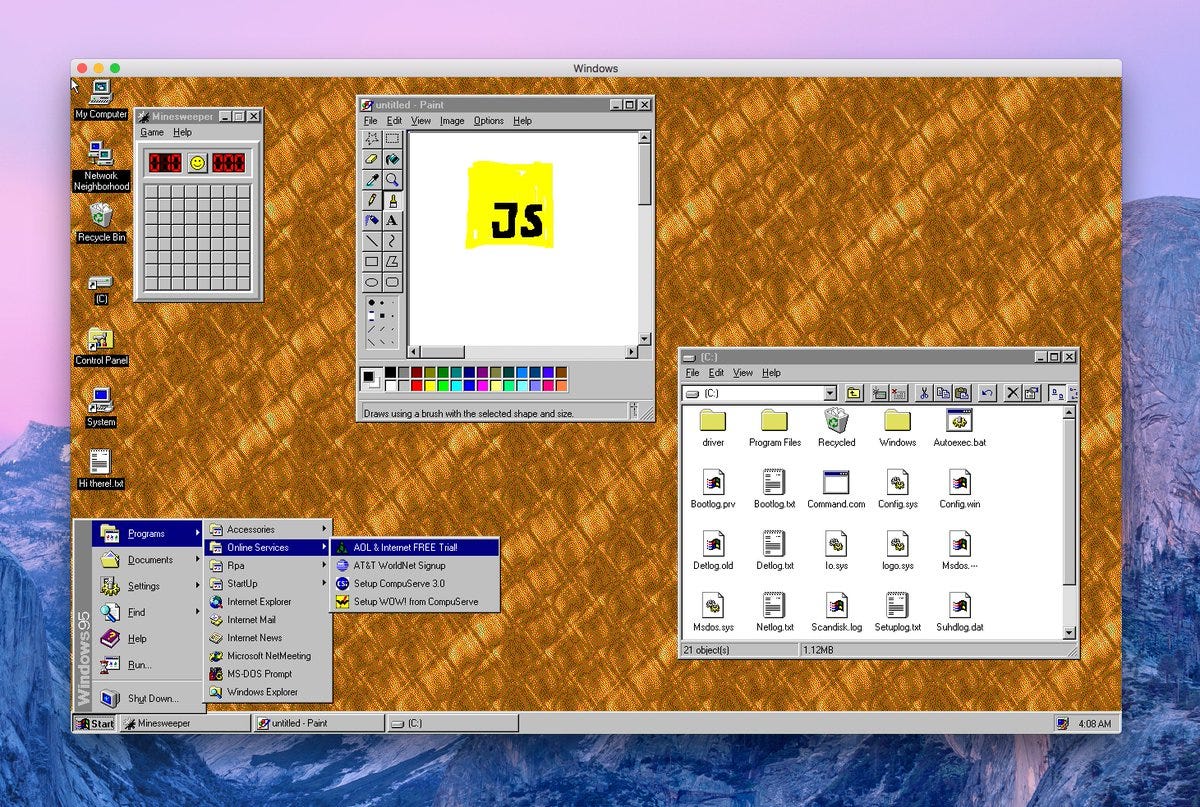
A new wave of AI agents from companies like Manus and Adaptive are launching with a core "My Computer" feature. This signals a critical realization: to be truly useful, agents must move beyond cloud-only environments and gain access to local files and applications on a user's personal machine.
Claude Cowork runs in a lightweight VM on the user's machine. This "subcomputer" concept provides a secure, sandboxed environment where the AI can install tools and operate freely without compromising the host system or requiring complex cloud permissions for every local resource.
As AI agents evolve from information retrieval to active work (coding, QA testing, running simulations), they require dedicated, sandboxed computational environments. This creates a new infrastructure layer where every agent is provisioned its own 'computer,' moving far beyond simple API calls and creating a massive market opportunity.
