Get your free personalized podcast brief
We scan new podcasts and send you the top 5 insights daily.
Perplexity is launching a personal, always-on agent that runs on a local Mac Mini to access user files and apps securely. This mirrors the 'OpenClaw' concept, indicating that persistent, local system access is becoming a key competitive feature for AI agents, not just a niche experiment.

Related Insights
Because agentic frameworks like OpenClaw require broad system access (shell, files, apps) to be useful, running them on a personal computer is a major security risk. Experts like Andrej Karpathy recommend isolating them on dedicated hardware, like a Mac Mini or a separate cloud instance, to prevent compromises from escalating.

The rapid adoption of features like remote control and scheduled tasks by Anthropic, Perplexity, and Notion is not about copying the open-source OpenClaw project. Instead, it marks the industry's recognition of a new set of fundamental "primitives" for agentic AI: persistent, remotely accessible, and autonomous operation. These are becoming the new standard for AI interaction.
Steve Jobs's long-term strategy to move Apple to its own silicon, initiated in 2008, has coincidentally positioned Macs (especially the Mac Mini) as the perfect sandboxed, powerful, and private hardware for running local AI agents like OpenClaw.

Users are choosing the Mac mini to run Claude Bot because it's an affordable, reliable, always-on device that offers crucial native iMessage integration. This allows them to control their desktop-based AI from their phone, effectively turning the Mac mini into a personal server.

The core appeal of open-source projects like OpenClaw is that they run locally on user hardware, granting full control over personal data. This contrasts with cloud-based agents from Meta, positioning data ownership and privacy as a key differentiator against convenience.

While cloud hosting for AI agents seems cheap and easy, a local machine like a Mac Mini offers key advantages. It provides direct control over the agent's environment, easy access to local tools, and the ability to observe its actions in real-time, which dramatically accelerates your learning and ability to use it effectively.

The future of AI isn't just in the cloud. Personal devices, like Apple's future Macs, will run sophisticated LLMs locally. This enables hyper-personalized, private AI that can index and interact with your local files, photos, and emails without sending sensitive data to third-party servers, fundamentally changing the user experience.
The true potential of local AI agents like OpenClaw is unlocked not by running a model locally, but by granting it deep, contextual access to a user's entire system—email, calendar, and files. This creates a massive security paradox, positioning OS-level players like Apple, who can manage that trust and security layer, as the likely long-term winners.

The trend of running AI agents on dedicated Mac Minis isn't just for performance. It reflects a user desire for a tangible, always-on 'AI buddy' or appliance, similar to an R2-D2, that manages their digital life.
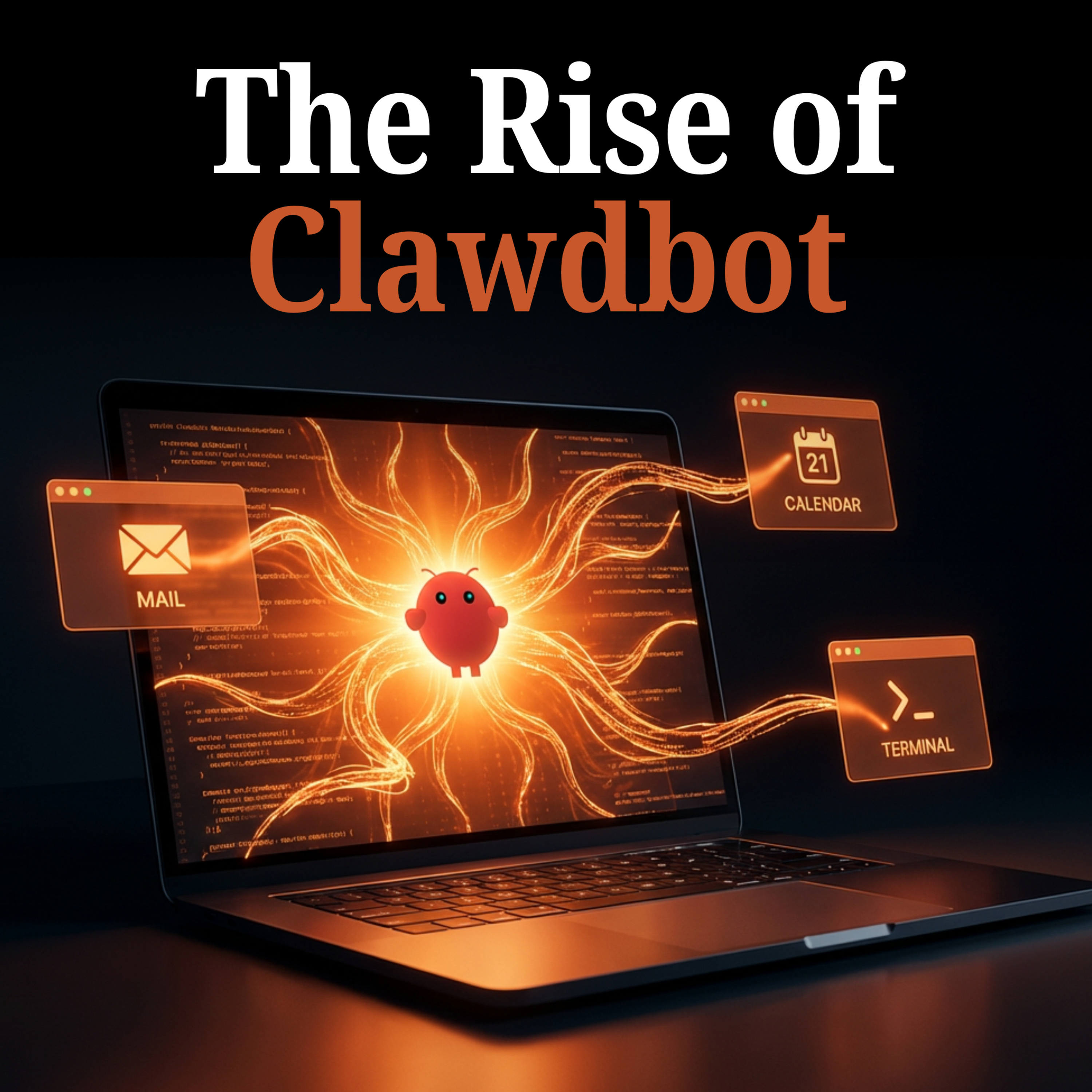
Running a personal AI on your own hardware is fundamentally different than using a cloud service. The key advantage is data sovereignty. This protects user data from third-party access, subpoenas, and control by large corporations, which is a critical differentiator for privacy-conscious users and businesses.