Get your free personalized podcast brief
We scan new podcasts and send you the top 5 insights daily.
While GenAI grabs headlines, its most practical enterprise use is as an intelligent orchestrator. It can call upon and synthesize results from highly effective traditional tools like time-series forecasting models or SQL databases, multiplying their value within a larger, more powerful system.
Related Insights
Recognizing there is no single "best" LLM, AlphaSense built a system to test and deploy various models for different tasks. This allows them to optimize for performance and even stylistic preferences, using different models for their buy-side finance clients versus their corporate users.

The "generative" label on AI is misleading. Its true power for daily knowledge work lies not in creating artifacts, but in its superhuman ability to read, comprehend, and synthesize vast amounts of information—a far more frequent and fundamental task than writing.

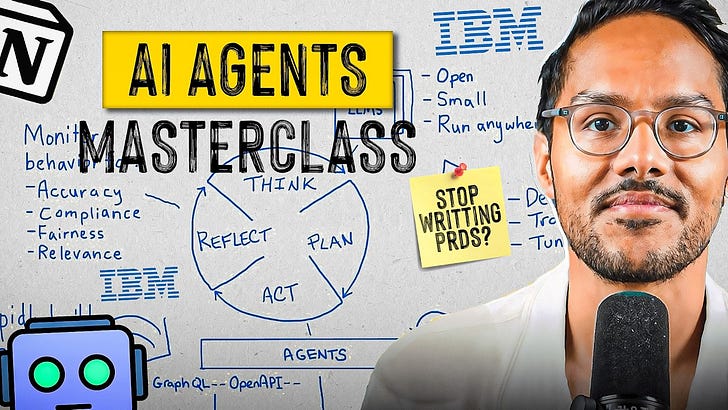
The LLM itself only creates the opportunity for agentic behavior. The actual business value is unlocked when an agent is given runtime access to high-value data and tools, allowing it to perform actions and complete tasks. Without this runtime context, agents are merely sophisticated Q&A bots querying old data.

According to IBM's AI Platform VP, Retrieval-Augmented Generation (RAG) was the killer app for enterprises in the first year after ChatGPT's release. RAG allows companies to connect LLMs to their proprietary structured and unstructured data, unlocking immense value from existing knowledge bases and proving to be the most powerful initial methodology.
A 'GenAI solves everything' mindset is flawed. High-latency models are unsuitable for real-time operational needs, like optimizing a warehouse worker's scanning path, which requires millisecond responses. The key is to apply the right tool—be it an optimizer, machine learning, or GenAI—to the specific business problem.

The true enterprise value of AI lies not in consuming third-party models, but in building internal capabilities to diffuse intelligence throughout the organization. This means creating proprietary "AI factories" rather than just using external tools and admiring others' success.

Enterprises will shift from relying on a single large language model to using orchestration platforms. These platforms will allow them to 'hot swap' various models—including smaller, specialized ones—for different tasks within a single system, optimizing for performance, cost, and use case without being locked into one provider.

Successful vertical AI applications serve as a critical intermediary between powerful foundation models and specific industries like healthcare or legal. Their core value lies in being a "translation and transformation layer," adapting generic AI capabilities to solve nuanced, industry-specific problems for large enterprises.
Exceptional AI content comes not from mastering one tool, but from orchestrating a workflow of specialized models for research, image generation, voice synthesis, and video creation. AI agent platforms automate this complex process, yielding results far beyond what a single tool can achieve.

Pega's CTO advises using the powerful reasoning of LLMs to design processes and marketing offers. However, at runtime, switch to faster, cheaper, and more consistent predictive models. This avoids the unpredictability, cost, and risk of calling expensive LLMs for every live customer interaction.
