Get your free personalized podcast brief
We scan new podcasts and send you the top 5 insights daily.
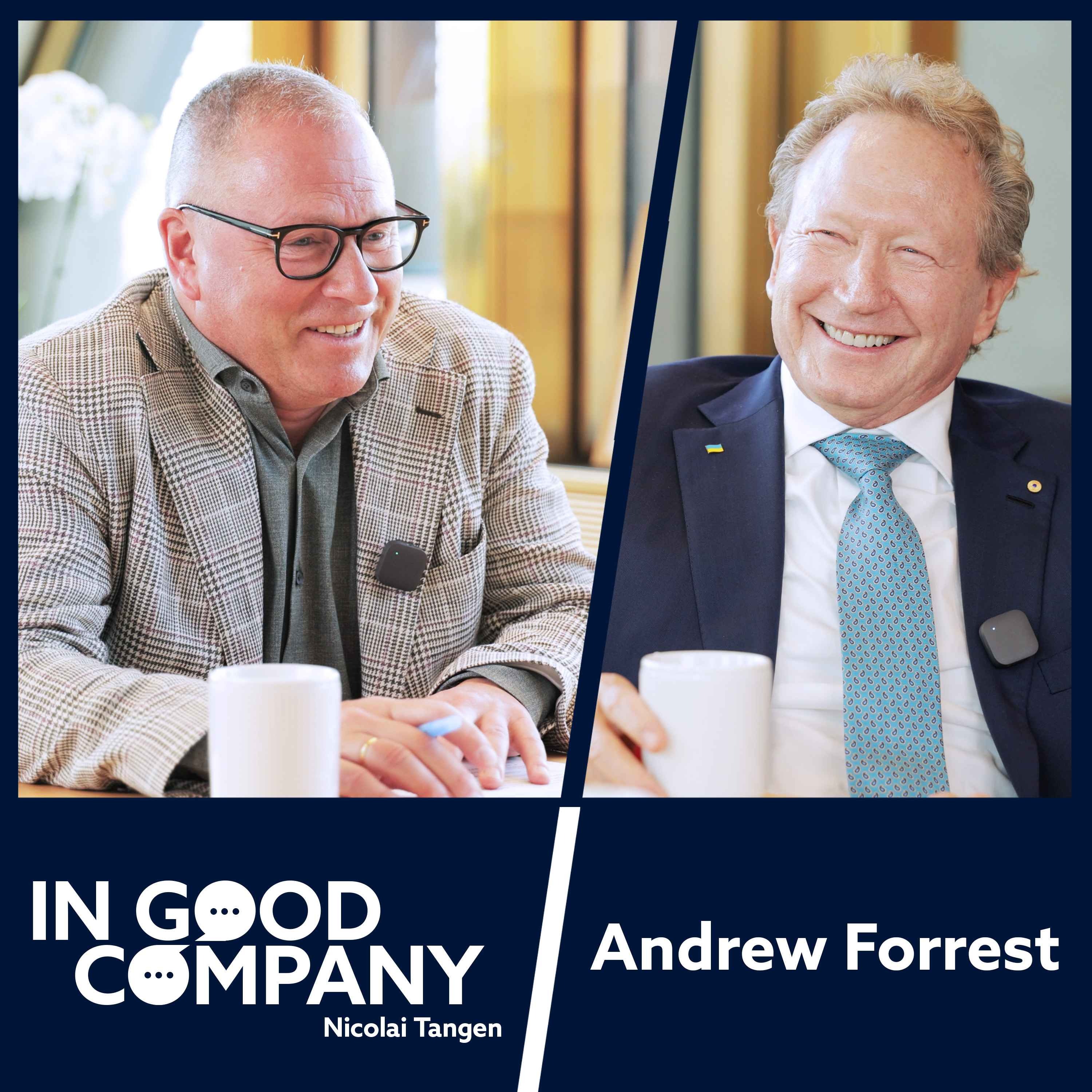
Andrew Forrest's original plan for Fortescue was to provide shared port and rail infrastructure. When incumbents refused to use it as a barrier to entry, he was forced to pivot into mining himself, creating a direct and ultimately more successful competitor to those who had blocked him.

Related Insights
After a hiking accident left him in a wheelchair, Andrew Forrest pursued a PhD in marine ecology. His research on climate change's impact on oceans directly motivated him to transform his heavy-industry mining company, Fortescue, into a green energy leader, committing to zero fossil fuels by 2030.
Startups often fail to displace incumbents because they become successful 'point solutions' and get acquired. The harder path to a much larger outcome is to build the entire integrated stack from the start, but initially serve a simpler, down-market customer segment before moving up.

Andrew Forrest is transitioning his mining company to zero fossil fuels not just for environmental reasons, but for a massive competitive advantage. He predicts eliminating diesel will save a billion dollars annually, making Fortescue's costs unreachable by competitors who haven't yet adopted green energy.
Andrew Forrest fosters a culture of ambitious innovation where "crazy brave plan a's" are expected to often fail. The key is requiring a "bulletproof plan b" so that failure doesn't endanger the company, allowing teams to learn and move forward without fear of existential risk.
Andrew Forrest identified that mining giants used their private, underutilized port and rail systems as a barrier to entry. His initial, disruptive strategy was to build an open, shared system, challenging their moat and creating a path for new competition in the iron ore industry.
After a life-threatening hiking accident, Andrew Forrest pursued a PhD in marine ecology. His academic findings on climate change's devastating impact on oceans directly led him to transform his $60 billion mining company into a leader in the green energy transition, linking personal crisis to corporate mission.
When Hexclad's founder suggested using Facebook for community in 2010, his boss's dismissal became the direct motivation for him to leave and start his own, more modern company, exploiting the established player's blind spot.

Early on, shipping behemoth Maersk dismissed Fleet Zero's electric ship concept as 'not serious.' This rejection fueled the founders. Years later, Maersk's eventual investment became a powerful form of validation and a gratifying milestone, demonstrating a complete reversal from a key industry incumbent.

Forrest's first company, Anaconda Nickel, struggled despite having contracts with a major engineering firm that took shortcuts. He learned that contracts are secondary to having a passionate, value-aligned team that can navigate problems collaboratively without resorting to lawyers.
An intimidating meeting with a Serbian taxi company, complete with bodyguards and a gun, convinced Bolt's founders that partnering with entrenched incumbents was untenable. This single event triggered a crucial pivot to work directly with drivers, fundamentally changing their business model and setting them up for direct competition.