Get your free personalized podcast brief
We scan new podcasts and send you the top 5 insights daily.
Early on, shipping behemoth Maersk dismissed Fleet Zero's electric ship concept as 'not serious.' This rejection fueled the founders. Years later, Maersk's eventual investment became a powerful form of validation and a gratifying milestone, demonstrating a complete reversal from a key industry incumbent.

Related Insights
Before seeking major funding, Elysian validated its radical aircraft design with skeptical professors from TU Delft and MIT. Winning over these experts provided the critical credibility and third-party proof needed to build investor confidence in their unproven deep-tech concept.

Shure's founders pivoted back to their original EOR concept, which failed years prior due to a lack of automation infrastructure. The recent maturity of AI agents and stablecoin rails made the initial vision feasible, showing that timing and technological readiness are critical for an idea's success.
A rejection from a competitive university grant program, while disappointing, can be incredibly valuable. It provides critical feedback and can lead to a direct introduction to a visionary early investor from the review committee who sees potential despite the project's initial flaws.

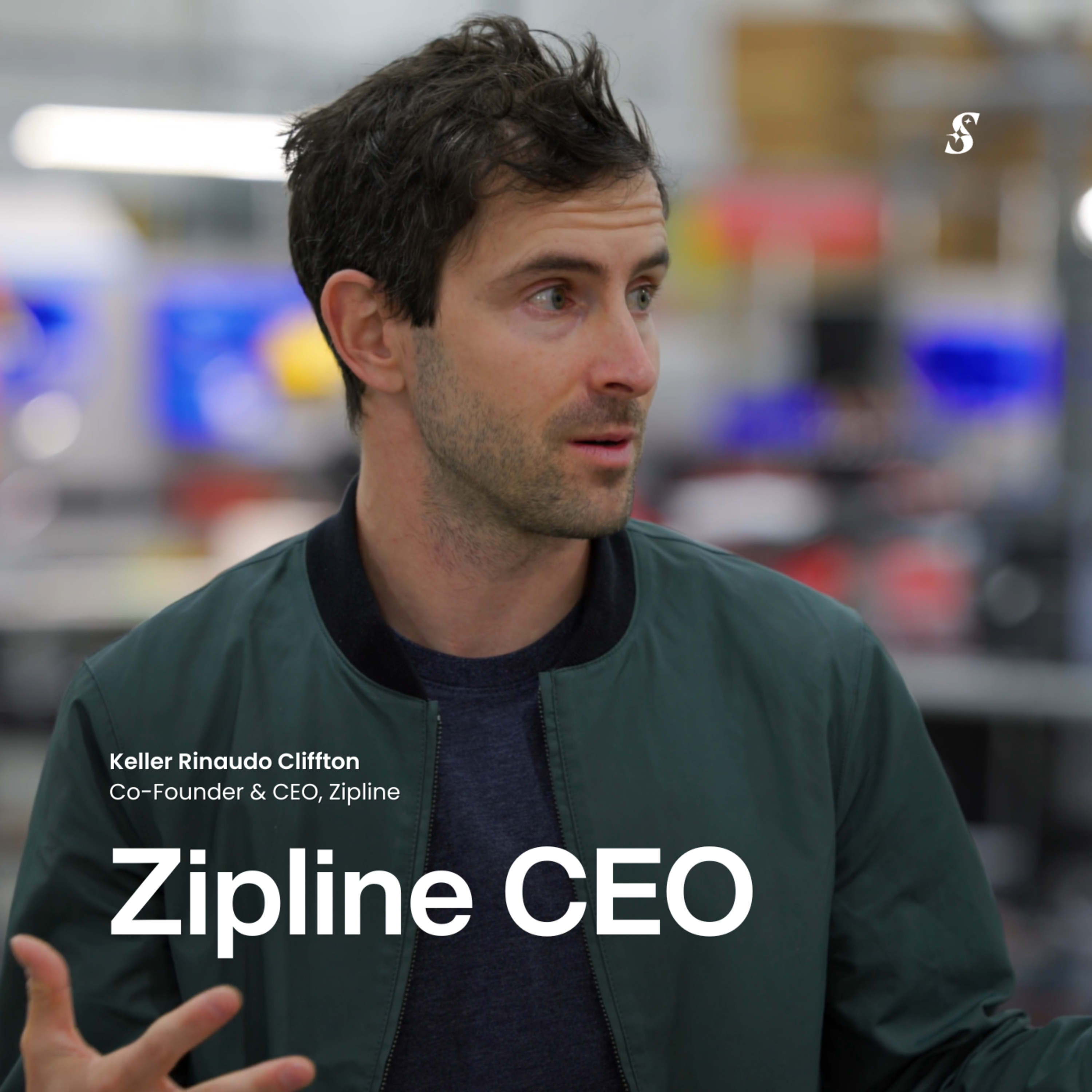
Zipline, much like early Tesla or SpaceX, was never part of a broader investment "hype cycle." They spent a decade working on a contrarian idea that most investors thought was stupid. This obscurity allowed them to build with deep conviction, attracting only highly contrarian investors who believed in the long-term, inevitable vision.
Archer's CEO viewed an immediate lawsuit from industry giant Boeing not just as a challenge, but as the moment he knew his company was a real threat. This aggressive move from an incumbent was a harsh, but powerful, validation that their disruptive technology was credible.

An investor's best career P&L winners are not immediate yeses. They often involve an initial pass by either the investor or the company. This shows that timing and building relationships over multiple rounds can be more crucial than a single early-stage decision, as a 'missed round' isn't a 'missed company'.

Founders must have conviction, as even their most sophisticated investors can fundamentally misjudge a bold strategic shift. A Sequoia Capital partner admits their own investors strongly opposed a pivotal move into logistics, demonstrating that founder vision must sometimes override expert consensus.

Instead of dismissing harsh criticism, extract the underlying truth. A brutal investor rejection focused Gamma on intertwining product and growth from the very beginning, acknowledging the difficulty of competing against incumbents. This became a foundational part of their strategy.

When a potential LP dismissed them to advise NFL players, the a16z founders didn't just get discouraged; they got angry. This disrespect became a powerful, "nuclear fire" motivation to succeed and prove the investor wrong, a common pattern for resilient entrepreneurs.
Fleet Zero uses hybrid ships as a Trojan horse. The initial value is immediate fuel and maintenance savings, justifying the battery purchase without existing chargers. This creates a customer base with large batteries in ports, providing a clear business case for utilities to then build the charging infrastructure.