Get your free personalized podcast brief
We scan new podcasts and send you the top 5 insights daily.
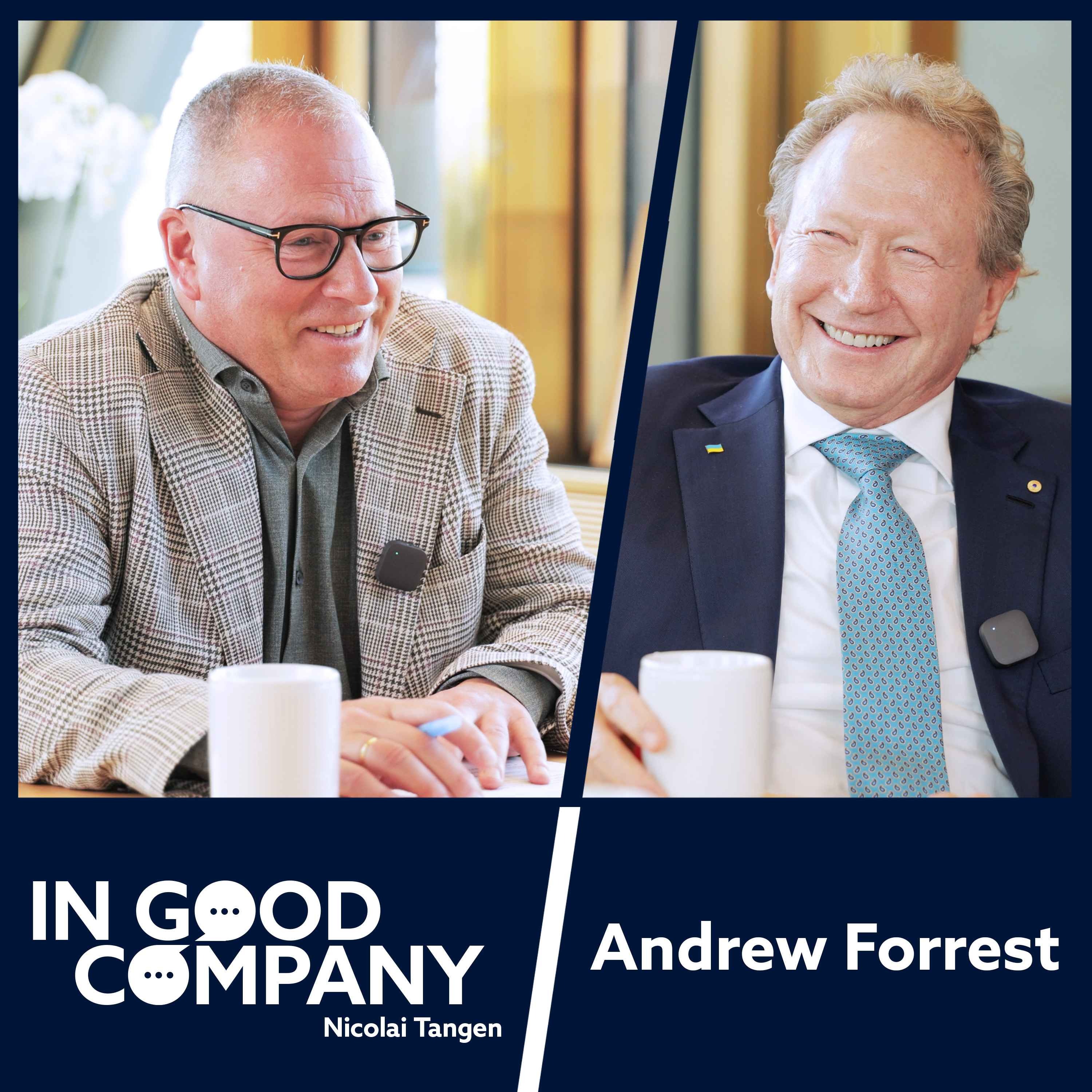
Andrew Forrest is transitioning his mining company to zero fossil fuels not just for environmental reasons, but for a massive competitive advantage. He predicts eliminating diesel will save a billion dollars annually, making Fortescue's costs unreachable by competitors who haven't yet adopted green energy.

Related Insights
After a hiking accident left him in a wheelchair, Andrew Forrest pursued a PhD in marine ecology. His research on climate change's impact on oceans directly motivated him to transform his heavy-industry mining company, Fortescue, into a green energy leader, committing to zero fossil fuels by 2030.
Holcim's sustainability strategy isn't just PR. By reformulating products to use cheaper, CO2-friendly raw materials and alternative fuels, the company creates significant cost advantages. This makes their eco-friendly products a source of profitable growth, not just an added expense, challenging the 'green premium' concept.
Base's core thesis is that the shift to solar and battery storage is inevitable not because of ESG trends, but because it represents the lowest marginal cost to add power to the grid. This economic argument is more fundamental and compelling than climate narratives alone.

Andrew Forrest argues that competitors will follow his green transition for economic reasons, not environmental ones. By eliminating a billion liters of diesel annually, Fortescue will save a billion dollars, creating a cost advantage that will force the rest of the industry to adapt to remain competitive.
Andrew Forrest identified that mining giants used their private, underutilized port and rail systems as a barrier to entry. His initial, disruptive strategy was to build an open, shared system, challenging their moat and creating a path for new competition in the iron ore industry.
After a life-threatening hiking accident, Andrew Forrest pursued a PhD in marine ecology. His academic findings on climate change's devastating impact on oceans directly led him to transform his $60 billion mining company into a leader in the green energy transition, linking personal crisis to corporate mission.
Andrew Forrest's original plan for Fortescue was to provide shared port and rail infrastructure. When incumbents refused to use it as a barrier to entry, he was forced to pivot into mining himself, creating a direct and ultimately more successful competitor to those who had blocked him.
The political challenge of climate action has fundamentally changed. Renewables like solar and wind are no longer expensive sacrifices but the cheapest energy sources available. This aligns short-term economic incentives with long-term environmental goals, making the transition politically and financially viable.

Holcim gets paid to accept waste materials, which it then processes into an energy source. This replaces fossil fuels, simultaneously reducing costs and CO2 emissions, demonstrating how sustainability can be a primary driver of profitable growth.
The founder believes the key to replacing fossil fuels is acknowledging their incredible convenience and cost-effectiveness. The winning renewable solution must be fundamentally better on those metrics, not just an alternative that relies on incentives.
